20060525

Headed to the Big Stage


The reasonable man adapts himself to the world; the unreasonable one persists in trying to adapt the world to himself. Therefore all progress depends on the unreasonable man”.
George Bernard Shaw (1856 - 1950)


Opening the email I thought it was a joke at first. A read the message again slowly, waiting to hear giggles of the staff from around the corner. I peaked from my office into the bullpen and everyone had their head down working away. Sitting back in my chair I read the email again. The organization was recognizable and the names were familiar, but the brief request was startling.

We are looking for a speaker for our 2007 Conference in Australia and were wondering if you would be interested. It would only be for one hour. In addition to a speaking fee of $4,000 we would cover the cost of a coach ticket and your hotel for 4 nights. I look forward to hearing from you.”

When did the world decide I had something important to say? I’ve got to smile knowing that I don’t even know what’s so important about my message, I spend most of my time just trying to figured it out. I have no silver bullet, no magic formula; each project is a struggle in resolution. It’s a mystery why would an international organization spend what amounts to $10,000 for one hour of my time?

This honor comes at a time when I views have become more radical, more reactionary and less tolerant of compliancy. My message is darker and deeply cynical that humanity will fail to awaken to the ecological holocaust that we are conducting. There are signs that we may have past the tipping point of ecological survival, but blindly we are sedated by a daily fill of electronic games and mindless pandering of self promoting broadcast networks. We have lost our passion as we have become a society of obese predators preoccupied with the social dribble of Hollywood. The immigration issue gave me a small glimpse of hope. It has been almost 30 years since as a nation we gathered in mass in the streets to collectively have our voices counted. I don’t care what side of the immigration issue you’re on, but it caused millions of people to take to the streets in anger. That is the important message.

Continuing to attack standard convention I become more intellectually isolated from mainstream professionals. Even friends disassociate out of fear of repercussion as if talking to me is an ethical betrayal. As George Orwell once said “In a time of universal deceit, telling the truth is a revolutionary act. “ As I reflect on this speaking request I begin to consider the interest in me as a speaker lies in the avocation of anarchy. Not so much as with what I say but rather that I’m willing to say it with all its consequences. Reaching the point in my professional career that I can say what I want without concern of consequences, I can now wear the “color purple”.

Outside my window is a small girl not much older than two years old playing in a small trickle of water running in the gutter along the curb. Her golden blond hair blows in the wind as she is dressed in a matching pink outfit and sandals. Completely immersed in her world she plays with a few small leaves as they float in the water. The sense of wonder and discovery is evident as I watch undetected. It’s a beautiful sunny day, first warmth of summer in the air as she laughs with each new insight with a voice that only I hear. The joy of her innocence is not in what’s she is saying, but in the rapture of her discovery. As I watch her I see that we are no different. I see my ability to immerse myself in the joy of discovery isolated from the world. I have always known that I am but a child still learning, never comfortable with the extent of my experiences. That is why it remains such a mystery that someone would value an hour of my time enough to fly me halfway around the world to tell them that what we are doing sucks.

Men fear thought as they fear nothing else on earth -- more than ruin -- more even than death.... Thought is subversive and revolutionary, destructive and terrible, thought is merciless to privilege, established institutions, and comfortable habit. Thought looks into the pit of hell and is not afraid. Thought is great and swift and free, the light of the world, and the chief glory of man.”

Bertrand Russell (1872 - 1970)

20060521

The Silence of Shadows


The hotel sign glows on a darkened street as I turn the engine off and scan the entrance for the valet. It’s almost 12:30 am, the evening staff has long gone home. I should have left the office earlier for the three hour drive to Des Moines, but the extra few hours in the office has made up a little for the past three weeks of travel. There is a moment of silence as I stare through the bug smeared windshield exhausted gathering the strength to leave the car. Opening the car door I place a leg on the pavement as a white light of searing pain runs down my left side. I knew the drive would be hard on my back which was tender from eight hours of lecturing on a concrete floor in Boston followed by a confined plane ride back home.

Slowly I crawl from the vehicle like a butterfly emerging from its cocoon. With each movement flashes a bolt of pain through my limbs as I grab the door to steady myself. I allow a few minutes to stretch waiting for the body’s natural pain killers to kick in. As the world sleeps I open the trunk and carefully remove my luggage. With a quiet determination I roll my belongings into the lobby looking for the check-in desk. The hotel is a renovated historic property built in 1918 and restored to its beautiful former opulence. The lobby has an intimate small feel punctuated with elaborate stout columns. The marble floor and subtle cream color scheme provides a timeless elegance.

Waiting for the sleepy night attendant I notice a display panel of the hotel in its old glory. There are photos of forgotten weddings and important meetings mixed along with a few matchbooks and faded menus. The men are dressed in black top hats and the women wear large ruffled gowns. It must have been the place to be at one point a long time ago. The night attendant methodically checks me in to a suite with out ever making eye contact. I think to myself at least I be leaving in a couple of days, but he will return day after day until someone determines he does not have the personality which fits the corporate image, at which time he will be called into an office and unceremoniously dismissed. Looking to the left is a dimly lit door with a flickering green neon sign above it identifying the lounge. I ask the attendance when does the bar close and he replies in a bored monotone voice that they should already be closed. I collected my keys and limp into the lounge.

The room is dimly lit with a small group of drunken poker players sitting around a table singing old rock classics along with the radio. A couple at the bar is intensely discussing the immigration issue as a prelude to foreplay. Scanning the bar shelves to determine which cocktail will best sedate my aching broken back I lean over and decide to drop a wrench in their flowering courtship. “Have you ever considered the immigration problem is not with the immigrants but with Americans?” Leaning over to make a point I continue “There would be no immigration issues if we stopped hiring illegal immigrants and fostering an underground economy which rewards the immigrants.” They stare at me puzzled. “It’s like the drug problem if no one purchased drugs there would be no market for illegal drugs. I think we should focus our attention on prosecuting Americans that are intent in breaking the law and stop this underground cash economy.” To illustrate the pointless debate I conclude. “As American businessmen we should do the law abiding thing and outsource our labor needs to China and India, which would be truly patriotic.” We can tread on a lot of issues but by god don’t tread on capitalisms right to exploit the people of our choosing.

The couple decides to change the subject as I order a martini on the rocks with a twist. The bartender is an overweight girl which is probably working the night shift to earn a few extra dollars as she attends community college to be a hairdresser. I watch in disbelief as she proceeds to make the martini in an old fashion short bourbon glass. Pouring the vodka on the ice with out shaking or stirring she picks up a large wedge of lemon and squeezes it into the glass. She then proceeds to cut out the pulp from the lemon wedge and drops the rind into the glass while handing me the glass. Holding my vodka lemonade to the light I ask “Have you made many of these martinis before?” She huffs while taking my twenty dollar bill and turns toward the cash register. Assuming I’ve done enough damage I limp out dragging my luggage and vodka lemonade.

The old creaking elevator opens at the fifth floor as I begin my long hobble down the hall to my suite. As I open the door I am unable to find the light switch. Groping around in the dark I am immediately aware of the musty stale odor of the room which reminds me of my aunt’s attic. I can already tell by the smell that the suite will not be sweet. I set down my vodka lemonade and luggage and run my hands the entire length of the wall without success. I decide to move to the silhouette of desk in front of the window and find the lamp. As the light illuminates the room my immediate impression is that of a garage sale. The front room of the suite has a small 1950 style flowered couch which has faded to a washed out pastel. The two lamps on two sitting on dark mahogany end tables are dented and scratched revealing the cheap pine construction below. My eye is immediately drawn to the lamp shade that is tilted off center. Maybe it was a brave attempt to create some contradiction and contrast to this retro composition, but it is disturbing that it slants in opposite direction from the starving artist fake oil painting.

In the entrance of the front room is a kitchenette with its avocado green counter top which has not been used in forty years. The owners must have gotten a deal on some mini refrigerators but decided not to spring for the extra cost of installing them in the cabinetry, instead placing them on the counter top so that the back was sticking up 24 inches from the counter top. I open the mini fridge door and felt a very slight draft of coolness, thinking that it was the perfect incubator for some unknown disease which would disable or maim anyone careless enough to place food in it.

Opposite from the couch was the business center which consisted of a desk, a lamp and an internet connection. I unpack my computer and plug it in only to learn that it will cost an extra $11.95 per day for the privilege of access. I agree to add the cost to my room and check my emails. There are a couple of easy emails to reply to. As I click the send button I wonder what the recipients will think when they see me working at 1:15 am or will they ever notice. Finally I turn my phone off and plug the recharger into the business center and call it a night.

The bedroom is no better. The garage sale furniture is scattered around. To my disappointment the bed is also a vintage model. Most hotels have upgraded their beds to high end luxury overstuffed beds that almost made sleeping in a strange location tolerable. To make matters worst the pair of queen beds have different patterned bedspreads which clash. Sitting down on the corner of one of the beds I decide to place my cell phone next to me on the end tables because it is oblivious that after sleeping on these beds with a bad back I will be crippled and will need emergency assistance to rise from bed in the morning. I chuckle as I look at the two paintings hanging over the two beds. The paintings are identical as I spend ten minutes scrutinizing each brush stoke to discern the smallest of differences. There are none. I wonder why the exact same picture was hung next to each other. In an odd way I find it the most interesting aspect of the suite. I think about getting my camera out to take a picture of it but decide it is too much trouble.

In an attempt to add some depth to the room I pull back the drapes to reveal a solid concrete wall no more than ten feet away. The only view of the city is possible if you press your face against the glass and squint as far as you can to the left in which you have a distorted view of the parking garage across the street. The whole scene reminds me of a subsidized low income government apartment in Moscow. I decide to distract myself and catch the news on the television. I fumble with the remote which does not work. I’m not sure that any remote in any hotel room I’ve ever stayed at has worked, so I’m not surprised to learn that the batteries are missing. As I manually turn on the TV I find out that the hotel is not connected to cable and the regular TV reception is so poor behind this concrete building next to me, that one three stations are available. It takes about 20 seconds to determine that my three sons, a John Wayne movie or local governmental channel is not going to provide much entertainment valve.

Finally deciding that any more investigation would be depressing I pull the bedspread from the bed grabbing my Ipod and vodka lemonade in the process. I’ll save the joy of discovering the bathroom until tomorrow. Turning off the lights, listening to my music and sipping my back medicine, I think about the old Motel Six commercials where Tom Bodet says “All hotels look alike when you turn the lights out.” He’s probably right unless you’re sleeping on a bed of nails.

As the rest of the world quietly sleeps I aimlessly stare at the shadows on the ceiling. The pain in my back has begun to retreat leaving a tingling numbness in my left leg. I’m reminded that I forgot to eat dinner, but immediately dismiss the surprises awaiting me with room service. Gradually I drift into sleep watching the silence in the shadows.

20060516

A Mother’s Day Confession


Mothers hold their children's hands for a short while, but their hearts forever.”
- Unknown

I set aside a few moments each Mother’s Day to remember someone I never really knew. Her name was Audrey. It is a terrible burden of guilt and shame to admit I can’t remember what my mother looked like or how her voice sounded. This burden has been my constant companion for thirty some years. Knowing that I was much too young to be expected to remember never eases the guilt. Children are ingrained from birth to honor and cherish thy mother. For me, all that remains is a series of images borrowed from faded photos and family stories told during quiet hours.

The first recognition of loss was instinctual and brutally accurate. I do not recall my age at the time, but I the moment is burned in my mind as if it was yesterday. Playing outside in the yard, I ran into the house and down the stairs through the kitchen. My father was on the phone standing no different than he ever did. Without breaking stride I ran past him never hearing a spoken word. Halfway down the steps a cold realization ripped through me like a bullet parallelizing me in place. I turned to look at my father but his back was facing me still unable to hear a word of the telephone conversation. In that brief second I knew with absolute clarity than my mother was gravely ill and would die shortly. To this day I still do not know how or why I was allowed to see the future with such absolute precision. Running to my room, I slammed the door and proceeded to cry, never revealing the dark future to anyone.

Memories of the next couple of years are just fragments as three of us kids spent countless hours in hospital waiting rooms. The smell of antiseptic, the echo of rubber wheels rolling down the bare corridors, the blank whiteness of the walls, and the muffled sounds of a black and white television hanging from the ceiling is most of what I remember. A feeling of sadness for being immersed into a community of terminal illness enveloped my childhood. Each week I recall asking about some gravely ill elderly person who I befriended the week before and was told they where no longer with us. I would sit on my mother’s hospital bed counting all the tubes and wires attached to her, while she would gently smile from beneath a clear plastic mask. I would gaze out the hospital window over the parking lot to the Navasink River in the distance making believe that was the promised land were disease did not exist and everyone came home. If I ever stopped to consider what was happening I would have tried to pay more attention, but I was just a child just riding out the endless boredom. To this day I am unable to visit hospitals without an overwhelming feeling of suffocation and panic. My greatest fear is being confined to a hospital which explains my absolute avoidance of them.

There was a day I recall which was different. Dad asked each of the children to dress up in our Sunday clothes before we headed to the hospital. We waited for what seemed to be an eternity in the hall before each of us was escorted one by one to our mother’s side. As I walked through the door I immediately noticed that my mother was wearing makeup for the first time in months. Her hair was perfectly combed and a flowered dress had replaced her hospital gown. All of the tubes, wires and masks were removed and laid in a pile on the stand next to the bed. She smiled as tears welled up in her eyes. For a second I thought she was finally to be released from the hospital and would soon be coming home again. Her lack of energy and frail disposition conveyed a different reality. She gently directed me to sit on the bed next to her as she hugged me for a long time. Holding my hand she stared deeply into my eyes telling me that she was proud of me and never ever forget how much she loved me, remembering that she would always be by my side. As a child I never understood that would be the last time I would see her alive. It was the last living memory of my mother. Unconsciously I realized the magnitude of the moment by freezing the images in my mind. Life would go on without ever shedding a tear.

It was a brilliant clear blue sky in the morning as the sounds of birds creeped beneath the open window. As I awoke I noticed that it was almost 9:30 am. It must be a holiday because we were allowed to sleep late and miss school. With an uncontainable childhood glee I bounced down the steps to the living room, chanting that “I am missing school”. While rounding the corner I saw my father sitting on the sofa with a glass of Dewars on the end table. I knew something terribly was wrong. With the calmest demeanor and caring controlled authority he asked me to sit next to him and proceeded to tell me that my mother had passed away last night. He sat resolute and composed. He commanded the strength of a thousand men, but as I looked into his eyes I could see a pain and suffering I have never known. The hollow depth of his eyes continues to haunt me today. It was the single most courageous act of love and compassion I will ever experience. No one should ever be tested as my father was tested on that sad day. At that moment forged by pain and incalculable loss I became a man weeping in my father’s arms. His pain flowed through me as if we were one sweeping me away to a desolate cold lonely prison devoid of light and warmth. I vowed we would pass the trial together. What was torn from us that day would be healed in time. The sheer strength and courage he possessed that day made him immortal in my mind. One by one as each of the children awoke my father would be asked to repeat this test of strength three times reliving Dante’s inferno over and over..

The funeral was attended by vast amounts of family and close friends. Flowers covered the walls flowing onto the floor and the scent of floral perfume filled every breath. Kind words were spoken. I could hear the whispers “She was so young, she was only 35. What about those poor children?” I recall wanting to be strong for my father, wanting to show him not to worry about me. After two days of visitation the service was over, my father and the three children were allowed a final private moment to pay our respects before the casket was closed forever. This was the only time I ever saw the full extent of my father’s grief as he fell to his knees sobbing uncontrollably kissing his bride goodbye for the last time. As the suffocating pain and grief surrounded us all I steeled my resolve to be strong. During the entire funeral, not once did I ever shed a single tear in sorrow. In retrospect in was the worst possible decision I’ve ever made.

The years that followed were a blur as the mind attempts to erase the pain and loss. My father struggled valiantly as my grandmother took control of our lives. Only now do I understand that he fell into a deep consuming depression that lasted about 18 months. To cope with his loss he poured himself into his work. He would leave for the train to take him to lower Manhattan at 5:30 am every morning and would return 9:00 pm. We saw little of him during that dark period. His moods were raw and anger would erupt without warning like a wounded animal. When he did return home from work he would sit alone in the darkened living room in silence and drink Scotch until he fell asleep sitting upright on the sofa. Each of us children withdrew into ourselves as we searched for answers that did not exist. It was a solitary nightmare that you could not awake from like sleepwalking through a darkened hall that had no end. My grandmother stood in the center of the vacuum and provided the stability we desperately needed.

To survive, I developed to ability to disconnect from my emotions. I kept my feelings knotted up into a tight little ball in the pit of my stomach. My calm relaxed demeanor is a by product of all those years of repressing emotions. I could always disarm the situation emotionally by pulling the plug and checking out. I cared little for myself and respected the world even less. An angry young man roamed the dark side of life. I embarked on a path of self destruction which is an entire story for another day.

It wasn’t until 14 years later at the age of 26 when on a rainy day, for no apparent reason I finally broke down and mourned the loss of my mother. For the next six hours I laid in the fetal position letting the years of grief flow from me cleansing by soul. The tears were for my mother having left life never seeing her children grow. The tears were for my father having suffered a loss that almost destroyed him. The tears were for a child that could not reach out and a childhood lost. The tears were for the suffering of friends and family. One life so dearly cherished and so abruptly removed cascades through many lives for many years.

The impacts of those early experiences were revealed in shocking clarity during marriage counseling sessions with my first wife. Over the years as a young adult I developed a habit of seeking women that were suffering and in emotion pain. I always believed I could make a difference that I could help. I felt I was center of strength which could provide these women an anchor in a stormy world. It was an incredible moment of clarity when the counselor pointed out this tendency originated with by mother’s illness and death. As a child I was unable to help save my mother so I subconsciously sought women I believed I could save and in some remote way save my mother. Reflecting on the past a great majority of my relationships fit this pattern. I had surrounded myself with broken women that needed to be fixed. It took me awhile to understand that I couldn’t fix these women; all I could do is fix myself. This journey of loss to restoration took almost 23 years.

Our story does have a happy ending. Two years after my mother’s death, my father began dating a close friend of my mother and a year later they got married. It took us kids a while to warm to the idea and made it hell on earth for her as she attempted to heal the family. Slowly she won our hearts as her unending devotion to the family revealed a heart of pure gold. She was an angel that descended from heaven to save this distraught family. Once healed, we became a very close family spending most all our vacations and holidays together enjoying each other’s company. My father spent 31 years happily married to this wonderful woman we call Mim before he passed away. During those years she became the mother I lost in every sense of the word. I remain eternally grateful that she filled my father’s life with purpose and love as she restored our family.

It is ironic how the world works. As we sit around the fireplace talking about the past, Mim provides us stories about our mother when she was growing up. Her voice fills with love and admiration. She understands the importance of having access to the past. Mim recalls all the little things that have been long forgotten and fills in the gaps in memory. She has never been threaten by or attempted to hide the past, allowing us to explore it whenever we needed to. It is one of god’s greatest gifts to sit listening to the mother I know and love so deeply telling me about the mother I never knew.

The art of mothering is to teach the art of living to children.”
Elain Heffner, 2003

20060514

In The Shadow Of The Future


A thick fog rolled over Logan Airport painting the windows in the terminal white like an abandon building. The flight is delayed three hours and counting. I reflect on the past four days in Boston which has been a blur of activity and enlightenment. I’m embarrassed that during the entire time in Boston I failed to exit the hotel to secure a breath of fresh air or to touch my feet to the city. A continuous driving rain was not the reason for my self imposed imprisonment. The source of my captivation was engrossing dialogues with leading visionaries which were intellectually inspiring. I attend a lot of conferences listening to a lot of keynote speakers, but it is seldom that a series of speakers can challenge me to reconsider my fundamental precepts about urban design and reveal paradise lost.

A simple conversation about nothing in particular during the social hour prior to a gala dinner obtained me an invite to the speakers table. I tend to shun social climbing at these types of events, so the offer to join the guest of honor for dinner came as a complete surprise. A few simple introductions and I found myself seated next to Time Magazine’s "Hero of the Planet Award" or "Bioneer", the father of the modern sustainability movement, as well as recently named one of the 20th Century's top thirty-five inventors.. Typically it is bad planning to seat an individual next to the keynote speaker, who has almost no knowledge of the speaker’s accomplishments. Social climbing requires detailed knowledge of all possible celebrities in the crowd so targets can be acquired. My total lack of interest in media personalities leaves me at a severe disadvantage in these situations. I must have been on vacation the month in 1999 that the guest speaker was made famous. Or least that’s what I told him. He smiled broadly as I asked him if he carried a copy of the Time magazine which I could borrow to catch up on current events.

Dinner was an elegant grilled salmon with pawns which was exceptional for banquet fare. The dinner conversation was congenial and refreshing. Our speaker was small in statue with thin blond hair and a fair ruddy complexion that gave him the appearance of a weather worn seadog. His thick Bostonian accent punctuated good natured cantankerous comments. His wife was frail in body with jet black dyed hair, but boisterous with a confidence cultivated from many generations on Cape Cod. In youth she was a professional ballet dancer, but a back injury earlier in the week confined her to a wheelchair which was uncomfortable and restrictive to a body that once moved with such grace. She tugged and pushed at the wheelchair resisting its embrace, never at ease.

At one point a clever joke by his wife about Tom Cruise caused the speaker to blush. As the table toyed with his bashfulness the blushing guest folded his hands over his face and began to glow red like a hearth of hot coals. His boyish mannerisms were endearing and disarming placing the entire table at ease as if we were old friends. The conversation turned to the subject to his work. His wife chided his for not returning a call of a former student. As it turned out the student was calling to ask him to write chapter seven in her book on “bio- mimicry”. He never got around to returning the call and as it turns out the book was a huge professionally acclaimed success. Smiling sheepishly he grudgingly admitted it was probably a mistake.

Drifting from the table discussion, I scanned the huge ballroom surveying all the tables filled with accomplished professionals of waiting to hear the shared wisdom of our guest speaker. Not listening, I hear a part of a conversation that snapped me back to the table with a huge laugh. “She had arms like lamb chops.” Unable to keep from laughing I said “She had arms like lamb chops? What the hell are you talking about?” Apparently the image it evoked in me was captured by the group as the table erupted into a side splitting roar. I never did get an explanation of what the conversation was about, leaving me to wonder through a sleepless night why “she had arms like lamb chops? “

A woman from our table ascended to the podium to introduce our speaker. She was an executive director from a prestigious environmental organization in New York City. Her graceful elegant introduction described a vast array of accomplishments over an amazingly diverse and varied life. He was trained in agriculture, parasitology, and tropical medicine, and received his doctorate in fisheries and oceanography. His early work involved the behavioral ecology of fishes. At one point she identified our speaker as an ‘bio-alchemist” which made him chuckle and blush. The crowd offered him an extended warm welcome as he effortlessly glided to the podium. He placed his hand on the microphone and pulled it down horizontal with the top of the podium, then quietly joked that he was unable to see over the top of the damn thing. As if being struck by lightening he immediately took command of the room. His diminutive statue and boyish mannerisms melted away as he demonstrated a powerful and formable intellectual presence before ever uttering a word.

He began with a tribute to a dear friend, a famous visionary architect who recently pasted away. The darkened room filled with images of private sketches and drawings of green visions of a possible fantastic future. Many of the images were obliviously private and deeply personal having never been seen before. The tenderness in which the work was described conveyed a lifelong collaboration with a trusted and valued peer. The speaker then deftly transitioned on to his early work and inspiration.

Images of a futuristic glass and steel building cover in green flashed on the screen. With great affection he described the building he designed as the first totally off-the-grid self sustaining living structure. The wind and solar energy systems were described in detail. The lush exotic garden in the center of the structure was bio-composter. Every system and material in the structure was carefully selected for zero environmental impact. He fondly described the many years of teaching thousands of students about biological technologies. Finally, he told the crowd how the institute fell in disrepair and how the building suffered neglect. With great pride he informed the crowd how the World Congress identified the institute as a world cultural historic site and listed the structure as one of the most important architectural achievements of the past century. They considered the site as the start of the sustainability movement. Without warning or tempering he informed the crowd that within three months of receiving the world historic designation the structure was demolished. The audience gasped in disbelief.

As he delved deeper into his body of work his genius became apparent. He designs what he now calls “living machines”, very sophisticated biological engines composed of plants and animals that restore degraded bodies of water. These large floating islands containing only biological living organisms are many times more effective and efficient than modern sewage treatment plants. Photos of horribly desolate industrial wastelands being transformed into lush beautiful clear water lakes flashed on the screen. He described the process “Acting as chemostats, Restorers utilize the widely recognized benefits of fixed bio-films to accelerate the natural processes found in a river, lake, pond or constructed lagoon.”


Images flash on the screen from somewhere in China showing a foul putrid canal which untreated raw sewage flows directly from the adjacent skyscrapers. The water in the canal is so turbid and thick you could walk across it. He offers an apology for the image while the crowd finishes dinner. Glancing at the screen he discusses the topic of the microcosm as a tiny mirror image of the macrocosm. “This ancient hermetic law applies to ecological design and engineering. As much as possible, global design should be miniaturized in terms of gas, mineral, and biological cycles. The big system relationships need to be maintained in the living machine”. The next images show the canal with lush green floating rafts in clear blue water with people walking along the constructed gardens. It is a truly amazing transformation.

More than an hour has flown by and the presentation is about to conclude. “The biggest challenge will be the waking up of the larger public to the fact that we need to shift from an extractive society to one that is restorative. There needs to be an increased local awareness to create viable communities - that's a very different model than what we've seen in the 20th century. I don't know what it will take to wake us up; we're kind of numb to species extinction and other environmental crises. It would be nice if we could change course without a major ecological disaster.”

In closing he indicates that there are two camps of humanity “Those that will sleepwalk into the future unaware to the impending disaster or those which will see the shadow of the future and be spurned to act.” The applause of the crowd rolls on for minutes without end. He is swallowed by a mob of faithful with questions and congratulations as steps down from the podium. The diminutive man and boyish mannerisms reemerges as he politely answers each question one by one. Walking from the ballroom I glance over my shoulder only to see the crowd around our speaker growing.

Inspiration comes in many shapes and sizes. Inspiration emerges from the realm of the everyday and common when it is least expected. This week inspiration came from a diminutive seadog with the ruddy complexion. I have spent the past two days since the gala dissecting and savoring the message in exquisite detail, examining each word as a jeweler examines precious gems. I look out the windows of Logan as the fog begins to clear. The flight attendant announces that we will begin boarding the flight home. In enter the plane with a renewed spirit. I need to wake those sleep walking and point out the shadow of the future.

20060508

The Gold Rush


You can tell the character of every man when you see how he receives praise”.
Seneca, Epistles (5 BC - 65 AD)

The screen flickers with familiar images. A distinguished gentleman in an immaculate suit extols the greatness of the effort. In the silent room, ice cubes in a cocktail glass echo like chimes. Faces begin to stare at me with knowing smiles, hoping to capture the magic of the moment. The voice on the screen concludes as the music builds. A women dressed in a black evening gown discreetly places a trophy on the podium. Composing my thoughts I tug at cuffs of my white shirt so that they are properly revealed from beneath the sleeves of my black suit. I find myself sitting alone in the crowd disconnected from the activities surrounding me as if in a glass cage.

The lights dim as a single spotlight illuminates the gentleman at the podium. Muffled sounds of the kitchen staff drift into the ballroom as the rear doors open, and then swings shut. A loudspeaker recites an embarrassing list of accomplishments which I prepared and submitted to the committee. Although I have never met the gentleman at the podium he speaks with great affection, having known me for years. Discreetly I look at my watch out of habit not really caring what time it is.

My mind is distracted for a brief second as I watch a woman across the room learn over to smell a rose in the floral centerpiece as a candle highlights her cheeks. I’m disappointed that I left my camera in my hotel room never able to capture the image. Without warning the crowd erupts into applause. This is my cue to stand. Carefully I button the top button of my suit and adjust my tie out of reflex. Weaving my way through the tables I shake the hands of acquaintances while casually placing my other hand on their shoulder. I smile and nod to those that are out of reach as I finally clear the maze of linen covered tables. Bounding up the steps to the podium I embrace the stranger in the immaculate suit and greet him as a long lost relative. With all the pomp and circumstance of a high school graduation, he officially presents me the trophy. The perfectly shined silver trophy is immediately soiled by my fingerprints as smudges appear around where my name is inscribed. I find it ironic that act of presenting me the trophy physically degrades the prize.

Arm in arm with the trophy between us we turn toward the photographer, who will document this moment for history. I put on my best “you are being photographed smile” as we wait for the two flashes. She checks the images and smiles allowing the event to proceed without further interruption. With the grace of a college professor the emcee bows and extends a hand offering me the podium for a brief statement. A grab the sides of the podium and stand erect without any notes. Over the years I have developed a bad habit of speaking without notes. Although it keeps my comments fresh and spontaneous, it has also allowed me to digress and wander into issues I tend to regret later.

Looking out over from the podium, I am blinded by the spotlight unable to see the crowd. As if in a dream I’m standing alone at the podium surrounded by darkness. There is an awkward moment as the crowd is frozen waiting for me to begin. Someone in the back of the room coughs and I refocus my mind on the present. I begin by thanking the gentleman in the immaculate suit and the committee. Next comes thanking the crowd for attending and supporting the organization. Glancing to the table where my clients are seated I recognize and praise their vision in allowing the project to happen. Slowly but deliberately, I carve the triumph up into small pieces that are delivered to everyone who participated in the project, my staff, our consultants, the public officials, the donors and finally the benefactors. Along the way I mix in a few facts about the accomplishment while joking about my personal limitations.

In the middle of my acceptance speech, I’m silently lamenting the fact that we didn’t do more, that we weren’t creative enough, that we left too much on the table. Once a project is built all the flaws and failures are revealed for all to see. The design is no longer an abstract concept but a physical representation of an ideal. Once built all the wrong assumptions and miscalculations become apparent. I’m embarrassed that the solution which is being recognized is so flawed. Is the crowd so naïve that they can’t recognize the mediocrity of the solution? I think of Charles Ives who said “Awards are merely the badges of mediocrity”. It has been more than four years since this project found its way to paper. My understanding of design has evolved becoming more relevant. I no longer see the world the same way as I did four years ago. My senses have been sharpened by four years of perpetual motion. How could I not be embarrassed by the immaturity and ignorance of the solution?

As I step down from the podium the crowd again erupts into applause. Sadly I smile at the faces in the crowd never really allowing myself the opportunity to enjoy this fleeting moment of triumph. Next time they will see what we are really capable of, what design is. Passing back through the maze of linen covered tables I slow to receive the congratulations of friends and foes alike. Just as I approach my seat the screen flickers this time with unfamiliar images. My moment has concluded. The crowd has transitioned to some else’s moment. Politely I release the spotlight and fold back into being just another face in the crowd. With the crowd again focusing on the gentleman at the podium, I take my white linen napkin and begin to remove the stained fingerprints from the silver trophy.

The past five months has been exceptionally kind to me. I have repeated the long solitary march through the maze of white linen tables over twelve times. My work but most of all, the hard work of my staff has been recognized by five national, one regional and three local organizations. I have traveled to Chicago, Boston, San Diego, Kansas City, Des Moines and Washington DC to accept the praise of my peers. This recognition has lead to more than a dozen feature articles and speaking engagements. If we are to believe the adulations, we are at the top of our game. We are the flavor of the week. However I am unconvinced.

What we have accomplished pales in comparison to the potential. Our success provides us with one incredibly valuable piece of gold, the opportunity to secure the next prestigious commission to refine our craft. Our ability to be considered for the next design is having clients that are willing to place an enormous trust in us. Awards and recognition provides them with a tangible measurement of accomplishment. Having access to the most challenging complex problems is the crucible for innovation. As a firm, without the challenges that feed us we would intellectually starve. I have no illusions about what these awards mean. I understand with precision the manufacturing and packaging of the image which produces recognition. In the end we must keep our feet moving. In design the road to failure is compliancy. If along road, your eye captures a slight glimmer of gold, why not pick it up.


“We find greatest joy, not in getting, but expressing what we are. Men do not really live for honors or for pay; their gladness is not in the taking and holding, but in the doing, the striving, the building, the living. It is a higher joy to teach than to be taught. It is good to get justice, but better to do it; fun to have things, but more to make them. The happy man is he who lives the life of love, not for the honors it may bring, but for the life itself.”

R. J. Baughan

20060507

The City Beautiful


Where sea and sand meet under the sun is a city which appears to be paradise. After spending a week in San Diego, I was almost hypnotized by its radiance. Slowly a ray of glorious California sunshine peaked through my resort hotel drapes to reveal a simple truth. The realization took considerably longer than in most cities for me to discover, but once revealed it was undeniable.

The days were filled with the typical tourist locations and experiences. I toured the newly opened Midway Museum and marveled at this retired symbol of American military might. I attended a reception on a paddlewheel cruise in Mission Bay while watching fireworks light the sky over Sea World. On Sunday, I strolled Seaport Village and watched brightly colored kites fill the crystal blue sky as beautiful young blonds in shorts whirled by on rollerblades. I dined next to a flickering fireplace in La Jolla while enjoying an incredible gourmet restaurant perched high on a cliff as the sun set over the Pacific. In the evenings I would wander along the shore passing the multitude of roaring campfires which softly illuminated the sand as the sounds of laughter floated over the water. I spent evenings sitting in Old town with friends drinking some of the more than 600 types of Tequila festooned along the walls of a cantina as the scent of jasmine caressed my face. The entire time where was something lingering in the back of my mind, a small unsettled feeling that something was not right.

While in a restaurant bar waiting for a table I was surrounded by a group of attentive beautiful young women who seemed sincerely interested in what I was talking about. Now I definitely know something is not right! It has been more than twenty years since I’ve been able to turn the head of a beautiful young woman. Finally it came to me, this place is not real. This place is too perfect. I stumbled into a Disney stage set while some sort of play was unfolding. I listened closely to the background music for a clue. You can always tell a Disney property by the signature of the subtle background music which is carefully designed to enhance the visitor’s experience. No, I was not able to identify Mickey Mouse playing the piano. I concluded it was not a Disney property, but where was I?

I began to study the crowd in detail. I was surrounded by perfectly white bleached smiles framed by full collagen lips. The enhanced breasts and contoured butts allowed the haute couture custom-fitted clothing to contrast the radiant artificially tanned skin. I studied one of the girls in her Calvin Klein silk tank dress topped by a vintage floral print opera coat trying to find her balance in platform Manolo Blahnik shoes as she clutched a vintage Dior purse. What was most disturbing was that she was perfectly color coordinated with her girl friend who was wearing a Dolce and Gabbana beaded lace slip dress with a beaded Fendi baguette. Next to them was a man posing in an Armani Charcoal Pinstriped 3-Button Suit with a black silk shirt open around the neck revealing his bare waxed chest sculpted by Bowflex. Each individual looked and acted like they had just walked off a fashion runway in Paris.

New arrivals to the restaurant drove up in a waxed and detailed midnight black Mercedes or a silver Audi sporting $500 sunglasses and jet black spiked hair as if imitating a celebrity porcupine. Each observation reinforced the concept of corporate crafted perfection embraced to a level of cult status. As I delved deeper in conversation, this commercial worship permeated every aspect of social existence; from the USC or Stanford education, to the tofu bean sprout vegetarian meals, to the save the whales fundraisers, to the personal Pilates instructor focused on improving body awareness. Even the names were revealing, like Chase, Dylan, Cadence and Paige. The only reason to provide your child such a name is to manufacturer a celebrity. All great art requires contrast or contradiction to “break the rules” and provide tension. Contradiction in art invokes the question “why”? Suddenly I realized I was the element of contradiction in this beautiful seascape. Maybe that would explain why I was so intriguing to the young beautiful social elite. Maybe they had never met a person who could care less about who your hairdresser was or what country club you belonged to. A person who would scoff at the insanity that someone would pay $1600 for a pair of shoes.

I began to wonder if I was Truman Burbank, a vaguely unhappy businessman in the perfect little seaside town of Seahaven. In the 1998 film “The Truman Show”, Truman starts to think that he is being watched. Little does he knows that his entire life is secretly filmed, his town is a gigantic sound-stage, everyone he has ever known was an actor and that his every waking and sleeping second is broadcast around the world as a top-rated docu-soap. I immediately began to scan the room for hidden cameras. Any second Allen Funt would walk out from behind the bar saying “You’re on Candid Camera”.

Standing at the bar I was transported back to my great aunt’s house where we would visit as a kid. Everything was perfectly arranged, but nothing ever moved out of place in all the years we visited. I would sit fearful about touching anything on the over stuffed baroque sofa with each cushion preserved in a clear vinyl plastic cover. My legs would stick to the vinyl making any movement an exercise in pain as you ripped the skin from the back of your legs. My aunt could tell what objects you looked at three rooms away let alone what you touched. Every visit I would sit rigid as a board mortified that I might upset the arranged perfection of the room. San Diego was just an oversized replica of my aunt’s house. This replica was expanded to include people, plants and animals, sort of the new improved next generation aunt’s house.


Despite of all of the trappings of perfection and beauty you could detect a slight emptiness while staring into those crystal blue lazik corrected eyes. Vietnam veterans would return home with what we called “the thousand yard stare”. It was subtle but each of the commercial debutants had the same thousand yards stare. I couldn’t tell if the hopelessness and disappointment was the realization that someone in the crowd was wearing a more expensive pair of shoes or if it was darker. Could it just be the Xanax-Prozaic-Vallium pharmaceutical cocktail everyone eats like M&M’s to keep them from rushing madly into a manic suicidal depression and putting a shotgun to their forehead? It must be the perfection.

Life requires balance and contrast. Evil cannot exist without good, ying without yang. The dichotomy of polar opposites provides distinction and a multitude of shades of grey. “Variety is the Spice of Life”. Maybe being forced fed a continuous diet of sunshine, flowers, expensive sports cars and trendy friends become monotonous and debilitating. When the most diverse daily experience is choosing between the pan seared Ahi tuna or the poached Chilean seabass you could develop a problem. Plus as I found out, in San Diego you have many hours each day totally isolated in your personal sports car locked in traffic gridlock to ponder relative merits of seabass vs. tuna. “Houston we have a problem!”

I was fortunate to discover this realization late in my visit to San Diego. Otherwise I would have sat around frozen, like in my aunt’s house fearful about touching anything. While approaching the plane I began to relax enough to finally scratch my ass as I watched the rest of the overweight tourists dressed in their brand new Sea World sweatshirt climb onboard. Whew! Just like leaving my aunt’s house I thought that was nice but thank God its time to leave. I swear I didn’t touch or move anything while in San Diego. At least I think I didn’t?

20060424

A Frozen Tear


A frozen tear
Fell from the sky
Passion’s gift
Yielded in a sigh

Touching earth
Spring’s return
Hope suspended
Where desire burns

A frozen tear
Fell from her eye
Mournful silence
Whispering goodbye

Touching flesh
Cradled in hand
Memories burn
Diamonds in sand

A frozen tear
Is part of me
Surrounds a heart
None can see

Touching dreams
Hidden by night
Spirits dance
Disappearing by light

20060423

The Freak in Funkytown


Recent travels have placed in Seattle every month for the past half year. I’ve found an edgy urban neighborhood which has a grittiness that I find interesting. It reminds me a lot of the urban future portrayed in the 1982 film Blade Runner. The hotel where I stay is a euro-style hotel in the Capitol Hill neighborhood which caters to the upper middle class 30 something crowd.

Capitol Hill is a study in sharp contrasts. It is the most densely populated neighborhood in Seattle. A local travel guide describes the neighborhood. “The hill itself is one of the most prestigious old neighborhoods in Seattle, with countless mansions and stately older homes, quite a few of which are now elaborate bed-and-breakfast inns. At one time local politicians dreamed of making this the location for Washington’s capitol building - hence the name. Today the campuses of Seattle Central Community College and Seattle University mark the southern edge while two commercial centers attract visitors: a small, fairly quiet strip along 15th Ave. E, and the busy, on-the-edge Broadway Ave. E stretch.”

“Because of a strong gay and lesbian presence, Broadway has been likened to San Francisco’s Castro District, but it could also be Berkeley’s Telegraph Avenue. It’s a great place to people-watch, and to catch up on the latest fashion statements for the youthful art crowd. You’re guaranteed to see more black leather skirts and jackets, frenzied florescent green hair, tattoos, nose rings, and pink triangles here than anywhere else in Seattle.”


Blade Runner 1982

The area is packed with counterculture small shops and restaurants. Tattoo parlors, piercing shops, adult supply stores are dispersed between art galleries, music stores, hair salons and book stores. The restaurant trade is affordable and highly ethic with wide ranges of Asian fusion cuisines mixed with Spanish, Mexican, Italian and British style fish and chips restaurants. The street life is vibrant and edgy where the hippy, grunge and alternative lifestyles are mixed with gay, anarchist, counterculture and artist communities. Although Seattle’s desperate heroin problem is fully evident, there is not a feeling that the area is unsafe. I began calling the district is “funkytown” because the residents perceived themselves as ultra hip and trendy. Maybe they are? Who am I to judge? I perceive them as more insecure, adolescent teens screaming for attention in a harmless but comedic fashion.

Slowly over a number of trips I began to realize that I was the freak the street life was marveling at. Although the street was obliviously tolerant of diversity of lifestyles, the extended stares and surprised looks informed me that I was the outcast. I began to wonder what in my appearance was so apparent. My attire was was suitability nondescript with a faded pair of blue jeans, a beat up tee shirt with Zapata the Mexican revolutionary staring at you with coal black eyes and a pair of sandals. I was dressed in the official street uniform. The dark sun glasses and ball cap reasonably disguised my age. What was it?

It came to me! I was totally undecorated. My body did not contain a solitary piece of body art. I had no tattoos, piercing, nose rings, chains, split tongues, fake contact lenses, paper clips or implanted horns. I have found it so unnecessary to decorate myself like a Christmas tree that I was never compelled to even pierce my ears. I was the equivalent of an albino freak in a circle tent. My nonconformance was glaringly oblivious to the self appointed fashion judges. I was so out of bounds to the trend setters that I began to crossover into the perverse cool. There’s a freak in funkytown.

I have spent a lifetime examining and attempting to understand tattoos. Yeah, it’s a form of free expression, a statement of what the individual stands for or what group they belong to. It’s a way to remember life events, good or bad. Whatever you want to call it, for god’s sake don’t call it art. It’s about as far from art as Muzak is from music. Most tattoos look like the individual was unconscious and their worst enemy was allowed to pick out and place a tattoo of their choosing in order to inflict the most humiliation and embarrassment possible on the victim. Take a good look at most tattoos and ask yourself, why was this individual compelled to place this scribble in this location? For all I know a person may just go out and play paintball with a group of buddies and after the game they find the location of each welt on his body and assign it a new tattoo. Placement appears to be that random.

How many millions of teenage girls have scarred their beautiful bodies by making themselves “special” and picked the ubiquitous dolphin, butterfly, heart, cherry or gecko tattoo. It makes them about as special as a Denny’s grand slam breakfast. I once asked a friend of mine why he always dated girls with tattoos? He said “It tells me she likes to abuse her body.

If you want to impress me with a tattoo show me the Greek letter sigma from members of Phi Beta Sigma Fraternity. By scorching their left shoulders with a brand of the sigma, their values of brotherhood, scholarship and service are physically a part of them. In case you didn’t know branding (which is a form of tattoos) is burning the skin to create permanent scarring in a desired design. Instruments used to brand include a range from a blowtorch to a wire coat hanger bent to the desired shape, immersed in boiling oil and placed on the skin. That’s got to hurt.

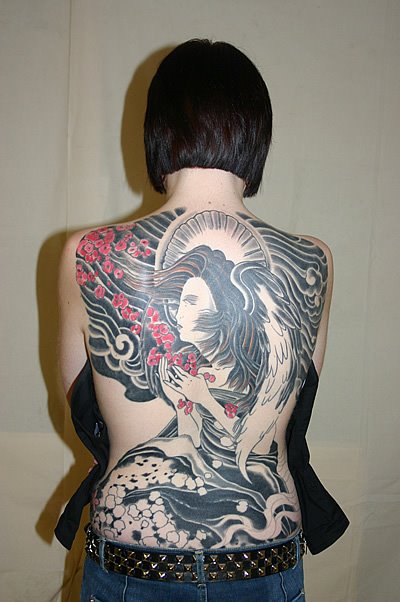
I will admit that there are a few tattoo rituals that I would consider art. The Japanese full body Kanji Tattoos and pure tribal or Celtic tattoos. But have you ever seen one in person? For every photo of an artistically interesting tattoo I’ve seen a couple thousand really bad tattoos. Some are so bad they are comical. You just know they got up the next day and said “Shit! What the hell did I do that for?” Mike Tyson was probably one of them.


I’ve got a proposition to help society out of the carnage of human graffiti. Before an individual is allowed to get a tattoo they need to show a certificate of graduation from an art appreciation course. The class would teach them to understand form, color, texture, proportion, scale, rhythm, balance, contrast and contradiction. They could learn the fashion risk of placing figurative Japanese design next to a black biomechanical design. They could understand the impacts of different colored inks and the patina of the skin’s aging process. The process of getting a tattoo could be elevated to a sophisticated gallery opening instead of a drunken ghetto car wreck. We can only dream.

Maybe the nonconformist judges the world too harshly. The next time I’m hiking across the Capitol Hill district, I should stop and get in touch with my feminine side by getting a tattoo of a butterfly on my crouch just to make me feel “special”. If I did that they would no longer stare and say look at the freak in funkytown.

20060421

The Call

At dawn the telephone rings.

"Hello, Senor Lucky? This is Ernesto the caretaker at your country house."

"Ah yes, Ernesto. What can I do for you? Is there a problem?"

"Um, I am just calling to advise you, Senor that your parrot died."

"My parrot? Dead? The one that won the International competition?"

"Si, Senor, that's the one.""What did he die from?"

"From eating rotten meat, Senor"

"Rotten meat? Who the hell fed him rotten meat?"

”Nobody, Senor. He ate the meat of the dead horse."

"Dead horse? What dead horse?"

"The thoroughbred, Senor Lucky. He died from all that work pulling the water cart."

”Are you insane? What water cart?"

"The one we used to put out the fire, Senor"

"What fire are you talking about, man?"

"A candle fell and the curtains caught on fire."

"What was the candle for?"

"For the funeral, Senor."

"WHAT BLOODY FUNERAL?"

"Your wife's, Senor...She showed up one night out of the blue and I thought she was a thief, so I hit her with your new Tiger Woods Top Flite graphite driver."

SILENCE...................

"Ernesto, if you broke my driver, you're in deep shit."

20060417

Death, Taxes, and our Great Civic Duty


"We must not let our rulers load us with perpetual debt.
We must make our election between economy and liberty
or profusion and servitude.
If we run into such debt, as that we must be taxed in our meat and
in our drink, in our necessaries and our comforts, in our labors and
our amusements, for our calling and our creeds...
[we will] have no time to think,
no means of calling our miss-managers to account
but be glad to obtain subsistence by hiring ourselves
to rivet their chains on the necks of our fellow-sufferers...
And this is the tendency of all human governments.
A departure from principle in one instance
becomes a precedent for [another ]...
till the bulk of society is reduced to be mere automatons of misery...
And the fore-horse of this frightful team is public debt.
Taxation follows that, and in its train wretchedness and oppression."

Thomas Jefferson
Monticello, July 12, 1816


The collection of any taxes which are not absolutely required, which do not beyond reasonable doubt contribute to the public welfare, is only a species of legalized larceny. Under this republic the rewards of industry belong to those who earn them. The only constitutional tax is the tax which ministers to public necessity. The property of the country belongs to the people of the country. Their title is absolute. They do not support any privileged class; they do not need to maintain great military forces; they ought not to be burdened with a great array of public employees. They are not required to make any contribution to Government expenditures except that which they voluntarily assess upon themselves through the action of their own representatives. Whenever taxes become burdensome a remedy can be applied by the people; but if they do not act for themselves, no one can be very successful in acting for them.

Calvin Coolidge
Inaugural address, March 4, 1925

20060416

Where Broken Toys Go


There’s a place where disappointment and despair reigns. It is a place where disbelief, sadness and anger is concentrated so intensely that light and joy can not penetrate. This place is Gate 35 at Reagan National Airport in Washington DC. It took a number of consecutive trips before I realized the true nature of Gate 35. It is the place where broken toys go.

Over the past six months I have had the occasion the travel to Washington DC via Reagan National five times. Each one of these trips was a Friday single one day bender, where I would awake at 4:00 am in order to catch the 6:00 am flight to Reagan National. The early morning flight was always uneventful and usually arrived early. The clue I was overlooking was that we would not arrive in Washington at Gate 35. In order to conduct a full day of business in the city I would book the last flight home which was the 7:30 pm flight from Gate 35. Each time the same pattern emerged.

Always on schedule, I would arrive at the airport a little over an hour early to check in and grab dinner. Reagan National is one of the best airports in the nation to eat at. In the concourse are a good sushi bar and the famous Legal Seafood restaurant from Boston. Time usually permits a quality seafood dinner and a couple of cocktails before I head off to Gate 35. As soon as I arrive at gate 35 despair is waiting to greet me. The flight is delayed 45 minutes. The aircraft has had some mechanical issue in Charlotte. I sit down to wait it out. Approaching 45 minutes later the next announcement informs us the repair has taken longer than expected and the plane in now leaving Charlotte. The target departure time is now 9:00 pm.

The entire group in Gate 35 shakes their heads and sighs in disappointment. Approaching 9:00 the next announcement comes. There is now a series of thunderstorms somewhere between Charlotte and Washington and the plane is being held in on the ground Charlotte. You guessed it another 45 minute delay. Sadness covers us like a blanket. People are getting tired and restless when the next announcement starts with a positive statement only to raise hopes that would be later dashed. “The plane from Charlotte is in range of Reagan National, ………but the weather has stacked up other flights and air traffic has placed a flow control on all planes landing………..so the flight from Charlotte is in a holding pattern for…….45 minutes……….departure time is now estimated at 10:30 pm.”

Beaten and battered it appears this last announcement is the last. The plane arrives at Gate 35 and we are loaded in silence resignation. I find my seat and sit back for the two and one half hour flight when another announcement comes. “Sorry for the delay……….We’re in the process of restocking and refueling the aircraft………..as soon as it is complete we will be leaving.” Having broken everyone’s spirit and will, they no longer feel it important to inform you that this in another one hour delay. Eventually the plane pushes off Gate 35 sometime around 11:30 pm more than four hours late. The pilot attempts to salvage the dismal performance with another announcement “Thanks for your patience……We are asking air traffic to reroute us so we can make up some lost time……Sorry but we were not able to completely restock the plane so there is no alcohol.” It crosses my mind that I should have been home almost one hour ago and there is nothing short of traveling faster than the speed of light which would save enough time to make up for this evening. The clock strikes 1:45 am when I get home. I have now been up for almost 22 hours.

Most people do not travel enough to understand the pattern that emerged with Gate 35. Each time I have traveled through Gate 35 the same thing happened. The story would slightly change as different gate agents added their own color commentary and embellishments. Around the third flight, I got it. I would get to Gate 35 and ask about the status of the 11:30 pm flight. The gate agent would reply “Sir we do not have an 11:30 pm departure, our last flight is at 7:30 pm.” I would argue the point with her “You do have an 11:30 pm flight you call it your 7:30 pm flight because no one in their right mind would book the 11:30 pm flight. Since you would be flying an empty plane you just decided to call it a 7:30 flight, past history proves that it is really the 11:30 flight.” At this point I would get one of those sit down and shut up or you will be on the 10:30 am flight tomorrow. At 11:30 pm as the gate agent takes my ticket I would say “My god I need to get my watch fixed its running four hours fast again.”

It took me a while before I could my finger of the exact feeling the passengers of Gate 35 were experiencing. Then I realized that we were all broken toys that could not be taken in the sleigh with Santa on Christmas. What disappointment and despair knowing that you were not going on that incredible journey. We were discarded like broken toys; our heartbreak would show as we resigned ourselves to a wasted life without purpose. I began to study the psychology of despair in the new toys that they were informed that they were broken and would not be traveling with Santa.

I have to admit that the world of broken toys can be ugly and cruel. As one of the oldest broken toys having missed Christmas many times in the past, I would sit with some of the older toys who knew the routine and watch the new toys arrive. Gate 35 established its own hierarchy like a prison yard. We appointmented ourselves as the yard leaders. The new toys would look to the gate agent as the prison guards assuming that good behavior would reduce their sentence, but in reality no one was safe in the prison yard. What did we have to worry about? We knew we were on death row and nothing would same us from this four hour delay.

We would watch each new toy arrive to the check-in desk only to learn their fate. They would hurry to the counter with eager anticipation smiling what they made the gate early. Shoulders erect with innocence, hopeful eyes. Then at the announcement, they would gasp or sigh. The shoulders would slump; the eyes would turn dull, while they skulked into a corner to lick their wounds. We would gain great entertainment value at the misfortune of others. Why not, we owned the yard.

It ended up being really funny watching these people. We would sit at the edge of the seating area so you have to pass us to get to the counter. As a new toy would approach we would whisper to them “the gate agent is in a really bad mood and that one more problem she said she would delay the plane so be careful.” They would look at us like we were crazy. As they stood at the counter we would try not to giggle. Then the announcement came and they would look over at us like we were fortune tellers. We would raise our hands high and shrug, screaming “Oh man what you go and do that for? We told you.” As they walked back to a seat in Gate 35 we would howl.

Just a word of warning next Friday if you’re headed to gate 35 at Reagan National we’ll be waiting for you. It’s a place where disappointment and despair reigns. It is a place where disbelief, sadness and anger is concentrated so deeply that light and joy can not penetrate. You don’t know it yet but this is where broken toys go and you’re one.

20060414

The Wire

There’s hard silence
On the end of a wire
Like the free trial
Time will expire

A book of photos
Gathers dust
Along the way
I lost the trust

It is her life
She can not share
If I was to fall
She can not care

Hoping to escape
She had a scheme
A distance shore
She builds a dream

Asking for little
Wanting too much
I look at the wire
Barely in touch

Should I let go
Adrift from shore
Tides wash away
Never was before

There’s hard silence
On the end of a wire
What does it matter
Only fools desire

20060411

Profusion on the Plains


Behold, my friends, the spring is come; the earth has gladly received the embraces of the sun, and we shall soon see the results of their love!
Sitting Bull

The prairie earth has erupted into exuberance and life. A mild winter followed by a cool March contributed to a glorious spring unsurpassed in decades. In reflection, I cannot ever recall every tree, shrub and flower blooming at the same time. The early blooms of forsythia, magnolia and redbuds share the stage with the late blooms of lilac, dogwoods and crabapples. The daffodils reach for the sky next to tulips. In the average spring this sequence of blooms may extent over four to five weeks as the ground slowly warms and awakes, but this spring all of nature exploded within the same week.

Every view is awash with spectacular color as each species sings in triumph over winter. Every corner is filled with profusion and excess. I have never experienced air so heavily scented with a sensuous mix of perfume. It is a gift to experience another prairie spring as memorable as this one. Today there is no other place I would rather be. I think I’ll turn the phone off, grab a bottle of Riesling and some cheese spending the afternoon at the botanical garden outside of town. I want to lie in the sun and watch this glorious display.

20060410

The Meeting Place


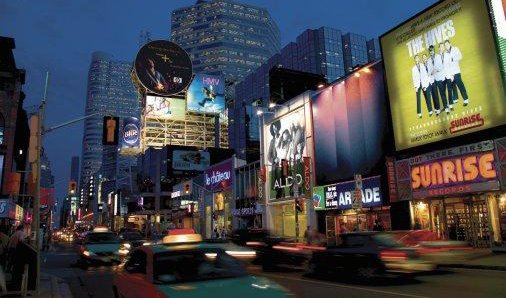
Toronto is a place that I had no image or expectation. My brief internet search before I stepped on the plane provided few clues as to the real identity of the city I would soon be experiencing. It is rare that I travel to a destination completely cold without a list of attractions that I would attempt to visit if circumstances allowed. The list is always more extensive than time ever allows. Other commitments consumed every minute for weeks prior to the trip so the journey had the feel of a scavenger hunt. I was unaware of the hotel I was booked at until I pulled out the memo on the plane. The only fundamental piece of information I knew was that I should expect my cab ride to the hotel to cost about $40.00.

Toronto would not reveal itself immediately. Clearing customs was simple, although a passport will be required by year end. Previous international travel taught me some simple rules. Change some money at the airport so you have local currency for the cab ride. This limits the opportunities for getting short changed by the cabbie. Always ignore the gypsy cab and limo drivers in baggage claim. They are typically planning to give you a real a real ride at twice the cost.

The first impression of the city was a huge traffic jam on the interstate. As we slowly passed the bumper to bumper traffic, I noticed the wide range of ethnic nationalities represented. I would later be surprised to learn that Toronto is the most ethically diverse city in the world.

Toronto is a Huron people's word meaning 'Meeting Place'. In the 1600’s Toronto was very crucial for its series of trails and water routes that led from northern and western Canada to the Gulf of Mexico. Known as the "Toronto Passage", it followed the Humber River, as an important overland shortcut between Lake Ontario and the upper Great Lakes. For this reason Toronto became a hot spot for French fur traders.

Toronto is the 5th largest city in North America at 2.4 million, which are more people than the populations of most of the provinces and territories in Canada. The ethnic diversity is what sets Toronto apart from other North American cities. Toronto is home to virtually all of the world's culture groups and is the city where more than 100 languages are spoken.


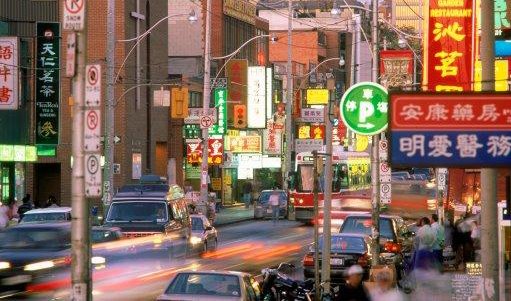
According to the City of Toronto’s website, “once primarily a British and protestant city, immigration has played a dynamic role in the changing face of Toronto since the end of the Second World War. Today, 42 per cent of all Canadian immigrants choose Toronto as their destination and as such, Toronto's visible minority population now accounts for more than 40 per cent of the population compared to 11 per cent nationwide. There are more than 90 different ethnic groups in the Toronto area and over one million non-English or French speaking people. The top ten source countries for immigration to Canada were China, India, Pakistan, Hong Kong, Iran, Sri Lanka, Philippines, Taiwan, Russia and Jamaica.”

It is apparent to the casual visitor that the city has embraced the many cultures of the world and it is working! Toronto has bilingual street signs, specialty stores, ethnic restaurants, ethnic publications and a variety of ethnic shopping centers. It is a vibrant city that at times feels more European than any other city in North America. Unlike other American cities there was not a racial undercurrent of conclaves. The atmosphere on the street was decidedly tolerant and open. Even the street beggars did not have an “in your face” attitude. They would silently stand and open a door to a store for you and politely say “have a nice day”. I’ve always maintained a simple rule for street beggars; you must contribute something to society even if it is a simple act. Act as a part of society not as outcast from it and I will contribute to your cause. Not once in my trip did I experience any individual in the city of Toronto act outside of societal boundaries, although there was clear and exuberate expression of ethnic multiculturism and individualism. I’m sure I could have found trouble if I had enough time, but it was refreshing that it was cloistered out of reach.

During dinner one night I overheard a discussion of two middle aged ladies from Toronto who were discussing the experience of a friend, who had recently moved with her husband to Chicago. She was white and her husband was black. The conversation focused on the racism the couple experienced in Chicago. The two ladies were in disbelief, appalled and dumbfounded that such demeaning and restrictive racial environment existed in the world. The married couple was denied a home purchase in a neighborhood because the husband was black. They described in great detail each of the subtle acts of racism that the couple experienced each day. I found myself quietly nodding in agreement as each violation was described.

The view during dinner from the CN tower.

At the start of the conversation I falsely assumed that the ladies were naïve to big city urban culture which requires a certain level of personal diligence mixed with slight adventure-like tension. Towards the end of the conversation my perspective shifted to the fact that racism and intolerance is alive and well in the states. This paradigm shift was only possible while being immersed in this incredible diverse city without a hint of these issues. For a moment I was able to examine our urban culture for what it was, a series of seething unhealed wounds. I was saddened by the realization that we tend to treat each other as if we are all five years old and are still on the playground. In reality, I must apologize to the five year olds because at that age we are all color blind and could not grasp the concept of racial intolerance.

I continue to wrestle with the meaning of this epiphany. Toronto was a mirror in which I could closely examine myself. Like finding the first grey hair or wrinkle in a once youthful face, you are profoundly confronted with the realization that you are not who you think you are. I am grateful to Toronto for this refreshing slap in the face. I will eagerly await my next opportunity to visit this invisible city on the northern plains which is the most cultural diverse city in the world. Who would have thunk-it???

20060326

Execution of Innocence Photos III


Execution of Innocence Photo II


The Casino Then and Now


The Palace on the National Historic Register (demolished)

Execution of Innocence Photos I


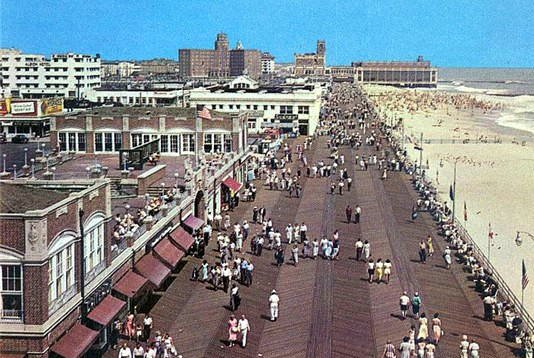
The boardwalk then and now


The Metropolitan Hotel demolished

Execution of Innocence

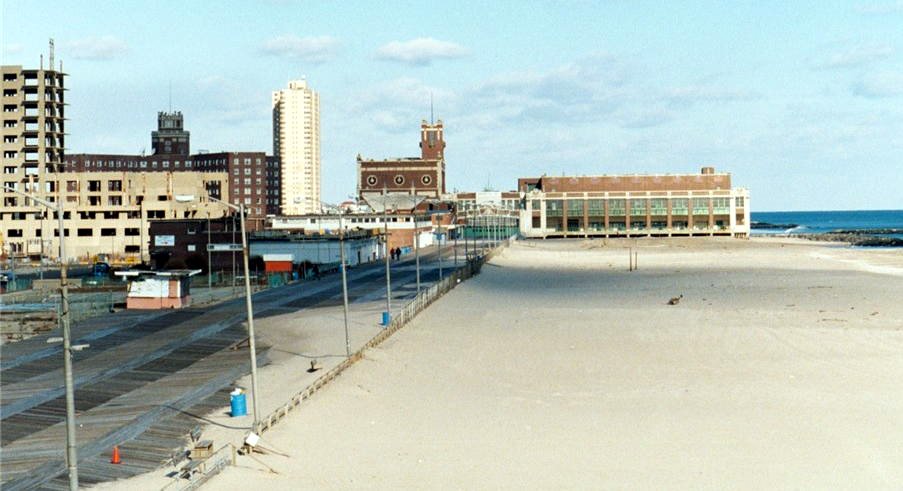
Memories fade and dissipate as time washes over us, like the endless waves pounding the sand. There was sanctuary in being able to return to the places of my youth to reconstruct the physical reality of a time of innocence long past. Walking the streets, the sun touching my skin, inhaling the ocean breeze awakens my sleeping mind. I am able to retouch the tiny fragments of life’s experiences, bringing them slightly into better focus. Like a discarded mosaic each small chip of colored glass captures a ray of sunlight illuminating a deep forgotten detail of the past.

It is with a sullen heart I morn these places that have succumb to insufferable neglect and now been wiped clean from the land, taking with them my ability to travel back in time to converse with who I was. It is a loss as painful as an unrequited secret love that was hidden from the world, but faithfully cherished in the heart for decades without compromise. My loss is intensely personal and deeply troubling. The withering of human flesh is accepted as part of an invariable march to death, but never once did I consider the built world as temporal as it now appears. It is inconceivable how a place can go from a vibrant exclusive center of social prominence and activity to a demolished ghetto of vacant lots in less than forty years.

.
For six years in junior high and high school I casually dated a catholic girl from Asbury Park, named Gloria. Her father emigrated from Sicily as a young boy. The entire extended family lived in a large turn of the century home on Second Street. Her grandmother spoke only Italian. Gloria’s mother emigrated from Hungary in her early twenties and when upset she would revert to screaming at you in Hungarian. Dinner at the house was a true old world experience which would start on Sunday about 2:00 pm and last to about 6:00 pm which most of the time everyone was yelling at each other.

Gloria’s father was a general practice doctor. Three rooms of the family house on the ground floor were set aside for the doctor’s office. What was unusual was that the doctor’s office divided the family’s living spaces and it was necessary to travel through the waiting room and examination room to get from the living room to the dining room and kitchen. It was not uncommon to sit in the waiting room chatting with the patients until the exam room door would open so you could get to the kitchen.

It remains a sad memory when I lost touch with Gloria in college after a tragic event that destroyed and scattered the family. Gloria’s older sister Rosanne was a chronic drug addict hopelessly addicted to the prescription drugs which were always available in the doctor’s office at home. No matter how well secured or hidden Rosanne would find them. When home no longer contained the needed drugs she took to the streets in the emerging drug culture along the Jersey shore. There were at least six failed interventions and attempted rehabilitations before it came to a sad end. One hot summer night Rosanne came home to steal drugs from the doctor’s office and Gloria’s father tried to stop her. It apparently escalated into a violent confrontation which Rosanne picked up a pair of scissors and on the front porch of the house in front of the neighbors and family members stabbed her father to death.

Shortly after without an income the family lost the house and Gloria moved her destitute mother near her while she was going to college at Seaton Hall studying to be a nurse. Gloria’s mother never recovered from the trauma and past away before Gloria graduated college. Rosanne was declared insane and has been institutionalized since that day. The house is a sad reminder of lost innocence.

I spent most of my time in Asbury Park during these years. Before any of my friends could drive I would take the bus after school from Red Bank to Asbury Park five nights a week. The last bus back to Red Bank was at 10:45 pm and if we missed it we would sleep on the beach taking the early morning bus back just in time to go to school. During this period Asbury Park was slightly past its zenith and was in transition.

Founded in 1887, Asbury Park was once one of the Northeast's most popular seaside resorts. In the early 1900s, people who now vacation in the Hamptons would've had their summer homes in Asbury Park. In the early to mid 1900s, Asbury Park was resilient, rebuilding entire sections of the beachfront after surviving devastating fires and hurricanes.

David B. Sokol a writer for Metropolis recalled the significance of the city’s vision in his article “Preserving Asbury Park's Progressive History”.

Now close your eyes and imagine Asbury Park without this decrepitude and you can see that Bruce Springsteen's adopted hometown is also home to great urban design. This dates back to 1873 and James Bradley's plan for the place that blended urban, suburban, and resort types in a way that fostered comfortably traditional and uniquely progressive design.

The city streets tell this story. Avenues, lined with residences and hotels, flare outward near the beach in order to capture ocean breezes and to more widely distribute them. In the downtown area south of the central Asbury Avenue, the pavement assumes a different personality. The triangulated street grid signals your placement in this high-density commercial district.

Asbury Park's waterfront offered another variation on scale. The palaces and the hotels increased residential density by the water, exactly where people wanted to be. Today's voids were once crowded with the theater of the street. And the waterfront served as a blank canvas for the exuberant Victorian and Populuxe architecture of the shoreline landmarks."

Between 1871 to the time of his death in 1921, James Bradley was deeply involved in every aspect of the development of Asbury Park. He planned the layout of the area before the first structure was built. He set aside park lands and waterfront areas. The urban scale blocks, remarkable in the 100-foot width of the avenues, flaring to 200 feet at the ocean, to this day provide a feeling of spaciousness often lacking in seaside resorts.

Bradley took full advantage of the natural assets surrounding and contained within the 500 acre tract of land he purchased. The land surrounding the three lakes within city limits were designed as public areas. He planned a plank walk along the ocean for strolling and restful enjoyment of the shore area. Bradley wanted a special character for Asbury Park and donated land to religious and civic groups, offering only large residential lots. Most of the churches front 100-foot-wide Grand Avenue and are surrounded by large Victorian-style "summer" homes.

Asbury Park, in 1881, was the first seaside resort on the American continent to adopt a perfect sanitary sewer system. Water was supplied to the city from the very beginning from artesian wells. In 1885, a trolley system was constructed that circulated from the train station through the shopping district and beachfront and then through the residential areas. Asbury Park's trolley system was the second electric system in the United States; previous trolleys were horse drawn. Asbury Park was the first community of the Monmouth County coast to use the electric light service starting June 20, 1885. The first "Baby Parade" was held in 1890 and became a yearly event. In less than 25 years Asbury Park had become renowned throughout the country for its grandeur.

In “A Brief History of Asbury Park”, Florence Moss describes the resilience of Asbury Park during its rejuvenation from disasters.

“On April 5, 1917, Asbury Park experienced its greatest fire. Four blocks of hotels, boarding houses and residences, part of the Boardwalk, and the First Methodist Episcopal church, a total of over 50 buildings, were destroyed.

Asbury Park recovered from the fire and severe devastation caused by a winter storm in 1923 with a building boom. Among the buildings built during this rejuvenation were the Santander, long known as a posh summer apartment house, the Berkeley-Carteret, Convention Hall and the Casino. The Casino and Convention Hall were designed by the architects Warren and Wetmore, who designed New York's Grand Central Station. Convention Hall, a unique structure, also included on the State and National Register, would fit comfortably on St. Mark's Square in Venice.”

By the 1930s, the city had become "the" place to be on the Jersey Shore. There was a swan boat and paddle boats on Wesley Lake, pony rides and miniature golf on Ocean Avenue. A foot bridge crossed Ocean Avenue near the Berkeley-Carteret, providing easy access to the many pavilions, several of which provided both fresh- and salt-water swimming pools. During the evenings, noted "Big Bands" played at the various pavilions for dancing.

Beginning in the 1960’s, as suburbanization and automobiles flourished, Asbury Park floundered as a vacation destination. Newly mobile visitors became daytrippers rather than long-term guests, and the hotels floundered in their wake. Race riots in 1970 were the defining event for the abandonment of a rich legacy on the shore.

Most of my personal experiences with Asbury Park were between the mid 1960’s to the late 1970’s as an adolescent teen. It was magical time of discovery and exploration while growing into manhood. While still vibrant Asbury Park’s transition from grandeur to a counterculture stronghold added to the diversity of cultural experience for a young man to immerse himself. The mix of old grand hotel resort culture contrasting with the new emerging gay, multi-racial, hippy drug culture under the bright amusements lights on the ocean was absolutely irresistible. The world was a much different place. Remember summer of love and Woodstock occurred during this period of exploration of values and sexual expression.

We were kings of the world. We were invincible and fearless looking for adventure under the summer moon. We were blessed with all the gifts of youth. My sun bleached brown hair cascaded past my shoulders. Our perfectly sculptured bodies and lean frames hardened by physical labor were covered by soft supple skin bronzed by the sun. Life on the shore was electric and palpable as you felt the energy leap from your skin in sparks. Our desire was inexhaustible as we strolled in our kingdom. Never have I felt in more control of the world.

The days were filled by swimming in the ocean and lying under the sun. The scent of sun tan lotion mixed with the creosote of the boardwalk and the ocean breeze. A constant hum of children laughing while running with the waves and the screaming of people on the roller coaster filled the air. Then we got bored, we would walk to the arcades and play pin ball or skeeball while smoking menthol cigarettes in the shade. My lunch of choice was a greasy softshell crab sandwich, fries and a coke followed by a handful of salt water taffy. You could watch the taffy being made in the front window of the candy store. Two big stainless steel forks wrapping and stretching the taffy as someone added the favoring.

Each night would bring hundreds of adolescent girls to the boardwalk as eager for adventure as us. Tan perfect bodies in shorts and halter tops with attitude yearning to explore life under the sun and the sand. Courtship was brief for the night was short. For a few hours we would ride the amusements, play miniature golf or go to the palace to ride in the tunnel of love then grab a slice of Neapolitan pizza with anchovies. My favorite ride was a wire cage about the size of an elevator cab. You could fit one to four people in it as they closed the door. The cage was like a swing where you used your body weight to move the cage back and forth to swing higher and higher. After a working at it, the cage would complete a full 360 swing lifting you high above the boardwalk where you got a board view of the shore. It was a ride that required physical endurance. You would be exhausted and drenched in sweat after a few attempts.

We could always follow the crowds to the Casino to let the girls ride the grand carousel. The carousel house would shimmer and sparkle in the summer night as the brightly colored horses whirled in circles. We would watch hypnotized by long flowing hair of the girls as they would capture your heart with the wide smiles and inviting glances. From around the corner you could smell grilled onions and popcorn. Sadly the carousel which was the largest in the world for a time was dismantled and each of the exquisitely carved horses was carted away to suburban bedrooms in station wagons after an auction.


"And the wizards play down on Pinball Way on the boardwalk way past dark
And the boys from the casino dance with their shirts open like Latin lovers along the shore Chasin' all them silly New York girls"

Bruce Springsteen, "4th of July, Asbury Park (Sandy)"


After a while we would retreat to the beach. For the next couple of hours we would sit in groups around a driftwood fire telling jokes and displaying feats of skill to impress the girls with sounds of the waves crashing in the background. Deep bass sounds of the rock concerts in both the Casino and the Convention Hall would drown out the hum of the boardwalk. We would pool our money and buy couple of bottles of a Portuguese wine called Matus to impress the girls. Lying on our backs arm in arm staring at the stars, passing the bottle of Matus around along with a couple of joints we would begin to drift into couples. There was never much pressure about the ritual, if you didn’t find the right dates both boys and girls would wander back to the boardwalk to try again.


"Beyond the Palace hemi-powered drones scream down the boulevard
The girls comb their hair in rearview mirrors
And the boys try to look so hard
The amusement park rises bold and stark
Kids are huddled on the beach in a mist
I wanna die with you Wendy on the streets tonight
In an everlasting kiss"

Bruce Springsteen, "Born To Run"


The lucky nights the two of us would quietly drift away from the bright lights and walk to the dark secluded sand dunes north of the Convention Hall. Along the way we would stop at the car to pick up a sleeping bag and another bottle of wine. Sitting alone in the sand dunes we would share our deepest secrets and greatest aspirations as the cool ocean breeze would delicately blow the hair from her shoulders. Her eyes would sparkle reflecting the moonlight as the mysteries of the world were revealed to us. In our naked solitude we would explore each other’s heart and soul with tenderness. The scent of womanhood mixed with strawberry perfume and salt air was intoxicating and exuberating. Her lips tasted of sweet wine and anticipation. We would fall asleep naked in the sand dunes waiting for the sun rise while the ocean sang us a lullaby.

I can assure you there is nothing more memorable than waking secluded on the beach to a spectacular sun rise over the ocean with a beautiful perfect tanned naked body holding you while she sleeps. The early morning chill makes her body all the more warm and soft. To this day there are a couple of perfumes of the era that will stop me cold and bring me to my knees in reverence of the power they still invoke in me. I am deeply grateful to all girls than shared my innocence with such tenderness.

After a few hours of talking quietly the beach would begin to fill with bathers for the day. We would smoke one last cigarette, get dressed and seek food. Walking barefoot we would pass Convention Hall and climb the long circular ramp to the second story of the Howard Johnson’s restaurant on the boardwalk. Seated at a table along the window you could see the entire extends of our kingdom along the boardwalk extending to blue horizon with the sun beginning to warm the sand. I would order a fried egg sandwich on a hard roll with cheese and pork roll along with a cup of black coffee. We would quietly eat breakfast in silence stealing smiles as we looked in each others eyes hiding our secret from the other diners. We would make plans to meet again which was a polite pretense which might not happen. We would kiss in a final embrace. As she walked away she turned to glance with a coy smile, her sun bleached hair dancing in the air. Each girl would take a small piece of my childhood innocence with her. No time to feel remorse the adventures of the night would begin again in a few short hours.

I witnessed the defining moment in time when Asbury Park’s death sentence was signed. I never realized its significance at the time or actually for the next decade. I was at a rock concert in the Convention Hall on a hot July 4th night in 1970. The show ended and we were expecting to watch the traditional firework display on the boardwalk. We exited the hall to find the world in total chaos. Police were wildly shouting in bullhorns to the crowd that the city had been placed under a marshal law curfew and that we should go home immediately. I thought it was a joke but there a dangerous pall in the air. As we started walking to the south I noticed the entire western sky was fire red. The city has erupted into a race riot. For the next five days chaos owned the city. Large areas of the downtown burned with over 100 people injured and 46 people shot by the police or snipers. It was never clear how the riot started, but tensions still ran high from the assignation of Dr. Martin Luther King two years earlier. From that day on fear gripped the businesses and tourist industry. Asbury Park was a social leper and would never recover.

Today, despite having a sizable yearlong population, Asbury Park is a ghost town. Writer David B. Sokol noted.

Nostalgic visitors looking to reminisce about childhoods spent riding the Swan Boats and Ferris Wheel find that even in the summer the boardwalk is quiet. There are no ice cream or pizza stands, no arcades, no games of chance and no souvenir shops. Only the Howard Johnson's and a lone antique shop are open occasionally. Ocean breezes bring banging and creaking noises from the skeleton of a condo tower left unfinished when money ran out in 1994.

As late as 2000, a majority of the picturesque structures from Asbury Park's long history remained standing. Though boarded up or falling apart, they gave visitors a hint at her once grand past. One by one these buildings are being torn down to make way for new construction that never happens. While the decay of these buildings was sad, the vacant lots that increasingly replace the hotels and amusements that used to welcome visitors are even sadder.”

The Casino Landing then and now.


Another assessment of the city noted.

By the appearance of its waterfront, the doldrums seem to have a clenching grasp on Asbury Park, N.J. Abandoned entertainment palaces of the late Victorian era and hotels of the early automobile age sit amidst cracked asphalt parking lots that divide beach and city. Imposing towers of senior and subsidized housing create the same effect writ larger, and the dilapidated rooming houses nearby ensure that you feel less than welcome here.”

I found myself spending days looking for photos of Asbury Park and with each one my heart was saddened by another building demolished or neglected to the point of collapse. I am still in shock and cannot comprehend the total and complete devastation of the spectacularly beautiful and proud resort on the sea which defined glamour and elegance. Is society so arrogant that is can discard and obliterate centers of history. What does this say about our future? When will we run out of new neighborhoods to defile and neglect before we find value in the ones we have? There was a common message in all the newspaper accounts by the developers and city officials. “Its costs too much, we need to make way for progress.” What a fallacy! Each building removed from the landscape or allowed to fall into disrepair reduced the value of the rest. This eroding tax base was followed by the flight of residents which allowed the next building to be demolished. Eventually property values declined to the point that even the bare ground was worthless except for speculation. It reminds me of the old saying “if you can’t eat it or fuck it, just shit on it”.

The departure of innocence is replaced with a deep and dark cynical opinion of the future. The execution of my innocence in now complete, I can not visit the past except in faded memories. Excuse me while I morn my dear friend.