Showing posts with label Life. Show all posts

20100424

Arc of the Chasm


“We shall not cease from exploration. And the end of all our exploring will be to arrive where we started and know the place for the first time.“

T. S. Eliot (1888 - 1965)

One grey overcast morning you wake up discovering the existence of a wide chasm that you are sailing across. The distance between the two points of reference is immense striking insecurity in your soul that you are floating high above the rocks without a way to land on either shore comfortably. On one side of the chasm is the life you have created with all of its obligations, responsibilities and familiarities holding you swaddled in the security of a warm blanket? On the other side is the extent of your dreams, aspirations and desires for which you planned to become, seemingly taunting you for your lack of accomplishment. Disillusionment fills thoughts while attempting to understand how the distance between the two became so great. When did the two lives diverge? Why am I unable to project the arc of my life in such a fashion to be closer to the later instead of the former? Is it a common condition of humanity to settle for compliancy and underachievement, or is it a cruel conspiracy of existence that we always craft our dreams into unachievable expectations? Daily distractions are the soma that numbs personal thoughts leading to critical evaluation while we toil away at small insignificant tasks unable to recognize that they have little meaning in the big scheme.

Having spent endless hours staring at the blank white wall of a hospital room in silence provides a perspective of internal reflection few will experience. The process demonstrates the fragility of life that tends to get ignored in the pursuit of racing the clock, but at the same time it reveals the meaningless activities we surround ourselves in becoming a slave to our possessions and constructs of routine. Do not assume in the smallest regard that I am ungrateful for the miracles of recovery that I have been blessed with. I live a sacred life that few can dispute having seen how arbitrarily life can be extinguished or restored between heartbeats. This experience clearly draws into focus how little time exists to accomplish our dreams, while openly ridiculing us at proceeding at a pace that will leave so many aspirations and experiences unfulfilled. I have been given the wisdom to have a perspective of life that is unique, seeing through all the trials and tribulations as if they are rain falling from the sky, destine to be shed without concern and like a raindrop they are transparent unable to conceal their relationship with the streams and rivers that flow endlessly to the sea. Clarify has been the gift I have been given though the intensely personal crisis I have lived twice. Clarify to see what is important and what is not, what is meaningful and what is obtuse, what a distraction is and what brings us closer to achieving a dream.

Clarify does not however allow us to be unencumbered by the morass of our routine and rituals, it just points out the contradictions in our life, begging the obvious question why do I allow myself to be who I’ve become instead of who I wish to be? This is the dilemma of the chasm. We must abandon the comfort of what we know and have sufficient faith to clear the chasm in order to achieve what we desire. I aspire to live an extraordinary life of purpose that makes a difference. With my new clarify of perspective I am angry and increasing bitter at how little progress I continually made toward this goal. In part our new economy is driven by fear and personal interests which diminish the concept of added value of which I have structured my entire business. I am discovering that my old world values of providing added value to relationships is meaningless in this new economy and as a result my ability to make a difference is increasingly futile. The origin of my anger is at the personal sacrifices and investments I have made in people and institutions that are not recognized nor appreciated. At what point is it time to abandon everything I know and go rogue, severing the burden of social responsibility in pursuit of personal exploration and achievement. Be assured that the journey would be much less tedious than trying to drag the entire world along with me. Many days it seems that abandon of social responsibility would never be noticed by the world in general or more incredibility by those closest to me, my staff and collogues for they are so preoccupied in maintaining the routine that they are unable to develop the situational awareness to understand the investment required to jointly succeed in a world that has abandon reason. I find the resentment and angry growing when I am the one sacrificing everything I have saved over a lifetime, investing on the behalf of others in what provides so little equity and so little recognition.

Many have responded to me that the primary difference is that I own the company and I find that line of reasoning appalling. My motivation is not in the title, it is not in the authority, it is not in the power of control, it resides in the opportunity to lead an extraordinary life of purpose. Ownership does not dictate the level of passion one brings to an endeavor; ownership does not instill a commitment to excellence, just because you are an owner does not change anything other than the degree of risk you are will to engage in to live a life of purpose. Ownership is only a vehicle to funnel the commitment that already exists within. The ownership issue is a convenient excuse not to make the investment, to accept mediocrity in execution, to explain the gap between the leadership and the contented. I don’t buy it, in every action we consciously make the decision to succeed or fail by the level of investment we make.

Here I remain, disappointed and angry at myself for not achieving an extraordinary life under the burden of trying to accomplish it within the social context. The time is quickly approaching where I need to decide to accelerate obtainment of my aspirations or to diminish my dreams so I can sit on the edge of whom I’ve become and who surrounds me, fooling myself into believing that being more is unimportant. It is within this context of indecision and doubt that I embark on a small diversion into exploration of the chasm which divides me. Call it a retreat, a sabbatical, a discovery, running away, or whatever you want, but I am on my way to get lose in the wilderness of Big Sur at the edge of the Pacific.

Driven back to the source of my strength I seek the majestic power of the ocean when it meets the earth. I need to be lost in the senses of wind, fog and salt as my muscle burn scaling the isolated bluffs and craggy outcrops of vernal pools and tidal basins. I need to be immersed in the solitude of nature’s timeless wisdom, in the scent of redwoods that have remain unchanged for centuries, in the new spring wildflowers which nod on the sodden hills for I have been lost for so long. I find myself eager to disappear if only for a few days, to where I can feel the cold sand on my skin, where the sharp thorns of sage will punish my skin for its absence, where I can lead an extraordinary life devoid of mediocre execution, devoid of dying embers of social compliancy.

Within this wilderness I shall explore the chasm, scaling its walls of disappointment, fording its rivers of hopelessness, examining in detail the paths and routes which can carry one back to the summit. There is no simple tourist map that can point out the trail, for the chasm can only be revealed and understoodd from within its dark shadows as my breath deepens in anticipation of the exploration. It is within the canyon that I hope to begin the dialogue of healing the divide. My pace increases knowing that the end of my life is gaining ground on me, beginning to handicap my ability to physically and mentally achieve all that I dream. Within an hour I will be in a rental car clearing the expansive fields of garlic beginning to climb the ridges protecting the Pacific from the distractions of the rest of the world. The sun will be setting as the long soft shadows grow from the scattered oaks on the rolling hills. The announcement to fasten our seatbelt blares overhead as I look at the clouds and see a long forgotten smile reflecting in the glass window of the plane. I am content in the fact that I am changing the arc, I am beginning to turn the tide as the journey begins with this first step.


“In human life, art may arise from almost any activity, and once it does so, it is launched on a long road of exploration, invention, freedom to the limits of extravagance, interference to the point of frustration, finally discipline, controlling constant change and growth. “

Susanne Langer (1895 - 1985)

20090318

What If?


“Depression is the inability to construct a future.”

Rollo May


Caught unprepared, the slap stung my cheek probably because it was so unexpected. I guess it was an attempt to awake me from this darkness which haunts me. Just pick yourself up, walk it off, its time to cowboy up. Your despair and loss is not unique, you are barely average at best, this shit happens to people everyday. If you want to compare scars look at this. My demons are stronger and bigger than yours. Get use to fact that you are powerless, inept, and drowning in self pity, that’s just the way it’s going to be, so swallow and take your medicine. The words bite me, striping me naked. I’ve always dreaded the precursor “You probably don’t want to hear this, but” because it’s always been an invitation to level a shotgun at my view of reality. It has now become apparent to those around me that I have reached a wall which I can’t surmount. Call it burn out, depression, midlife crisis, or whatever I can no longer conceal it behind a stoic resolve, I can no longer turn it into anger and use it to clear the next hurtle. For the first time in my life I cannot find the pleasure in spring for I am frozen in a winter of blue unable to move forward.

The essence of my self destruction sends me spiraling down a black hole of apathy, a marriage between nightmares and headaches. Some days it's just not worth chewing through the restraints as I bleed like the stream, pouring sorrow into the ocean. It is like I am standing in a room without any doors. The room is plain white and its only distinguishing feature is its corners. Believing that every corner contains the answers I seek, I claw at them feverously. However, the answers I seek can not be answered by the questions I ask and the corners only torment me. Silently I hope to find the answer, but my hope is fading as I stand in this white room with no doors, no longer wanting a way out. I am assaulted by the clichés just breathe, just put one foot in front of the other, take one step at a time, tomorrow will be better, there is a light at the end of the tunnel, it’s the darkest before the dawn, things will get better, but ringing in my ears the clichés are of an ancient dialect that I don’t understand. Do not try to take my sorrow from me; it is the only thing that comforts me right now.


What if your fears and dreams existed in the same place?
What if to get to heaven you had to brave hell?
What if everything you ever wanted cost you everything you ever achieved?
Would you still?

20080218

The Instinct of Hope


Tomorrow is a day of recompense of which the future is uncertain. Once again a surgeon’s cold steel will exorcise evil in the weakness of flesh. Hopeless to change what is written in blood of the innocent, breathless I shall wait for fate to be revealed. In the darkness of the night the landscape is barren except for the warm glow of the instinct of hope.


Is there another world for this frail dust
To warm with life and be itself again?
Something about me daily speaks there must,
And why should instinct nourish hopes in vain?
'Tis nature's prophesy that such will be,
And everything seems struggling to explain
The close sealed volume of its mystery.
Time wandering onward keeps its usual pace
As seeming anxious of eternity,
To meet that calm and find a resting place.
E'en the small violet feels a future power
And waits each year renewing blooms to bring,
And surely man is no inferior flower
To die unworthy of a second spring?


John Clare (1793-1864)

20080203

The Blackness of Gravity

A Perfect Storm of Turbulent Gases in the Omega-Swan Nebula, Photo by NASA

“Gravitation is a natural phenomenon and one of the fundamental forces by which all objects with mass attract each other. In everyday life, gravitation is most commonly thought of as the agency that gives objects weight. It is responsible for keeping the Earth and the other planets in their orbits around the Sun; for keeping the Moon in its orbit around the Earth, for the formation of tides; for convection (by which hot fluids rise); for heating the interiors of forming stars and planets to very high temperatures; and for various other phenomena that we observe. Gravitation is also the reason for the very existence of the Earth, the Sun, and most macroscopic objects in the universe; without it, matter would not have coalesced into these large masses and life, as we know it, would not exist.” (Wikipedia, 2008)


Beyond a critical point within a finite space, freedom diminishes as numbers increase. ...The human question is not how many can possibly survive within the system, but what kind of existence is possible for those who do survive.

Frank Herbert (1920 - 1986), Dune

The kinematical and dynamical equations describing the trajectories of falling bodies are considerably simpler if the gravitational force is assumed constant but bodies never fall in unison. This theory is useful to explain the dilemma we all face in the search for happiness and spiritual balance. Humans by their nature, encoded deep into their being are solitary souls that preserve a secret world of existence that is inaccessible to all. I call this the secret garden where we sequester our hopes, fears, desires, and the inner realm of our dreams. Over the course of a life we allow precious few to glimpse past the door of the garden. All of us float in isolation in space subject to the attractive or repulsive forces of gravity. Our family, friends, relatives, mentors and strangers all exert the force of gravitation on us to varing degree. In thermodynamics the closer two bodies are the greater the gravitational bond, although this might not be the case with spiritual influences.

As the gravitational pull grows within the closest of relationships an elliptical orbit is established which represents a balance of energy for a small moment in time. We find our selves falling into comfortable orbits that may or may not allow the individual to nourish and tend the secret garden. As relationships build and families grow the gravitational forces change and shift, creating new orbits some of which are closer, others than travel further from the nucleus. It’s most important to realize that at any moment in time everything is in constant motion and dynamically changing. Each new experience, each new acquaintance, each new flower in the secret garden changes the balance of gravitational forces in our lives. Relationships in order to survive must allow orbits to change and seek new balances. Excessively close orbits can implode and collapse like a black star, consuming all light and energy, destroying both bodies. These orbits are inherently unstable and destructive, but the pull of gravitational forces appears too great to overcome creating a death spiral in the secret garden as the blackness of gravity blinds us.

The Aristotelian theory of gravity was a theory that stated that all bodies move towards their natural place. For some objects, Aristotle claimed the natural place to be the center of the earth, wherefore they fall towards it. For other objects, the natural place is the heavenly spheres, wherefore gases, steam for example, move away from the centre of the earth and towards heaven and to the moon. I like to think that all bodies move towards their natural place eventually overcoming the influences of gravitational forces that traps us into artificial or obsolete orbits. Therefore is becomes our primary challenge to find our natural place where the secret garden flourishes. We must always be moving toward finding the natural place regardless of the consequences, because denial of this state of balance is spiritual destruction and emotional bankruptcy. In this balance a new series of orbits will be established that foster personal growth and fulfillment.

This explanation oversimplifies the inherent contradictions in life which is the duality of existence. Gravitational forces are just one example of the duality of life, being pulled in two directions by opposing forces. We all seek to balance between opposing forces in seeking happiness. Yet it must be understood that happiness is illusionary always fleeting and can not be guaranteed without constant toil and mental exertion. Each of us must always tend the secret garden, unending in our journey to find those precious few souls which we can allow for a moment in time a glimpse past the door into the garden. Over the years, I have become comfortable with the duality of life, since most of my existence is bifurcated by travel, a constant state of disconnection. Acceptance of the duality of life in seeking our natural place, our balance, while always in motion and changing is the essence of spirituality and emotional bliss.

Many religions embrace the struggle in finding balance in the duality of life. Hinduism seeks enlightenment through the acceptance of Advaita or the concept of oneness with the duality of life. Advaita (a+dvaita = non-duality) simply means that the Source, by whatever name known - Primal Energy, Consciousness, Awareness, Plenitude, God - is Unicity, Oneness, Non-duality. The manifestation that arises or emerges from the Source is based on duality, the inevitable existence of interconnected opposites: male and female, beauty and ugliness, good and evil. At any moment there are bound to be interconnected opposites. The sage accepts the duality that is the basis of life and is anchored in peace and tranquility while facing the pleasures and pains of life exactly like the ordinary person. The ordinary person does not accept the duality, the existence of interconnected opposites at any moment of life, chooses between them and is unhappy.

In the teachings of the Yoga of Devotion Retreats, the sage accepts the 'duality' of life; the ordinary person chooses between the interconnected opposites, and lives in the unhappiness of 'dualism'. The man of understanding certainly sees preferences being made in daily living between the polaric opposites, but is totally aware of the fact that the preferences happen according to the individual programming in each case, and are not made by any individual person doing the preference. The man of understanding is, therefore, always in tune with the Source or in balance with gravitational forces. When the final flash of total understanding happens, it is not at all unlikely for the individual to realize the unbroken wholeness of the universe and to clearly see the whole range of polaric opposites as a great illusion or a play of a feigned quarrel between lovers.

Another source of insight and inspiration on the challenge of duality is from a chapter in the book 'The Tao of Physics'. A basic conjecture in Tao, the Chinese philosophy is that there is an underlying equilibrium of two opposing forces in nature. The Chinese call these the yang and the yin. The yang symbolizes the masculine nature of reality, the rational, calculating, analyzing side; whereas the yin represents the feminine, the more sensitive, delicate, conscious side of things. Chinese believe that all human life is interplay between these two forces, and equilibrium is desired between the two for a smooth functioning of things.

This duality is not only seen in human nature, but also in all things in life. Every aspect of life has this dual nature, or rather everything has these seemingly opposite extremes to itself. Good-evil, success-failure, life-death, expansion-contraction, up-down, positive-negative are all examples of these opposites. The greatness of Tao and Hindu philosophies lies not in the realization of this duality of things, but in overcoming the so-called opposite natures of the duality, and realizing the underlying unity in them. It is the art of seeing good in evil or success in failure and living between the lines in harmony.

The duality of life is most prominently in conflict between our inner secret garden and the world around us which requires allegiance and strict codes of behavior. Whereas our dreams, hopes and desires more often lead us into an orbit which is in conflict with the gravitational forces that are pulling us in another direction. It is the inability to escape artificial or obsolete orbits which fuels conflicted emotions and ultimately creates greater and greater instability as one suppresses the need to seek the natural space of self actualization. Living to sustain another’s orbit is not living at all, its indentured servitude of a life denied.

In the early 20th century, Sigmund Freud attempted to define the duality of the human mind with the psychoanalytic model of the id, ego, and superego. Freud posited a structural model of the mind in which these three parts interacted and wrestled with each other for dominance; the result of this constant struggle is the whole of each human's behavior. The gravitational forces that we place upon ourselves are also in constant motion, ebbing and flowing attempting to seek a natural balance. Any state of emotional equilibrium is fleeting as we grapple with new thoughts and experiences.

The term id is derived from Latin meaning inner desire and is dominated by the pleasure principle standing in direct opposition to the super-ego. “The id is responsible for our basic drives such as food, sex, and aggressive impulses. It is amoral and egocentric, ruled by the pleasure–pain principle; it is without a sense of time, completely illogical, primarily sexual, infantile in its emotional development, and will not take "no" for an answer. It is regarded as the reservoir of the libido or "love energy".”

The super-ego tends to stand in opposition to the desires of the id and acts as the conscience, maintaining our sense of morality and the prohibition of taboos. Freud's theory implies that the super-ego is a symbolic internalization of the father figure and cultural regulations. Fractured relationships with one’s father can manifest itself in an over compensation of the super-ego at the expense of the id or keeper of the secret garden.

“The ego is the mediator between the id and the superego; trying to ensure that the needs of both the id and the superego are met. It is said to operate on a reality principle, meaning it deals with the id and the superego; allowing them to express their desires, drives and morals in realistic and socially appropriate ways. It is said that the ego stands for reason and caution, developing with age.”

“When the ego is personified, it is like a slave to three harsh masters: the id, the super-ego and the external world. It has to do its best to suit all three, thus is constantly feeling hemmed by the danger of causing discontent on two other sides. It is said however, that the ego seems to be more loyal to the id, preferring to gloss over the finer details of reality to minimize conflicts while pretending to have a regard for reality. But the super-ego is constantly watching every one of the ego's moves and punishes it with feelings of guilt, anxiety, and inferiority. To overcome this, this ego employs methods of defense mechanism. Denial, displacement, intellectualization, fantasy, compensation, projection, rationalization, reaction formation, regression, repression and sublimation were the defense mechanisms Freud identified.”

As we struggle to seek a natural state of balance it is easy to see how both internal and external forces can create conflicted emotions which can paralyze an individual, manifesting into feelings of helplessness, confusion and conflict ultimately laying the foundation for depression. All of us must embrace the duality of life recognizing that some actions of self survival may be viewed as instability in the orbits surrounding us. Acceptance of the duality of opposing forces allows us to embrace adjustments in our orbit by the ones that love us the most, for it is a principal of natural law that no orbit can remain static or fixed. As a result no one should expect to keep someone confined to an orbit that is in conflict with the natural place of self balance.

Outlining a framework for happiness is the easy part, actually finding and maintaining that natural state of grace is a life long pursuit, a journey without end that will take us to places unimagined. We should not fear where the attractive forces of nature may take us as long as it toward balance where the secret garden flourishes and dreams are realized. I have found that taking my hands off the wheel, eliminating the desire to steer and manage gravity, is the most empowering feeling of all. Seek out whose individuals who make the garden grow, allow the gravitational forces of attraction to move you to your natural place or otherwise fall into the blackness of gravity.


The great majority of us are required to live a life of constant, systematic duplicity. Your health is bound to be affected if, day after day, you say the opposite of what you feel, if you grovel before what you dislike and rejoice at what bring you nothing but misfortune. Our nervous system isn't just a fiction, it's part of our physical body, and our soul exists in space and is inside us, like teeth in our mouth. It can't be forever violated with impunity.

Boris Pasternak (1890 - 1960), Doctor Zhivago

In the space which thought creates around itself there is no love. This space divides man from man, and in it is all the becoming, the battle of life, the agony and fear. Meditation is the ending of this space, the ending of the me.

Krishnamurti

20071020

Lost in the Flood


Life is a long lesson in humility.”

James M. Barrie (1860 - 1937)

One year ago today my wife died, but through the marvels of modern medicine, a handful of luck and a one of the nation’s most talented brain surgeon she survived a ninety-nine in hundred death sentence. Since then everything has changed but everything remains the same. As we celebrate her first birthday of a second life, we are blessed to have a chance so few are privileged to experience. As pages turn it is not without a price to pay for what was lost in the flood.

In attempt to find comfort in the routine of her previous life, my wife shortly after her release from the hospital, dove head first back into her career against everyone’s better judgment. It was a period of denial that the event ever happened, a desire to prove the world was no different, refusing to accept that she was even lucky. I’ve come to realize she did not experience or comprehend the threshold of death. For her it was the easiest of progressions to stroll into the afterlife as convenient as slipping out of a jacket on a sunny day. Ultimately, it was my near death experience not hers. I had experienced it as if I had left my body hovering above her in the hospital.

For over thirty years her identify was one of a powerful executive, a consummate professional that was sought out for an unparalleled depth of knowledge and ability. Throughout a varied and diverse career she managed multiple offices with a staff of over thirty, established a new Midwest division of six offices for a national corporation and held leadership positions in every aspect of a complex financial industry for a dozen companies. She did all of this without post secondary education using her perceived inferiority as a strong motivational tool to push ahead of her peers. Driven to succeed does not adequately capture the years of working 80 hour weeks. For a lifetime she possessed a defining personal identity which was her foundation of self assurance. Between heartbeats on that day one year ago everything about who she was changed.

Twelve months of healing and evaluation has revealed the final extent of the collateral damage emerging from a shifting fog of uncertainty and hope. It has been a challenging time for both of us as I sit helpless watching her reconcile her new life against the old. In her solicitude, she excruciatingly compares her previous person with the limitations of the new. For months her primary focus was to hide each new disability as they became apparent while attempting to continue her career. Short term memory loss, reduced analytical capacity and significantly diminished reading comprehension unleashed a flood of emotions I have never seem as she struggled to hold on to an exposed root of self respect in a seething river current of personal loss. The detailed neurological assessments have uncovered her amazing ability to adapt, to compensate and how brain function while so fragile responds in mystical ways.

An area of significant impact was her ability to process the spoken word, part comprehension and part short term memory. As a result she has developed an acute visual perception. In order to process the spoken word she will write the message out in her hand with an imaginary finger so that comprehension bypasses the disrupted audio paths and is communicated to the brain visually. It astounds me on resilience our brain is, finding new pathways to repair damage. She was so good at compensating in other ways that the disability was hidden until the neurophysiologist tested a fully range of brain function.

Slowly over the months it became apparent that the collateral damage exceeded her ability to function at a high level in her career. The constant struggle and deception took the fight out of her as she reluctantly came to realize that she no longer wanted to work so hard making people believe nothing had changed. The experience has been only what I can describe as a recovery from a modest form of Alzheimer’s. It has given me a fearful perspective of the unimaginable horror of descending into Alzheimer’s without hope of recovery. It is with certainty that we all will at different rates descend into humility suffering indignity of losing what we cherish. If only by the grace of god, we live long enough whatever fortifies the core of your soul will be taken from you, beauty, mind, body, memories, family, privacy, independence, leaving us all naked at the door of death. Without ceremony we transgress to frail, tattered broken reflections of our former selves, a slow process yielding to nature. Each small loss of mobility, functionality, range, stamina and endurance signals the eventual slow waltz with life’s close. There is no apology for my morose ramblings for they are only a statement of truth whether or not we want to recognize the final and inescapable law of nature.

Gradually through a curtain of tears and fears she accepted the new direction life has taken, but the shift is still undermined by the loss of self assurance, confidence and self identify. This has fundamentally changed our relationship and the level of nurturing she requires. A previous relationship of equals, powerful and decisive, a collective balance is now in flux and redefinition. The fine balance of shared responsibility has been disrupted, at times taking on a parent and child persona as I am possibly overcompensating in a sheltering protective fashion. I find myself doting on her as if she is helpless which she is not, but I find her much more pensive and unsure of decisions. She is in the final stages of obtaining approval for long term disability which will complete her transition to her new life.

One of the remaining mysteries has been her loss of appetite for which I have taken her to specialists and physicians over and over without discovering a cause. Every time we recieve a clean bill of health. She has lost 40 pounds and is now struggling to fill a size 0. I think she has stabilized at this weight which is of no apparent concern to her. The extreme weight lost probably makes me more protection because she seems so frail. At a critical point during one of the visits to the neurosurgeon, he highly recommended that she quite smoking because there is a number of small defects on the other side of her brain and smoking is a significant factor in increasing the risk that these defects can develop into another rupture. He also suggested that she get a chest x-ray because an unexplained weight loss such as hers could be cancer. As we walked out of the doctor’s office she lit up a cigarette and looked up at me to say “I think that went well.” I have to admit it was one of the few times in our marriage I totally lost it. It was a blur but I think my first words were “What fucking planet do you live on!!!!!” It remains an unresolved issue, a small defiant stand on personal choice and independence she is unwilling to relinquish.

A requirement of the short term disability policy is that she stop working which was a struggle at first but now she quietly sits at home cleaning long forgotten items while spending time with her mother. The days drift by in a series of never ending errands and casual meanderings as her daily interaction with the outside world shrinks. After thirty years of making her clients successful, catering to their every need, becoming close in decades old relationships, I’m astounded how quickly they have all disappeared without a trace which makes me angry at their shallowness.

Although not obvious to her I watch each day like a hawk gauging her level of satisfaction and personal fulfillment always concerned that her departure from the spotlight will manifest itself into depression. On occasion she will look at her laptop with wistful eye of a life departed, but just as quickly her gaze will focus on the dust that has accumulated on its lid as she goes to get a dusting rag. Each day I pray she finds solace and balance in her second life. When the times are right I probe by asking her simply “Are you happy. Is everything going alright?” The answer always takes much longer than I feel it should, revealing an unresolved internal debate, but is unquestionably “Yes I’m happy”. I intentionally leave an awkward silent pause to allow for the recrimination or retraction that never comes.

None of us can know what the future shall bring. We all travel our separate road making decisions based on the moment. Even in retrospect I’m not sure we can judge if those decisions are for the better or the worst, they are just a milepost in a journey that ends sometime and someplace in the future. Personally, I’ve always had to reconcile my family legacy of early departures to the afterlife. As they say “We don’t make old bones.” This lifelong realization might be an underlying factor in my frantic pace; a life line that could be measured in years not decades if family history determines the odds and probabilities. What will I leave behind unfulfilled? As we all walk to the fateful edge of existence what dreams will be broken, what desires will haunt final our thoughts, what love will be lost in the flood?

As each natural disaster cleanses the land with undirected violence, sculpting the earth into new patterns we learn anew to navigate our altered world by the sun and heavens having faith in those things unchanged in a changed landscape. Adapting to circumstances while picking of the pieces of our life we walk into an uncertain future only knowing those things that we lost in the flood but always thankful, hopeful to experience another spring morning, another summer afternoon, another sunset, another starlit night, just another chance to breath.


"Cowards die many times before their deaths;
The valiant never taste of death but once.
Of all the wonders that I yet have heard,
It seems to me most strange that men should fear;
Seeing that death, a necessary end,
Will come when it will come. “


William Shakespeare (1564 - 1616)

20070620

Life & Death

Photo by Mr. Blue

"To know how to grow old is the master work of wisdom, and one of the most difficult chapters in the great art of living."

Henri Frederic Amiel

20061231

New Year Toast


We drink to your coffin. May it be built from the wood of a hundred year old oak tree that I shall plant tomorrow.


20061224

To My Youth

thirty-five years ago


"Hold on to what is good even if it is a handful of earth.

Hold on to what you believe even if it is a tree which stands by itself.

Hold on to what you must do even if it is a long way from here.

Hold on to life even when it is easier letting go.

Hold on to my hand even when I have gone away from you."

Pueblo Blessing

20060603

Big Shoes to Fill

Over the Memorial Day weekend while looking at family photos, I rediscovered the memoirs of my great aunt. She had taken the time before she pasted away and wrote an essay about her father Joseph McLean, who had a very distinguished career in the construction industry. He was considered by many to be a leading figure in the construction on many of America’s skyscrapers and treasured memorials. He knew many of the leading figures of the day. I have spent much time researching his work, since I am in the same industry. Here’s my great aunt’s essay which was written in the 1960’s.

John McLean (1867-1943)

Dad's dream and aspirations were to be a doctor and with determination to be the best. With his very skillful hands, I know he would have made a good one. But it wasn't to be. His father's untimely death changed all that. He was not the least bit interested in farming so at age 14 he was apprenticed to a cabinet maker for 5 years. During that time he became a very skilled mechanic. He loved wood and good workmanship. After his apprenticeship he got a job in civil service in Melbourne. While there he met mother and they were married. At that time dad was very thin with a heavy mustache and grandma asked mother why she would marry a man who was going into consumption. Over the years mother changed that. When she was young, mother's desire was to open a shop for baby’s clothes. She could sew and embroider beautifully and it gave her the greatest pleasure to smock and pretty up a little girl's dress. But that all changed when she started going with dad. He was determined to succeed so every evening he would bring home math and engineering books and she would help him study. Dad was very good at math and could solve almost any problem connected with the building industry. Give him a slide rule, and he could do wonders with it. His one regret - he never learned euclid. This he spoke of often.

I believe it was around 1901 that King George V and Queen Mary, then Duke and Duchess of York paid a State visit to Australia. Of course they visited Melbourne and dad was asked to make the gift the city would present to the royal couple. Dad was told to make a set of six pens. He was given a 10 foot log of Fiddlebark Mahogany, a very beautifully grained native tree to work with. Dad made the pens and then took them to a goldsmith where they were elaborately decorated with 24 carat Australian gold. Dad, of course, was not invited to the State Dinner but his uncle was. When the time came to toast the King and Queen, as was custom the champagne glasses were all thrown into the large fireplace and broken. But Dad's uncle instead put his glass in his pocket and brought it home to Dad. It was just a cheap glass but it held many memories for dad and was carefully preserved. Today Peggy has the glass. On Bob's report of his business career, he makes mention of a picture frame that dad also made. An international contest was being held among all British territories for someone to design and make a frame big enough to hold a life size painting of King Edward VII and Queen Alexandria. It seems dad's design won and the picture now hangs in the Big Hall at Buckingham Palace. Evidently dad never knew this for he never mentioned it at all - only the pens.

An opportunity opened up in dad's department for the job as head of the department. Dad took the test and came out tops above everyone else. However the man who came in third also wanted the job, so he went to his priest. The priest exerted his power and that man got the job. Dad was so angry he left the department and decided to go to South Africa Mother stayed behind with Bob, Rita and Henry. Dad soon found jobs in Pretoria and Durbin. It was in Durbin, I believe, that he fell in love with a diamond in a jeweler's window. It was a beautiful canary diamond displayed on blue velvet and dad just couldn't forget it. He was determined to buy it even though he didn't have the money - however that was no deterrent. He told the jeweler to hold the gem for him and he would be back for it. In those days dad was a very beautiful dancer (he still was in 1934) so after work he started teaching dancing to raise extra money. Bit by bit he saved the money and purchased the diamond. Then the problem was how to get it into Australia without paying duty. A friend of his was going back so he carefully wrapped the stone in old paper and stuffed it into the toe of a friend's working boots. Mother got the diamond without any problem.

By that time dad had made contact with Milligan Brothers, contractors from the U.S., who had a big job in Johannesburg. Dad went back to Australia, got mother and the children and returned to Johannesburg. The job was the construction of the office building for the DeBeers Diamond Co. It was the first steel construction building in South Africa and consisted of several floors with a huge safe in the basement to store the diamonds. As the building was constructed on solid rock dad was asked if he could handle dynamite to blast the rock necessary to make the safe. Dad, of course, said yes he could handle dynamite even though he had never even held a piece in his hands. That was Friday. Saturday he went to visit a friend, an old miner who could handle the stuff. Dad spent the weekend learning how to work with dynamite. Confident he could do the job; he went to work on Monday and started blasting. When the entire framework was up, by custom a tree was put on the roof. That night the natives on the job paid dad a great honor. They came out to the house and gave him a chivarie, at that time seldom performed for white people in South Africa. Dad really knew how to handle people.

When the building was finished the company asked dad to go to the United States as they had jobs there. He went home and told mother she had a week to pack. Dad had made some good solid trunks - one for his tools and two for whatever she could pack in them. Mother had just made a lot of jam and was determined to take it with her. When they reached customs dad was instructed to open all the trunks and bags. The agent started by examining one trunk. He put his hand down one corner and came up with a handful of broken glass and jam. Disgusted, Dad was told to shut all the trunks and bags and move on. As you might have guessed, they had had a very rough crossing. Rita clearly remembers when they went through a typhoon seeing every adult in the saloon on their knees praying for help and forgiveness as they never expected to survive.

At the dock they met Mr. Cunningham who had preceded them from Africa. Mr. Cunningham took them to look for temporary housing. So, Bob being the oldest was given the responsibility of taking care of Rita and Henry. They spent the day in Battery Park. Bob had been given some money and was carefully told which was a penny, a nickel, a dime, a quarter. He was instructed to buy lunch. The three spent the entire day exploring every part of Battery Park and the aquarium. Dad contacted Milligan Brothers and was told the job was in Staten Island so that was where they moved to. The first job was to build a plant, for Ivory I believe. By that time Milligan Brothers had no further work and a depression was on, but with only one short lay off dad always seemed to be busy.

It was around 1917 that he met Mr. Hegeman, Mr. Harris, and Mr. Baxendale. The four of them formed a company called Hegeman-Harris Co. While the others were inside men -running the office and working with prospective clients, dad was the building supervisor. At first they were non-union and did all their own work. They maintained their own supply yards and hired extremely talented people. Their reputation for quality work spread and they became acquainted with some very influential people while fixing up and redecorating beautiful homes and mansions. However as their business grew, it became necessary to enlarge and let work out to subcontractors. They hired superintendents for each job and dad became the general superintendent.

Before they enlarged however, I remember one job in particular that dad loved to tell about. In the very early 20's they were redoing the apartment of a very famous Broadway actress. She had gone to Europe and fallen in love with a 1000 year old fireplace in some palace. She bought it and had it shipped over. She sent dad very definite instructions on how to handle it. Dad went down to the ship to see that the crate was carefully unloaded and trucked to the apartment. When the crate was opened, it was found the elaborately decorated fireplace was made of wood and was so worm eaten and rotted that it couldn't be even touched with out crumbling apart. It definitely could not be installed. Without any qualms dad brought in his best carpenter, and painter. They built a new fireplace. His carpenters with shaping and engraving tools made an exact copy of the original design. Then Paul, a very talented artist, went to work. He used a beebee gun to shoot holes in the wood where the worms had eaten the original. Then he antiqued the worm holes and all of the filigree. When he was finished, it was impossible to tell the difference between the old and the new. When every one was fully satisfied with the copy, the original fireplace was burned and the new one installed. When the actress returned, she was simply thrilled and overjoyed that the fireplace had stood the journey so well. She was so pleased she gave a large reception to show off her purchase. It was a great success.

Dad's company during his active years never went for small houses; only in one instance did they do so. During World War I they practically built a whole city for the Navy in New Port News, Virginia. They were mainly interested in colleges, hospitals, and commercial buildings. I remember a few of them built when he was general superintendent and before 1932 but I have forgotten most. Those I do remember are: one hotel in Washington, D.C. , a small bank in Red Bank, N.J., a large church in West Palm Beach, Fla., a theater in Newark, N.J., where there was a long argument over the motto inscribed over the front door, Should it be "Whatever you do, do well" or " Whatever you do, do it well" , Elks Memorial in Chicago, the tomb of the Unknown Soldier in Arlington Cemetery (just the tomb not the present buildings around it), Chicago Tribune Tower, American Radiator Building in New York City made of black marble, Hospital at Louisville in connection with the University, Libraries at Dartmouth, Yale, and Harvard, Einstein's Lab at Princeton, N.J., Additions to Brooklyn Memorial Hospital and Lenox Hill Hospital, a building on Wall Street, the Pennsylvania Tower for a Light company in Allentown, Pa., and the Fifth Avenue Presbyterian Church. The Fifth Avenue Presbyterian Church was built for Rockefeller. The RCA Building in Radio City, NYC was dad': last big job. He did not put up the Trilon or Parisphere at the 1939 World's Fair but the contractor who did had to call dad in as a consultant when he had a problem he couldn't solve. In addition to the above he did restoration work on many magnificent homes and mansions in the New York area, many of them I got to see. On of those jobs he got a big chuckle out of was redoing the apartment of Mrs. Paley, wife of CBS president. Three times they did walls and put down inlaid floors and a furniture company furnished draperies and furniture and three times it was all ripped up and done over again. Dad never got over laughing about the two bathrooms. One was tiled in small pink glass mirrors and the other in blue. When you sat on the toilet, dad said you saw a thousand reflections of yourself.

One time he was asked by Mr. Rockefeller to go to Tuskegee Institute in Alabama. They had requested a donation and Mr. Rockefeller wanted to make sure they merited it. Dad had the privilege of meeting Dr. George Washington Carver who by that time was very old and feeble. To shake hands you held out your palm and he just laid his palm on it. Dad was most impressed with what they were teaching the boys. They made their own bricks and built the buildings. They even could do their own electrical work. Some with artistic talents were using potters wheels and turning out some beautiful vases, etc. At the threat of W.W.II in 1939 the New York Mirror asked him to examine the roof of their building and recommend what should be done to reinforce it in case of air attack. Dad was truly respected throughout the country as one of the leaders in the building industry. He was also on many occasions the go-between for the building contractors and the unions. He had a very good relationship with Mr. Samuel Gompers who he regarded as a very honorable man.

He was well liked by all the men who worked under him. If any one was having a problem, he never hesitated to stop and see if he could help. If the man was truly interested in what he was trying to do, Dad would work with him over and over until the man could handle it properly. He would never swear at any one and never reprimanded or criticized anyone in front of others, he would call them aside. But the one thing Dad never forgave was tardiness. He would fire a man for that quicker than for anything else. He, himself, when in charge of a job was always there first and had the work all laid out by the time the men arrived. In addition a man should never keep a lady waiting under any circumstances. The lady could be late but never the man. He always carried two pencils with him, a gold one on his watch chain and a silver one. When Dad had to sign a paper, the supers watched anxiously to see which pencil he used. The silver meant something was unsatisfactory and the gold always brought a smile.

In 1928 Dad took his first real vacation - seven months on a semi-retired basis. Mother, Dad, and I (Hannah McLean) went to Australia in October. The night before we left Mother had all the family to dinner, adults no children. After dinner she had a surprise. Dad loved auctions and at one bought a huge diamond pin. It wasn't really beautiful in design but it contained many diamonds and a few sapphires. The pin was taken to Hardigan Jewelers in Newark and broken down. The center stone about a 2 carat diamond was made into an engagement ring for Mother together with a solid diamond wedding band. A gold ring with 3 diamonds was given to Bob and a one stone ring to Dave. Rita and Bertha both got beautiful dinner rings. I got a bracelet with a diamond in each white gold square and enough loose stones were set aside for Roger, who was then in college, to be made into a wedding band for the girl he would marry. The remaining stones were put into a beautiful brooch for mother. At that time she also gave me the canary diamond which she had had placed in a beautiful platinum and diamond setting.

The next day we left on our trip. We took the train to Chicago and from there through the mountains to Vancouver. By the time we reached Vancouver Dad knew half the people on the train. He was very outgoing and just loved people. We sailed on the Aorangi- the star ship of the fleet and 13,000 tons. We had a good crossing and a wonderful time. We stopped at Honolulu and Suva, Fiji and took tours of both islands. Also stopped at Auckland, New Zealand. We landed in Sydney and took the train to Melbourne.

At Melbourne Uncle Tom met us and we stayed at his home. It was a big house with plenty of bedrooms but no one slept in a bedroom. All slept on the side porches around the house that is all but mother. She insisted on a bedroom. Uncle Tom had bought a small 2 seat car for Dad and Mother to use. So wherever they went I had to follow by train.

After touring Melbourne and spending several days with Aunt Lil in Foster where we all had a wonderful time and went swimming on Christmas, it was time to visit Dad's family. We stayed with Uncle Roger and Aunt Sara. They were a nice couple. I liked them both very much. We next went to visit Aunt Hannah, Aunt Bec and Uncle Willie. They had a large farm house with more conveniences than Uncle Roger or Aunt Sara but the same feeling of true friendliness was missing. We were invited on an endless round of teas. At that time there were seventeen Mrs. McKernans living in Euroa, so you had to be careful what you said to anyone. We had one very interesting side trip to Shepperton. A nice town with lots of greenery. But then it is it an area watered by irrigation from the Goulburn weir. Much like Imperial Valley in California. We visited some of the fruit farms and I saw the biggest bunches of grapes I had ever seen. We went through the Shepperton Fruit Processing plant where they can pears and peaches. The girls did the peeling, halving and stoning quicker than machines could. A piece of fruit goes in one door and half an hour later it comes out another door, canned, labeled and ready for shipment. They handled 105 tons of fruit a day. A very interesting visit -The only amusement at night was talking or playing cards. One evening Uncle Willie informed us that we did not belong to a church only a sect, a true church must have a bishop and celebrate the seven sacraments. So there are only 3 true churches - the Episcopalian, the Roman Catholic and the Greek Orthodox. Needless to say that didn't sit too well with either mother or dad. But he was just as opinionated about everything else so you didn't even let it go in one ear. On one of our last days there we had a picnic and over 50 McKernan relatives were on hand. I didn't even try to remember names or relationships. Just say "McKernan" and every one answered. It was a wonderful way to say good-bye.

After Euroa we went to Seymour to visit Aunt Eliza. Her husband had died earlier that year. Life at Seymour was very monotonous. There was absolutely nothing to do. No radio. Played cards a bit. We lived on Iamb. They raised sheep and prize bulls. If a lamb was prepared for dinner and it rained or thundered, it was immediately cooked to keep it from spoiling as they had no refrigeration at all. So you lived on cold lamb day after day. Dad made his excuses and left as soon as he could. He just had to see the end of the cricket match. Mother and I stuck it out a few more days. We returned to Melbourne for another round of good-byes for we truly had had a wonderful visit there. All mothers’ family gathered for the last farewell.

We had some interesting and beautiful side trips. Dad had gotten a bigger car so I could go with them. We visited Lakes Entrance but had to stay longer than expected because of bush fires. When we were allowed to leave we were lucky to be behind a native of the area. Trees were still burning on both sides of the road and one had fallen across the road. No problem. He just got his ax out and chopped the tree apart. We went up the Snowy River but was told not to stay as the fires were getting too closen. One interesting visit was to Yallourn. A beautiful little town - clean as a whistle. It was where they mined brown coal and turned it into electricity for all the countryside. The day we arrived they had just opened up their new hospital.

Naturally we went through it. Dad mentioned the fact to the hotel manager that he had built some hospitals. The manager told the Hospital Head who told the surgeons. So Dad was asked to go through the building with them and point out what he would have done differently. He made several good suggestions and as a result we got a personally escorted tour of the mine. I remember thinking how funny it was that so many men had to ask the super questions. It was just to get me to talk. They had never heard a Yankee speak before and were fascinated by my accent. I was sorry to learn a week later that the town had burned to the ground. It was such a pretty place.

One thing Dad accomplished during his visit was to teach all the girls of eligible age in all the families to drive and saw that they got their licenses. He was a good teacher. He even got mother to drive which was really a miracle. She had to take the test three times. She finally succeeded but hated driving. She was literally afraid of the car.

We returned home on the Tahiti, a 7000 ton ship, making stops at Wellington, Raratonga, and Tahiti. At Wellington we had arranged to meet Dad's uncle, Robert Hannah. It seems that Dad's Aunt Hannah Ferguson had married Robert so she became Hannah Hannah ! One Hannah is bad enough but two! Dad had written him of our visit to Wellington. When we landed the company car and chauffeur were there to meet us and drive us all around the area. We were to meet Uncle Robert at six for dinner. The car again picked us up, Uncle Robert did not live in the famous Hannah mansion but in a town house on a steep street. There we met Uncle Robert, his two daughters and either their husbands or fiancées I am not sure which. Uncle Robert arranged for us to visit the Hannah Shoe Manufacturing Co. the next day. After a delightful dinner, it was time to go back to the ship. The two men had cars and the company car were all parked in front of the house. But instead of driving us to the ship Uncle Robert told us to go to the top of the hill and get the bus which would take us directly to the pier. We walked up the street as instructed but then Dad called a cab. He was so angry he could hardly talk but he was determined never to see his Uncle again. So early the next morning we took an all day bus trip and got back to the ship just in time for sailing. Dad could never get over it - three cars in front of the house and we were told to walk. Today the Hannah Shoe Mfg. Co. is still in business.

In Tahiti Dad hired a car to drive us around the island, a distance of about 125 miles. Tahiti is cone shaped - very high in the center and sloping steeply down to the shore line. The one car wide road followed very closely to the water. Many little rivers flowed down the mountain. The bridges were simply cement slabs one car wide with no railings and road level. Half way around the island we had to stop for a very heavy rain storm. The water quickly rose in the streams ahead of us and was soon 2 feet deep over the bridge. We waited as long as we could for the rain to stop and the river to lower as we simply had to catch the ship and no place to turn around so we had to go ahead. The driver gathered some native boys and had them stand on either side of the bridge to show where the edges were. Other boys pushed and guided the wheels so we wouldn't get stuck in the water, and swept into the ocean, which was only 10 - 12 feet from us. It was truly scary. But Tahiti is beautiful and we did enjoy the ride once over the bridge. The rest of the trip was uneventful and we landed in San Francisco on April 12. We visited all of San Francisco and spent 3 days at the Ahwanee Hotel in Yosemite. Then we visited Los Angeles, San Diego and Tijuana before taking the train through the Carissa Gorge to Phoenix. From there we went to Grand Canyon and stopped at the El Toro Hotel. After a two day visit there, we returned to Phoenix and took the bus to Globe over the Apache Trail - a most thrilling ride. Our next stop was to New Orleans. We visited the old Farmers Market and had dinner at Antoine's. It was supposed to be world famous. I must admit I was disappointed with Antoine's. It was small not too clean, red checkered table cloths and Child's china but Waldorf prices. I will say, however, the dinner was excellent. We arrived home on May 3rd. My diary contains a complete description of our sightseeing tours.

Before we left on the trip Dad had sold the house in Glen Ridge and bought land in Short Hills. While waiting for the new house to be built we stayed with Rita and Dave and the children. At that time they had a nice home in Maplewood, not very big but comfortable. In 1932 we moved into our new home, a real dream house.

About that time Dad wanted to retire and asked to have his stock redeemed which was worth $250,000.00. Mr. Derricks, who was with the firm then persuaded Dad to stay in and hold onto his stock as they had plenty of work ahead. Dad reluctantly agreed and continued on semi-retired basis, working three days a week for $69.00 a week and doing no traveling. In 1934 one of the accountants visited Dad on a Sunday urging him to sell as the company was keeping two sets of books. But Dad couldn't believe it - Hegeman and Harris were his friends and they wouldn't mislead him. So he held on.

In 1935 Rita moved to Matawan, N.J. as she thought it would give her son Davie a better chance in life. While looking for her house, Dad also found a 100 year old house with only 10C feet separating two houses. He came from the land and I guess he felt an urge to return, so he bought the house with 10 acres of land. As he was only going into New York three days a week, he hired Holmes Emmons to work around the house and yard with him. A beautiful garden was put in for Mother. For himself Dad planted boysenberries, raspberries, currants (red, white and black) and specimens of every type of fruit and nut tree. But he and Emmons spent most of their time helping Rita fix up the old farm house she had.

In 1938-39 Dad spent a lot of time at the New York World's Fair. After the Fair opened, Rita hosted a dinner for him at her house. There he entertained Lord and Lady Beal of England, Dr. and Mrs. Pulivka of Czechoslovakia and the young architect of the Australian Pavilion as well as Bob and Bert. Bob had known the Beals and Pulivkas in Europe. It was a very pleasant day and Rita did herself proud. Lord Beal made himself at home in the kitchen and proudly announced he had made the gravy. Mrs. Pulivka, a countess in her own right, couldn't get over the size of Rita's house. She said back home it would accommodate four families. The young architect was fascinated by the Sears Roebuck catalog. He was simply amazed that any company could afford to issue a catalog in color for free. He took it home as his one souvenir.

In 1940 Dad just had to retire and give up driving. He turned his stock in and learned the sad truth. All they would give Dad was $39,000.00. So too late Dad found out the accountant was right and the "true friends" he trusted made deals to enrich themselves.

Dad had two real pleasures in life. One was Christmas and the other was Sunday breakfast. Starting in 1935 two weeks before Christmas he always took Davie, Joe and Peggy to Bamberger's in Newark. Mother, Rita and I could go along if we wanted to but after we reached the store, we had to disappear. Dad took the three children to the toy department and gave them free rein. They could try everything, ride everything and pick out what they liked. Then he took them to lunch. Again we were completely ignored. Each one could order anything they wanted and all thoroughly enjoyed themselves. Christmas Eve was his big day. He just couldn't wait until Christmas Day to give out the presents. He would sit in his chair any just beam! It's too bad he was in such poor health when his grandchildren were old enough for such trips. By that time he could never really enjoy the holidays anymore. But when working he always saved $2.00 a week from his lunch money and brought Mother a surprise gift. Unfortunately their tastes didn't agree but he never forgot her. His second pleasure -Sunday breakfast. After Bob was born Mother never got up for Sunday breakfast. She always saw that he had a good breakfast before leaving for work on weekdays, but never on Sundays. That was Dad's day. He would make the coffee, toast a piece of bread, butter it liberally, cut the crust all around so Mother could eat it easily and then with a big smile would bring it up to her. When Rita was at home and working he did the same for her and for me also when I was working. Mother appreciated his attention but both Rita and I could have blessed him for waking us up to get a cup of coffee after we had been out late the night before. But who could say anything when you saw his big grin and sparkling eyes. It was truly a service of love.

During his driving years Dad purchased many cars. His first in 1919 was a Cleveland Touring Car. It was really a wonderful car and everybody in the family learned to drive on it. After he could afford a newer car Dad bought a Nash but every time he went to start it, the car caught fire. It lasted two weeks. After that he bought a Stearns Knight and then a Handley Knight, al touring cars. His first closed car was a Buick Crown Victoria, two big seats in front and barely leg room for passengers in the back seat. The day after W.W.II broke out he bought a Buick sedan. In the meantime the Cleveland first went to Bob and when he could afford better to Rita who used it for many years and swore that it ran on the smell of gas as it was so economical to run. It's funny but while I cannot even remember my current license plate, I remember the first license plate number on the Cleveland. It was 144939.

After his retirement Dad spent his time puttering around the house and helping Rita and thoroughly enjoying it. On rainy days he would go to the cellar, open his tool trunk and sharpen all his saws and other tools. Then wrap them up, put them safely away and lock the trunk. You were never permitted to touch or use any of his tools. If you needed a hammer h€ would buy you one, but you could never use his.

In December 1942 Dad developed a very bad cough. He asked me to go to the doctors and get some medicine. I did but the doctor said it wasn't a cold but his heart and he had only a short time to live. I told the doctor I didn't care what he did but he had to keep him alive until January 3rd. Dad was so looking forward to his 50th Anniversary and we had planned a big celebration. But the sad news changed all that. We had dinner at home but only for the adults. It turned out to be his last good day. Mother was never told the doctor's report. However Dad's circulation had already started to act up. His legs were ice cold. He couldn't lie down at night and had to sit up in a comfortable chair. On January 4th we took him up to Dr. Kearns in Newark, our family doctor for many years, who immediately put him in the hospital. So six days a week I had to drive Mother up to Newark. Bertha visited him regularly every Tuesday. Dad's condition became worse and he suffered much pain. Each day doctors allowed he clots up the legs but could do nothing. Today modern science could have done wonders but not in 1943. On March 10th he had a heart attack but on March 11th he was allowed to come home. It was then that Mother realized how serious the situation was. We brought him home but within a week had to take him back. We just couldn't handle him. He never left the hospital again but got progressively worse. On Tuesday, June 15th Bertha visited Dad and phoned Mother to say she had never seen Dad looking better. She no sooner put the phone down than the nurse upstairs phoned to say Dad had passed away. He had had an arterial occlusion. He had been in the hospital a full six months. Mother insisted on a home funeral. Masonic and religious services were held. He was laid to rest in Evergreen Cemetery next to Henry on June 18th, 1943. He was truly a great man and set an example for all of us to be proud of and to follow.

20060324

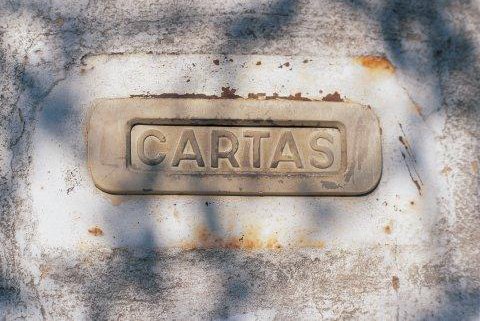
Carta Familiar


“There's always something to write about. If there's not then you need to live life more aggressively.”
Min Kim 2006

20060101

A New Year Wish

To honor those who are gone for we hold their memory.
To cherish those who love us for they give us strength.
To follow your heart for it is the path of happiness.
To see through the eyes of a child for you will live forever.

To give of yourself to the world for it will free your soul.
To weep for those without hope for they will teach you.
To leave a legacy for the world shall remember you.
To live a life of urgency for our time is short.

To seek comfort in family for they connect our past.
To plant a tree for it shall grow for hundreds of years.
To inspire a dream in a child for they are our future.
To banish fear from our hearts for it clouds our mind.

To breathe every breath deeply for it might be our last.
To know the world a better place for you made it so.
To pause at the sight of beauty for it surrounds us.
To love unconditionally for it is the reason we exist.