20070620

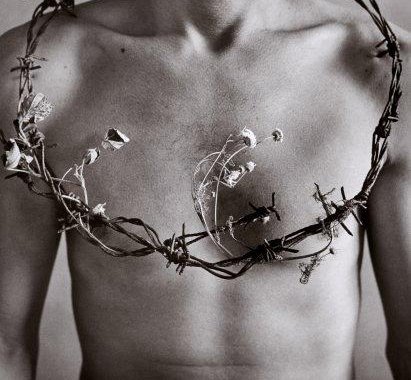
Life & Death

Photo by Mr. Blue

"To know how to grow old is the master work of wisdom, and one of the most difficult chapters in the great art of living."

Henri Frederic Amiel

20070617

Le Bec-Less


Market Street was filled with the Friday night summer mix of tourists, beggars and businessmen as I walked to my extravagantly overpriced hotel in Philadelphia. I had just completed an eight hour seminar for a group of interested professionals who had each paid five hundred dollars to hear me pontificate. The organization for which I am speaking tends to treat their lecturers well in order to keep them interested in undertaking the grueling task of carrying a full eights hours of lecturing without support or assistance. Even I had to admit that my 16th floor hotel suite was stunning.

The sleek and ultramodern wrap around windows provided me a king’s view of old Ben Franklin sitting atop of City Hall in the city center of Philadelphia. This type of luxury and opalescence can easily wash away the hours of drudgery standing before a crowd of thirty. In the back of my mind was a desire to step the experience up a level and treat myself to a guilty pleasure. My benefactors have yet to reject any expense associated with this lecture series, so I decided to find out what levels of excess they might approve. Why not? I had just earned the organization somewhere in the neighborhood of $10,000. With an eager anticipation I jumped on my computer and began surfing the web for the object of my desire.

For decades I have been traveling to Philadelphia for business, conferences and interviews and have always told myself as I walked past its doors that I would one day venture in and treat myself to pure indulgence. Over the years the time never seemed right or I was with the wrong crowd or I couldn’t spend sufficient time to enjoy it. Today however it was impossible to fly back home and I had a five star hotel suite only a few blocks away. Even if the unthinkable would happen and I was unable to physically get back to my sanctuary, I was confident that the able bodied hotel staff would come pick me up and carry me back to my suite if I so required. The stage was set for trip behind the velvet rope into a world that few get to experience.

It was not difficult to locate on the internet. It has been a Philadelphia landmark for almost four decades. In fact it was known as the leader of the "Philadelphia restaurant revolution". Esquire described it as the best French restaurant in America. There it was Le Bec-Fin, which first opened in 1970. Owner and founder Georges Perrier named the restaurant after the French words for "Fine Palate". The restaurant has consistently been rated as America's finest French restaurant and the Mobil Travel Guide has traditionally rated it as five stars.

I stumbled across an article from Peter Wells, the food critic at Food & Wine magazine. “Our dinner reservation was at Le Bec-Fin, a restaurant I've dreamed about since college. When I arrived at the University of Pennsylvania in 1981, the school's promotional brochures bragged about what everybody in town called "the Philadelphia restaurant renaissance." The greatest of the renaissance chefs, the Michelangelo of Walnut Street, was Georges Perrier, who learned his craft at La Pyramide in France and began cooking in Philadelphia in the late '60s as a young man. By the time I arrived in the city, his Le Bec-Fin was recognized, both by the nation's reigning food critics and by the locals, as the best restaurant in town, maybe the best in the country.”

I continued reading. “The entrance to Le Bec-Fin was still as forbidding as I recalled, with a brass plaque instructing us to ring the bell for admittance. Ignoring it, I pulled on the smoked-glass door and it swung open. We were in the world's smallest lobby; it was barely big enough for the hostess to step from behind her station and take our coats. Another door was opened and we were led into the dining room.

I believe we gasped. The new room was all white and gold, like a bride. Restaurants with chandeliers and mirrors usually make me picture either dotty great-aunts or beefy men with pinkie rings. This didn't. It was the kind of room that made you feel smart, cultured and attractive just for being there. At the same time, I wanted to run my fingers across the woven silk wall panels.


This was not the same room I would have seen in my college days. Five years ago, the Mobil Travel Guide demoted Le Bec-Fin from its top five-star ranking down to a mere four. Now, I have never met anyone who based his dining decisions on the Mobil Travel Guide. Who cares what a gas station thinks about food? Well, Philadelphia cared. The day Le Bec-Fin lost the star, TV trucks parked outside the door. And Georges Perrier cared. Boy, did he care. He had a nervous breakdown, followed by severe depression. He huddled with his psychic. He launched an investigation into what went wrong and fired a waiter he deemed responsible. He fired himself, turning over command of the kitchen to a chef from Daniel in New York. He hired a new wine guy, who added 500 bottles to the list. Finally, he tore down the dining room, ripping out the flocked persimmon-colored wallpaper, the fleurs-de-lis carpeting, the wrought-iron banisters, and several walls—everything but the chandeliers.”


Carefully I looked up the other reviews, all of which indicated that Le Bec-Fin was still the heavyweight champion of the world. Life was on cruise control until I read one simple sentence that brought my world crumbling around me. It was a small footnote to one of the reviews which indicated that Friday or Saturday reservations required months of advance notice……..months of advance notice…………. months of advance notice. The words repeated themselves over and over in my head as a black drape of sullen despair covered the room. After a brief but personally intense period of mourning I decided to give up the dream for another day and hauled myself down to lobby concierge.

To increase my bitter disappointment the young gentleman behind the concierge counter spoke with a French ascent as he asked “How may I help you today, Mr. Blue?” At least he should be able to direct me to another French restaurant in the area where I can drink sufficient Champagne Royales to deaden my palette adequately to lure myself into imagining I’m at Le Bec-Fin.

I look at him emotionless and mumble, “I really had my heart set on a dining experience at Le Bec-Fin, but I understand that it can take months to get a reservation.”

With an equally cold and emotionless face he replies “Yes, that is true. I know because I also work there as a waiter.” I’m constantly amazed at how small the world is. Without providing me and opportunity to speak he continues, “Let me make a call and see what I might be able to do?”

As the young man whispers into the phone I am reminded of a quote from Vaclav Havel.
Isn't it the moment of most profound doubt that gives birth to new certainties? Perhaps hopelessness is the very soil that nourishes human hope; perhaps one could never find sense in life without first experiencing its absurdity.”

Calmly the concierge concludes his phone call and hands me a slip of paper. “Mr. Blue I was in deed fortunate to get you a reservation, but it might not be the finest table in the restaurant. The reservation is for 8:30, which leaves you plenty of time to walk to the restaurant.”

I discreetly hand my savior a twenty and joke “You could probably seat me in the bathroom and I’d be happy. Thank you for your effort.” Slipping out the side door of the hotel I am astonished that I was in possession of a highly sought after reservation. I never thought to ask why I would be so lucky as to obtain such a rare opportunity.

On the four-minute walk, I pass Striped Bass and Susanna Foo, two restaurants that muscled in on Perrier's block. The city has renamed the side street across from Le Bec-Fin "Georges Perrier Place," but the town fathers can't do anything to slow the advance of ambitious new competitors with a more modern outlook. As I approach 15th street there appears to be a large commotion ahead of me and it’s close to my designation. I’m unfazed, because it is not uncommon to find some sort of public protest in the streets of most cities. They tend to act as a form of entertainment, sort of a theatrical event to the average city dweller.

As I get closer the motley crew of fifty to seventy five is better organized than most with bullhorns, home-made signs, video equipment and a coordinated choreography to harass their targets of distain. It looks like the event is either just warming up or has just ended because the group is just milling around. I finally get close enough to realize that they are all wearing photos of ducks around their necks and on their posters. Ducks? How strange?

Could it be something with Disneyland and the exploitation of Donald Duck as a capitalist symbol? If that was it the ducks would be more like cartoons. Let me think. It’s not the start of hunting season. There is no reason to make all this noise when you are not allowed to shoot ducks. That can’t be it, I conclude. I know there has been a lot of debate about glass skyscrapers and the fatal impact those structures have on the migratory routes of birds. Apparently hundreds for thousands birds die each year by flying into glass windows on skyscrapers. Maybe it has gotten to the point that they have taken the issue to the streets in protest? Whatever the protest is about always seems to be some fringe issue with little relevance to the daily lives of most people.

It isn’t until I get close enough to read one of the signs that the mystery is revealed with stunning relevance. “Ban Le Bec-Fin from serving Foie Gras”. Another sign shows Georges Perrier in a Nazi uniform standing on the bodies of dead ducks. I need to look twice. It’s amazing what you can do with Photoshop these days. I’m not sure if I follow the connection of serving French cuisine and the Nazi leader, but it seems to be a standard approach for calling attention to yourself.

Glancing across the street the crowd is focused on the single golden door of my desired location Le Bec-Fin and quite surprisingly I wanted to taste Foie Gras from the master. It is singularly one of my most favorite delicacies. If you have not tried Foie gras, it is one of the most popular delicacies in French cuisine and its flavour is rich, buttery, and delicate.

No, no, no, no!!!!!! Not tonight!!!! Why me????? Since my reservation is not for another 30 minutes I decide to cruise by the crowd on the opposite side of the street and get a better look at the situation. The group has hidden small pockets of protester on all four sidewalks leading to and from the restaurant. The hidden protesters are holding television screens showing the feeding and execution of ducks in the commercial production of Foie Gras. This technique has been adopted from the anti-abortion protester to emotionally shock casual viewer. Unfortunately for me it just evoked two thoughts. First was wow, I wonder how long that skinny pimple faced teenage can hold that huge television? My second reaction was probably not what the protesters wanted. Wow look how fat that duck is, I bet his liver is really tasty. It was sort of a dining promotion for duck liver. I guess they need to Photoshop more duck distress and pain into the video for me. Why pick on Foie Gras? Hell half these socially correct protestors probably live on hamburgers. Maybe they need to read Fast Food Nation to get an idea that every food is basically exploiting some species.

The technique of gavage dates as far back as 2500 BC, when the ancient Egyptians began keeping birds for food and deliberately fattened the birds through force-feeding. Today, France is by far the largest producer and consumer of foie gras, though it is produced and consumed worldwide, particularly in other European nations and the United States.

In modern foie gras production, force feeding takes place from 12−18 days before slaughter. The duck or goose is typically fed a controlled amount of corn mash through a tube placed in the animal's esophagus. Due to this force feeding procedure, and the possible health consequences of an enlarged liver, animal rights and welfare organizations and activists regard foie gras production methods as cruel to animals. Foie gras producers maintain that force feeding ducks and geese is not uncomfortable for the animals nor is it hazardous to their health. Scientific evidence regarding the animal welfare aspects of foie gras production is limited and inconclusive. A number of countries and other jurisdictions have laws against force feeding or the sale of foie gras due to how it is produced.

For me its like people that smoke crack, they are not really concerned about how many Bolivian boys are killed in the production of a fleeting sense of euphoria. If I need to give up my Foie Gras in order to save the world, maybe the world is not worth saving. I choose a different hill to fight on for the environment, not on a limited production of some small delicacy that is so expensive that no one can afford to eat it regularly. It’s time to get real.

Rounding the block, I decide to build my courage and make a run for the door. It is almost the exact same time I discover that the protest is not winding down but just starting. The bullhorns start blaring and the crowd chants while surging toward the door. The protestors have now pulled out video cameras to film the event and any customer that attempts to penetrate the golden door. It is beginning to turn ugly as the street is now blocked and the city of brotherly love starts to scream from the overheating cars stuck in the traffic jam.

As I elbow my way through the chanting protestors, I get about ten feet from the door when I notice a handful of casually dressed men with large black revolvers strapped to their sides apparently guarding the door of the restaurant. I can only assume that they were hired to guard the door, but they are now very agitated and nervous. Having grown up in New Jersey, I have witnessed and participated in my share of street fights and know the signs of someone pumping themselves up to deliver an ass-kicking. It’s the way you stand, more erect. It’s the way your arms swing to get loose. It’s the way you pull in big long breaths of air to supercharge your metabolism.

It’s right at this exact moment it dawns on me. What the hell am I doing in the middle of this? Come on it is only a meal, granted a pretty exceptional, once in a lifetime, to die for meal. Well maybe not to die. I can’t imagine myself enjoying the dining experience while the restaurant staff is pulling on riot gear and piling furniture against the door. Although it could be a real French revolution, Bastille Day type of experience, with the aristocracy dining on Foie Gras while the proletariat burn down the town. Discretion must be the better part of valor as I decide to give up the quest to gain entrance.

Walking away I think that if these protestors really looked at themselves they could find all sorts of things to be pissed about. The abused child labor used to make their sneakers; the mining operations used extract the precious metal used in their video equipment, the toxic solvents in the markers they used to paint their signs, the chemical contamination of the land used to grow the cotton in their underwear. No, for some reason they needed to jump all over an obscure practice that less than one in a thousand people might do once a year. Instead I just walked around the block to another famous restaurant and ate some fresh Copper River Salmon without noticing anyone concerned or protesting the likely loss of the wild salmon fisheries. I guess I will have to wait until another trip to the city of brotherly love to experience the magic of Georges Perrier’s culinary art. It was a bitter Le Bec-Less pill to swallow, but it only took three fine Kentucky bourbons to wash the disappointment from my mind.


"Hey buddy, think you could spare some foie gras? Times been tough you know."

Mr. Blue (June 2007)

20070611

Power of One


"Never doubt that a small group of thoughtful committed people can change the world: indeed it's the only thing that ever has!"

Margaret Mead (1901 - 1978)

I recently used this quote in an interview and have been pondering it's essence for the past couple of days. It prompted me to read more on Margaret Mead. I highly recommend it. Here's a few more quotes I enjoyed.


"Women want mediocre men, and men are working hard to become as mediocre as possible."

"Man's role is uncertain, undefined, and perhaps unnecessary."

"It has been a woman's task throughout history to go on believing in life when there was almost no hope."


20070606

Without a Face


The problem lay buried, unspoken for many years in the minds of women. It was a strange stirring, a sense of dissatisfaction, a yearning that women suffered. Each suburban housewife struggled with it alone. As she made the beds, shopped for groceries, matched slipcover material, ate peanut butter sandwiches with her children, chauffeured Cub Scouts and Brownies, lay beside her husband at night, she was afraid to ask even of herself the silent question: 'Is this all?'

Betty Friedan

20070603

An Asymmetrical Evening in Black Tie

Photo by New Yorker Magazine

Black featureless figures dance and scurry in front of a luminescent white wall that glows with a mystical soft light that could only originate from the heavens. The scene appears to be an interactive dynamic work of kinetic sculpture as shadowy forms glide on the smooth granite floor. The crowd which number in the thousands has come to watch the birth of a new direction in architecture. Anyone who loves art and architecture is in attendance for the formal black tie opening of the Bloch Building expansion to the Nelson Atkins Museum of Art. High society is out in force, doting like a proud grandmother on the bold and expressive new child.

The sounds of jazz floats on the calm evening air as I approach the entrance. For the past five years I have watched the structure emerge from the ground never expecting the universal acclaim which has marked this opening. I’m unable to recall the last time architectural critics from New York, Chicago, Los Angles, London and Paris have uniformly showered a new work of architecture with such praise and adulation. Paul Goldberger, architecture critic for the New Yorker Magazine, notes that the expansion “is not just Holl’s finest by far but also one of the best museums of the last generation. Its boldness is no surprise, but, in addition, it is laudably functional, with a clear layout, handsome and logically designed galleries, and a suffusion of natural light.”

It is with much humility and a slight sense of pride; I ascend the long gallery to the lobby passing the multitudes in strapless evening gowns and tuxedoes. My role in the project, although important to the aesthetic, will forever be obscured by the enormous legions of team members who have toiled for years on this project. My contribution will be relegated to a footnote, but I’m comfortable with that.

The experience of emerging into a series of flowing white galleries is best described by the architect Steven Holl. “The expansion of The Nelson Atkins Museum of Art fuses architecture with landscape to create an experiential architecture that unfolds for visitors as it is perceived through each individual’s movement through space and time. The new addition engages the existing sculpture garden, transforming the entire Museum site into the precinct of the visitor’s experience. As visitors move through the new addition, they will experience a flow between light, art, architecture and landscape, with views from one level to another, from inside to outside. The threaded movement between the light-gathering lenses of the new addition weaves the new building with the landscape in a fluid dynamism based on a sensitive relationship to its context. Rather than an addition of a mass, the new elements exist in complementary contrast with the original 1933 classical “Temple to Art”.

Photo by New Yorker Magazine

Traversing the hallways to the extravagant long buffet tables I pass three former mayors, one Senator, one attorney general, five artists, two actors and five chairmen of prominent local companies. It is a spectacle of royalty seldom seen in such abundance in Kansas City. Dinner is served in amidst the polished marble columns of Rozzelle Court in the heart of the historic 1933 structure as a band serenades the patrons.

After dinner I stroll down the new galleries that are organized in sequence to support the progression of the collections which gradually step down into the Park continually punctuated by views into the landscape. I slowly explore the new addition until the Isamu Noguchi Sculpture Court reveals itself, establishing a binding connection to the existing Henry Moore Sculpture Garden. Sitting outside in the restrained landscaping of the sculpture garden I enjoy the view while sipping an after dinner cocktail. Darkened forms dance in front of the light under a brilliant full moon to the muted cry of a sensual lone saxophone. The night is perfect as the fleeting moment representing years of effort disappears like the smoke of a cigarette on a breeze. From this day forward this private playground of mine which I have shared only with my associates and construction workers will become the possession of the public. It is with a touch of melancholy I leave this familiar friend to its adoring public. I shall forever retain a sense of fondness for my Asymmetrical Evening in black tie.

"As we look deeply within, we understand our perfect balance. There is no fear of the cycle of birth, life and death. For when you stand in the present moment, you are timeless."
Rodney Yee

20070510

Carry the Weight


"All your life, you have heard yourself denounced; not for your faults, but for your greatest virtues. You have been hated, not for your mistakes, but for your achievements. You have been scorned for all those qualities of character which are your highest pride. You have been called selfish for the courage of acting on your own judgment and bearing sole responsibility for your own life. You have been called arrogant for your independent mind. You have been called cruel for your unyielding integrity. You have been called anti-social for the vision that made you venture upon undiscovered roads. You have been called ruthless for the strength and self-discipline of your drive to your purpose. You have been called greedy for the magnificence of your power to create wealth. You, who've expended an inconceivable flow of energy, have been called a parasite. You, who've created abundance where there had been nothing but wastelands and helpless, starving men before you, have been called a robber. Have you stopped to ask them: by what right? - by what code? - by what standard?"
Ayn Rand (1905 - 1982)
Source: (Atlas 422-3)

20070422

EC4K


"As I am strolling down the garden path,
I saw a flower glowing in the dark.
It looked so pretty and it was unique;
I had to bend down just to have a peek.

Hello old friend,
Its really good to see you once again."

Eric Clapton

20070408

Four Horsemen of the Apocalypse Stand before Us


And I saw when the Lamb opened one of the seals, and I heard, as it were the noise of thunder, one of the four beasts saying, Come and see.

And I saw, and behold a white horse: and he that sat on him had a bow; and a crown was given unto him: and he went forth conquering, and to conquer.

And when he had opened the second seal, I heard the second beast say, Come and see.

And there went out another horse that was red: and power was given to him that sat thereon to take peace from the earth, and that they should kill one another: and there was given unto him a great sword.

And when he had opened the third seal, I heard the third beast say, Come and see. And I beheld, and saw a black horse; and he that sat on him had a pair of scales in his hand.

And I heard a voice in the midst of the four beasts say, A measure of wheat for a penny, and three measures of barley for a penny; and see thou hurt not the oil and the wine.

And when he had opened the fourth seal, I heard the voice of the fourth beast say, Come and see.

And I looked, and behold a pale horse: and his name that sat on him was Death, and Hell followed with him. And power was given unto them over the fourth part of the earth, to kill with sword, and with hunger, and with death, and with the beasts of the earth.”

Revelation chapter 6, verses 1 to 8


What the Future Holds

The following are a few quotes from the prediction of consequences due to climate change.

“As many as 30 per cent of species face an increased risk of vanishing if global temperatures rise 1.6 degrees Celsius above the average in the 1980s and 1990s.”

“Hunger for millions with a sharp fall in crop yields in Africa. It could also rapidly thaw Himalayan glaciers that feed rivers from India to China and bring heat waves for Europe and North America.”

“Global warming could also create tens of millions of climate refugees.”

"According to some estimates, there are already almost as many environmentally displaced people on the planet as traditional refugees,"

"As the impacts of climate change strike home, the numbers are likely to rise considerably, possibly as high as 50 million by 2010.”

“Water shortages that could affect billions of people and a rise in ocean levels that could go on for centuries.”

“Africa will be hardest hit. By 2020, up to 250 million people are likely to be exposed to water shortages.”

“In some countries, food production could fall by half.”

“North America will experience more severe storms with human and economic loss, and cultural and social disruptions. It can expect more hurricanes, floods, droughts, heatwaves and wildfires.”

“Europe will face more heatwaves and drought, with a reduction in crop productivity.”

“Parts of Asia are threatened with widespread flooding and avalanches from melting Himalayan glaciers. Europe also will see its Alpine glaciers disappear.”

“Nearly a third of the world's species of animals and plants will be at risk of extinction by climate change within 50 years.”

“Scientists predict the loss of thousands of species in temperature-sensitive biodiversity hot spots such as the Great Barrier Reef, off the east coast of Australia, if temperatures go on rising.”

“Some species, such as corals, there will no longer be in a climate that is suitable for them to survive. Others, like the North American rock rabbit, the pika, may be unable to reach distant regions that are more suitable.”

“What came out of our exhaust pipes and power stations [from Europe and North America] contributed to the deaths of a million people in Africa, and afflicted 50 million more”

“A Sahara type of climate could be possible in places such as England, while other parts of the world would fare even worse.”

“There was a very serious reduction in sunlight, the amount of sunlight in Israel. In fact, if we compare those very early measurements in the 1950s with the current measurements, there was a staggering 22% drop in the sunlight.”

“The three warmest years on record have all occurred since 1998; 19 of the warmest 20 since 1980.”

We can no longer ignore the destruction of the world as we know it. The information listed above is from over 2,500 scientists representing the world authority on climate change. There was little doubt about the science, which was based on 29,000 sets of data, much of it collected in the past five years. Each day a new stunning revelation about the impact of climate change illustrates the magnitude of the impending apocalypse. Yesterday it was the prediction that the production of maple syrup will cease in the United States within a generation. Maybe we need to see it from a graphic perspective.


“A warmer climate may have significant effect on the forests. Decidous forests will probably move northwards and to higher altitudes, replacing coniferous forests in many areas. Some tree species will probably be replaced altogether, jeopardizing biological diversity several places. (UNEP/GRID-Arendal Maps and Graphics Library)”

“The figure shows a comparison of current vegetation zones at a hypothetical dry temperate mountain site with simulated vegetation zones under a climate-warming scenario. Mountains cover about 20% of the Earth's continents and serve as an important water source for most major rivers. Paleologic records indicate that climate warming in the past has caused vegetation zones to shift to higher elevations, resulting in the loss of some species and ecosystems. Simulated scenarios for temperate-climate mountain sites suggest that continued warming could have similar consequences. Species and ecosystems with limited climatic ranges could disappear and, in most mountain regions, the extent and volume of glaciers and the extent of permafrost and seasonal snow cover will be reduced. Along with possible changes in precipitation this would affect soil stability and socio-economic activities such as agriculture, tourism, hydropower and logging. Resources for indigenous populations and recreational activities would also be disrupted (UNEP/GRID-Arendal Maps and Graphics Library).”


“The transmission of many infectious diseases is affected by climatic factors. Infective agents and their vector organisms are sensitive to factors such as temperature, surface water, humidity, wind, soil moisture, and changes in and forest distribution. This applies particularly to vector-borne diseases (VBD) like malaria. It is therefore projected that climate change and altered weather patters would affect the range (both altitude and latitude), intensity, and seasonality of many vector-borne and other infectioius diseases. In general, increased warmth and moisture would enhance transmission of VBDs. However, it should be noted that any such climate-related redistribution of disease may also entail, perhaps in conjunction with other environmental stresses, some localized reductions in rates of infection.”

“In tropical countries, VBDs are a major cause of illness and death. For the major VBDs, estimates of numbers of people at risk and infected, and of VBD sensitivity to climate are shown in the figure. While the potential transmission of many of these diseases increase in response to climate change, the capacity to control the diseases will also change. New or improved vaccination can be expected; some vector species can be constrained by use of pesticides. Nevertheless, there are uncertainties and risks here, too: for example long term pesticide use breeds resistant strains and kills many predators of pests (UNEP/GRID-Arendal Maps and Graphics Library).”

Within a generation we will witness a cataclysm the world has never experienced in billions of years of existence. On a personal level, I cannot conceive that environments I have experienced will possibly no longer exist in my lifetime. Consider my trek to watch the spawning of millions of salmon in the pristine estuaries of Sitka, if fact wild salmon may no longer exist as a food stable in a short period of time. My photos of the glaciers in Glacier National Park will be my only evidence of a million years of existence. Swimming in schools of fish in the Great Barrier Reef could be a distance memory as the sun bleaches the coral into dead white graveyards. The beaches in New Jersey and Florida that I spent so much of my childhood will disappear under the rising sea level as erosion scours the shore. Islands in the Caribbean where I spent so many winters could we swept away. My childhood ski trips to Hunter Mountain in New York and Okemo in Vermont will be a footnote in some historical heritage museum. When will we decide the threat is real and inevitable? What will spur individuals to action?

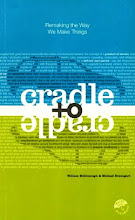
The emergence of a small sustainable movement is being hijacked by our consumer driven economy. What is most disturbing to me that everyone is wrapping themselves in a “green” cloak to avoid discovery that nothing much has changed. If you want to really understand what “green” means read William McDonough's new book “Cradle to Cradle”, written with his colleague, the German chemist Michael Braungart, which is a manifesto calling for the transformation of human industry through ecologically intelligent design. McDonough indicts the entire conservation movement as “doing bad things less slowly” and challenges industry to radically rethink its approach. The book makes the case that an industrial system that "takes, makes and wastes" can become a creator of goods and services that generate ecological, social and economic value, but we are running out of time.

The “green“ cloak is really a sedative to convince the public that they are contributing to the welfare of the environment when they are not. The issue is arising everywhere, from green products to green communities. We purchase green to feel good that we are making a contribution without impacting our lifestyles. Commercial office space and multifamily residential properties are only now classified as “Class A” investment property if it is “green architecture” which is movement in the right direction, but for some it is a reason to stop examining other detrimental activities they are engaged in. Poor people have little option to be anything but sustainable, with so little resources to participate significantly in the consumer economy. It is the upper and middle class of society that have the ability to accelerate change, but have convinced themselves that recycling the random plastic container or participating in an eco-tourism vacation will save the world when they run businesses that are supporting petro-chemical post industrial economy. Why do they not recognize the contradiction? Doing the right thing is often inconvenient for the privelged.

How many executives, board members, business owners and individuals in positions of responsibility take great pride in having a second home in Costa Rica or some other pristine environment and traveling on safari to see the splendors of nature, while the basis of their wealth is belching out pollutants in some toxic industrial park? How often to you see the executive brimming at the gala handing over a check to their favorite environmental cause while their company hires lawyers to fight some EPA infraction? Privilege demands accountability and social responsibility. Instead privilege allows them to indulge in dragging their children around the world frantically trying to show them the few remaining natural wonders, before they are obliterated by their own apathy and inaction.

As William McDonough describes it “The industrial framework that dominates our lives now is fairly primitive. It is conceived around a one-way manufacturing flow—what is known as a "cradle to grave" lifecycle. This cradle to grave flow relies on brute force (including fossil fuels and large amounts of powerful chemicals). It seeks universal design solutions ("one size fits all"), overwhelming and ignoring natural and cultural diversity. And it produces massive amounts of waste—something that in nature does not even exist.”

He sees the next industrial revolution as transforming the making of things. “This fundamental conceptual shift leads to design strategies that some might find surprising. For example, instead of minimizing the consumption of energy generated from coal, oil, and nuclear plants, why not maximize energy availability using solar and wind sources? Instead of using only natural, biodegradable fibers like cotton for textile production (a pesticide-intensive agricultural process), why not use non-toxic synthetic fibers designed for perpetual recycling into new textile products? Instead of directing intelligence towards regulation compliance and liability reduction, why not design industrial processes and products so safe they do not need regulation, and direct creativity towards maximizing economic, social, and ecological benefits?”

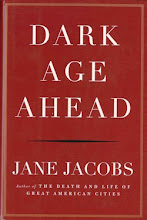
I am pessimistic that we will change our patterns of destructive behavior so that the story will have a happy Hollywood ending. Society has squandered almost a half a century of knowledge and warning about the impending apocalypse. The road map was clear fifty years ago with Lewis Mumford’s “Values for Survival” (1946), Aldo Leopold “Sand County Almanac” (1949), Harrison Brown’s “The Challenge of Man’s Future” (1954) Rachel Carson’s “Silent Spring” (1962), Paul Ehrlich’s “The Population Bomb” (1968), William L Thomas’ “Man's Role in Changing the Face of the Earth” (1971). Appalling it has been 15 years since Al Gore wrote “Earth in the Balance: Ecology and the Human Spirit” (1992) which is the fundamental message of his movie “An Inconvenient Truth” (2006) which is finally moving the public debate. It is my fear that the privileged few which can control the economy have recognized the need to react too late to prevent the destruction of the world we once knew. Our children will inherit the wrath of the four horseman of the apocalypse, living in world where they will become environmental refugees as they watch millions of the world’s population die and conduct war for the precious few natural resources left.

It is only appropriate that on this Easter we reflect on the bible to provide us strength for the future we have created. Behold the “Fifth Horseman” for he is the light of the world.


“Then I saw Heaven opened, and behold, a white horse! He who sat upon it is called Faithful and True, and in righteousness he judges and makes war.

His eyes are like a flame of fire, and on his head are many diadems; and he has a name inscribed which no one knows but himself.

He is clad in a robe dipped in blood, and the name by which he is called is The Word of God. And the armies of heaven, arrayed in fine linen, white and pure, followed him on white horses.

From his mouth issues a sharp sword with which to smite the nations, and he will rule them with a rod of iron; he will tread the wine press of the fury of the wrath of God the Almighty.

On his robe and on his thigh he has a name inscribed, King of kings and Lord of lords.”

Revelation chapter 19, verses 11 to 16

20070401

Moving Up in the Draft


The Chinese use two brush strokes to write the word 'crisis.' One brush stroke stands for danger; the other for opportunity. In a crisis, be aware of the danger - but recognize the opportunity.”

John F. Kennedy (1917 - 1963)

Staring down at my dark slacks I carefully pick off a small piece of white lint while waiting my turn in the back of the nondescript lecture hall. Looking around at the two hundred people in attendance I am relieved that I made the correct fashion choice in wearing a jet black pin striped suit with a crisply starched white shirt and a conservative gold tie laced with silver highlights. I had a feeling that the crowd of city and governmental officials would be dressed a little more formal than most. Seldom do you see business suits and ties anymore which I believe contribute to a general feeling of malaise and insecurity in people. There is nothing more empowering than wearing a tailored suit with sharp pressed creases. People will walk more erect, confident and self assured. Maybe I hold this belief due to my father’s career on Wall Street where a three piece suit and a felt fedora was a daily uniform.

A middle aged woman in a stylist business suit seated three rows in front of me turns to steal a glance with probing blue eyes. With a subtle motion I smile and nod my head in acknowledgement of her attention. Slightly embarrassed she turns forward and whispers something to the gentleman seated next to her. The crowd is aware of my presence as I sense an eager air of anticipation. My mind drifts back to the pounding surf and sweet salt air of the Coral Sea. It stuns me to think that it has been 30 days since I removed my sandals and brushed the last grains of sand from my feet. The memories are already fading and becoming indistinct like a misty fog rolling over the shoreline. The images are there but the sounds and scents are disappearing with each passing day. Time is so fleeting and every day life is filled completely with activities that the weeks rip in rapid succession like a sign posts on a speeding highway. This week alone I am speaking in Baltimore, Kansas City, Indianapolis and San Diego. Something has changed in the past few months, a subtle shift in recognition, an ever so slight transformation. It is something I can sense but do not yet understand completely. I need to realize the increased demand for my time and limit my schedule accordingly.

My eyes aimlessly roam the patterned blue gray carpeted floor of the lecture hall when I am amused that below my perfectly pressed slacks is a pair of black wing tips slightly caked with mud from some recent site visit. I am immediately reminded of Frank Lloyd Wright’s quote “You can tell if a person is grounded by the soil on his shoes”. I attempt to discern the origin of the soil by its color and texture. Could it be the northeast or south or even the pacific west. I come to the conclusion that the soil could be from almost anywhere and it is going to be impossible to isolate the moment when my foot touched the moist earth. Quietly I spend the next few minutes scuffing my shoes together in a weak attempt to improve my spoiled appearance, but finally decide I rather like the eccentric appearance leaving most of the red earth clinging to the leather like a cluster of barnacles hugging an oaken hull.

Clasping my hands together slowly my head tilts toward the floor allowing all emotions to slip from my thoughts as if my skull was a sieve. My mind envisions that I am standing before a calm still body of water completely content and relaxed. The water is a symbol of power and adaptability assuming the shape of its container. This has become a ritual for me, a gathering of internal energy and focus exhibited in a brewing of a storm, a force of nature building in the sky. It’s like filling the cannon with gunpowder, canister by canister until the full charge is loaded in preparation of firing. As if being pulled by an invisible harness I rise to my feet as the voice at the podium recites an elegant list of accomplishments. It is always embarrassing to hear the litany of tributes which always makes me feel like the crowd is now expecting someone more important than me.

At a moments notice the crowd erupts into a loud and sustained applause as a roomful of eyes turn to stare at me. In an instinctual response I reach with my left hand to the lavaliere attached to my belt. With a familiar intimacy my hand caresses the wire next to the switch as I turn the microphone on. The fuse is now lit as kinetic energy explodes in my veins coursing like a hot fever. Suddenly I become another person, my alter ego emerges as the confident extrovert I always wanted to be. Somewhere in the recesses of the brain a switch is thrown as the Gemini twin awakes to command the spotlight. I find it similar to the euphoria an alcoholic feels during a blackout. Disconnection of an outer body experience as rambling muses of a madman prepares to extol the depths of his madness. I tease myself that the crowd is entertained as if watching a car wreck. They know something horrible is occurring but are unable to avert their eyes, the sadistic fascination with violence. This statement probably contains more truth than I would care to admit.

For me it is an internal dialogue, a discussion about passion to the point of fanaticism. It is an oral internal debate as opposing dilemmas are resolved on an imaginary verbal chalkboard. Simple proven diatribes strung together into powerful mantras which slither on the ground like cobras searching for a commonly held belief to sink their fangs into. It must be the almost thirty years of interviewing for projects and commissions that allows me to read the emotions of the room like a blind man reading Braille. My gestures slowly hypnotize the crowd as I draw raw emotion up from the earth and cast it over the crowd with each choreographed moment. I have developed a hard rule during interviews that when I ascend to a sequence of reasoning that become so inspiring and so emotional that goose bumps briefly crawl across my arms, its time to immediately shut it down and close. It is that critical point where nothing you can ever say will be near as profound as what you just said. All that is possible after that point in the interview is to talk the selection committee out of selecting you. Live the fundamental rule, stop selling after you have closed the deal.

The shift in recent months is subtle but evident. I have graduated from one of the featured speakers in a conference to the keynote speaker. Five of the last seven lectures were in the role of keynote speaker, a much different position in the agenda. No longer assigned to one of the six or eight lecture halls where you compete for audience with provocative topics. The keynote is the ultimate primetime slot during the delegate’s lunch or during a plenary session with the entire assembled conference attendees. Your name moves up on the marquee, you become the reason why people attend the conference. This increased stature comes with dramatically increased expectations.

A keynote speaker is the life blood of the conference business. It is no longer acceptable to rank along the top handful of featured speakers, but you must demonstrate an exceptional mastery of the craft that excels your presentation far beyond the pool of featured speakers. The keynote speaker must inspire, motivate, and empower the audience to change the world through wisdom, logic, character and antidotes. You must call on the wisdom of past leaders to teach. The keynote is as much illusion as substance with a commanding control of truth as they see it. I’m not sure I’m ready for the jump to the big stage, the center ring, the first chair. The margin for error is razor thin as now television cameras peer from the back row capturing every detail in stone. The words are no longer surreal drifting as a song on the wind, but precise and concrete so that it can be dissect over and over to remove the soft flesh and examine the intricate skeletal structure. Small strips of magnetic tape stream behind the curtain recording very hesitation and stumble.

Once again the Gemini twin explodes into a fiery climax remaining calm and erect as the crowd applauses. The high energy switch is turned off as a dizzying spin back to earth allows fear to grab my ankles. For a brief second I once again feel like the alcoholic confused, awaking from another blackout, wondering if I covered all my thoughts. I search my short term memory to reconstruct the dialogue but find it surprising empty. As I step down from the podium, turning off the lavaliere, my insecurity forces me to seek opinions from the people around me about the message, finding reassurance in the positive reviews. Today I captured the buzz, I succeeded in bringing the crowd new insights by challenging their percepts.

With each step into on this new stage I feel confidence growing, which will allow me to dig deeper into my fundamental beliefs and fearlessly bear more of my soul. It will allow me to stray further into the jungle, to push the madman closer to the cliff, to wade deeper into the dangerous currents to navigate uncharted waters. The next step won’t take long because tomorrow is another keynote is San Diego. This time I’ll put an extra canister of gunpowder in the barrel testing the limits of the crowd’s indulgence as I move up in the draft.


“Great wisdom is generous; petty wisdom is contentious. Great speech is impassioned, small speech cantankerous.”

Chuang-tzu (369 BC - 286 BC)

20070307

place by the sea


"A place by the sea is where I want to be,
where distant dark mountains would watch over me.
Where clockwork tides would refresh the shore,
the sands yellow fingers would reach my door.
I would watch the art of the sky both day and night,
from the blue to the stars as the clouds play with its light.
But I am already there at my place by the sea,
these are my visions of you as inspired in me.
For you are my vision that has brought to be,
you are my mountains my sands my place by the sea. "

rob pocock

20070303

Gondwana and the Daintree


Torrents pour from the sky like a warm soothing embrace as I stand alone in silent reverence for what’s before me. At times the soft fog and falling rain obscure my view and turns the landscape into a surreal dream conjured up from a science fiction novel. The rich sweet organic air is so humid that I can imagine myself breathing underwater as a feeling of contradiction between sheltered security and wilderness vastness is sweeping over me. Sounds of raindrops hitting leaves as they migrate to the swollen earth roar in my ears like a million small drums beating out an ancient tympanic symphony. I listen attempting to discern a primal pattern, but I am but a foreigner in this diverse forest. My eyes do not know what to look for; my ears can not tell me what I hear. I have no understanding of this pristine Eden I have entered; I am but a new born helpless and vulnerable in the womb of nature.

I’m unsure if it is tears or raindrops flowing down my cheeks as emotions cascade through me like the small rivulets of rainwater that caress my feet on their way to the Coral Sea. In all my dreams I could have never imagined stunning beauty and inspiring diversity like what is before my eyes. I am of no concern to the Daintree Rainforest which has existed for a 100 million years. As I look out at the rainforest within my field of vision is eight species of plants that are so rare that the world has classified them as extinct. I have a difficult time comprehending the magnitude of what I’m seeing. In the entire world there are only about 70 different species of mangroves, 35 of them live together in the Daintree.

The tall thin palm-like plant next to me is a cycad which began life sometime in the Middle Ages and is estimated to be over a thousand years old, equally as amazing is that it will live another thousand years. Cycads like this one, predate every plant in the world’s temperate forests and predate every plant in the world’s coniferous forests.

The Draintree Rainforest’s history starts 120 million years ago when the giant continent Gondwana was covered in dense rainforests and dinosaurs roamed around the jungle. 55 Million years ago this continent split up into several pieces and the piece that we now know as Australia drifted south and amazingly, for the next 120 million years the rainforest in this area survived climate changes and ice ages and that is why visitors to the Daintree nowadays can still see what the world looked like more than a hundred million years ago. Although most of the dinosaurs are gone the cassowary has survived until today (when you see them walking you will notice the likeness to the creatures in Jurassic Park) and the crocodiles are still around (they have been around for that long they have seen the rise and fall of the dinosaurs). There are also ancient tree species like the king fern and the Idiospermum, which had been thought to be extinct for millions of years until it was re-discovered by a farmer. Along the coast there are fringing reefs which were living coral reefs long ago when sea levels were higher before the last ice age, now they stick out of the water at low tide.”

We climb up a ridge to a patch of brightness in the forest. Sounds of dozens of species of birds are echoing in the canopy of the forest as the rain begins to abate. They call to each other hidden from view, piecing the dense foliage like an arrow. The forest is abundance as I notice the vast variety of mysterious tropical fruits that hang providing a bounty for all. As we crest the long ridge the rain abates revealing the sun in timid soft rays. Within moments the sun’s heat drives the moisture from the air into a wispy white still haze so that you feel like your walking in the clouds. A powerful whining hum fills the forest as Cicadas compete for attention. Through a small open gap at the top of the ridge I can peer down the long slope of the Daintree until it reaches the Great Barrier Reef.

The coral white sand is draped on the aquamarine and azure water like a discarded ribbon. This is where two of the most diverse and complex ecosystems in the world meet the Daintree Rainforest and the Great Barrier Reef, only separated by narrow finger of sand. The contrast is spiritually overwhelming, standing in the dense sheltering greens of foliage and white clouds of mist immersed in a cacophony of sound, staring out on the vastness of brilliantly clear blue green water that sparkles with light and billowing sculpted clouds which extend uninterrupted to the horizon in relative silence. Peering about the foliage to my left there is a long mountainous finger of land floating on the Coral Sea, called Cape Tribulation.

Cape Tribulation was named by the great explorer James Cook in 11 June 1770. “He had been sent out from England to Tahiti to observe Venus passing in front of the sun. Thanks to his measurements scientists could now work out the distance between the earth and the sun and a range of other things. But to justify the expense of the journey the British Crown had decided that he was also to take possession of New Holland to expand their empire. Cook sailed up the east coast of Australia and did quite a bit of surveying and drew up numerous charts, as so far he only had a fairly basic map from the Dutch explorers that had been here 160 years before him. Things ran fairly smoothly until one night after passing this area his ship struck the reef. The Endeavour came very close to sinking, luckily a large chunk of reef had broken off and remained in the hole and actually worked as a plug, this together with a sail covering the hole, the crew pumping like mad and the dumping of all non vital heavy things like cannons, they managed to keep the ship afloat. So when Cook looked out on the coast at first daylight he was not in the happiest of moods and named a few features with not the most cheerful of names; the cape he could see was named Cape Tribulation (tribulation means trouble) and the mountain behind it Mount Sorrow. The reef the ship had struck was named Endeavour Reef and a bay to the north where they rested while towing the ship up the coast with row boats was named Weary Bay. Finally they found a river to go up and beach the ship so it could be repaired, this one was then named the Endeavour River and that is where Cooktown is located nowadays. After seven weeks of repairs, some run-ins with Aborigines and discovering the kangaroo, they headed further north where they planted the Union Jack and officially took possession of this country. This makes the striking of the reef off the coast of Cape Tribulation all the more significant; had they sunk here they would not have been able to claim Australia later on and it could have still been New Holland nowadays”.

Saddened that my time is over and I need to make my way back to civilization, I turn to glance once again at one of the world’s great wonders from one of the world’s great wonders. Tomorrow it will too easy to forget this special feeling of rapture. Inhaling deeply for the first time I can taste both the rich organic humus of a million years and the biting salty crispness of the sea breeze. This is the best thing I can do, for memories filed away deep in the mind are always connected with the sense of smell. I shall return here in my mind when ever I bring a moist handful of humus to my nose or when I catch the slightest whiff of salt air. For that brief moment I smile and whisper to myself, I don’t think it can get much better than this, when some movement and color flash in the corner of my vision.

In the monochromatic display of greens from foliage and moss filtered through the soft lens of grey mist a brilliant piece of the bright blue sea flutters by. This is startling because the bright blue is such a contrast to the muted forest greens. All of a sudden, before my eyes the rarest of all sights appears, the Ulysses Butterfly which is found in no other place in the world than the Daintree Rainforest. It hovers before me and then lands on a branch not more than two steps away. I reach for my camera knowing that so far the rainforest has been so dark with such low light that not one of my pictures has survived. Out of reflex I take one step forward and touch the shutter without focusing. A quickly as it appeared it disappears into the mist. This picture you see below is one of the very few photos that survived the day. There was a lesson the Daintree was teaching me. Do not preoccupy yourself when you’re with me, you only have but a moment, but I have a million years. Immerse yourself in my abundance for I am the origin of life.

"It is not much for its beauty that makes a claim upon men's hearts, as for that subtle something, that quality of air that emanates from old trees, that so wonderfully changes and renews a weary spirit."

Robert Louis Stevenson
(1850 - 1894)

Secret Friend's Caress

"The tide rises, the tide falls,
The twilight darkens, the curlew calls;
Along the sea-sands damp and brown
The traveler hastens toward the town,
And the tide rises, the tide falls.
Darkness settles on roofs and walls,
But the sea, the sea in darkness calls;
The little waves, with their soft, white hands
Efface the footprints in the sands,
And the tide rises, the tide falls.
The morning breaks; the steeds in their stalls
Stamp and neigh, as the hostler calls;
The day returns, but nevermore
Returns the traveler to the shore.
And the tide rises, the tide falls."

Henry Wadsworth Longfellow
(1807-1882)

20070227

Emerald City in the Land of OZ


The driving rain pelts the blue field and white stars of the Australian flag waving on top of a turn of the century green copper domed pinnacle two hundred feet below me. Perched next to a window on the thirty-first floor of extravagantly appointed luxury hotel, I stare out over the exceptionally vibrant City of Sydney. The rain is a brief retreat from the spectacular weather and balmy tropical breezes. This is the first moment of reflection from a furious exploration of the Emerald City and the Gold Coast.

Sydney is a modern vibrant energetic city with a strong backbone of tropical British colonial influence which is evident in the beautifully maintained governmental buildings. While seemly isolated in this remote southern location, its reach is international as blends of world cultures travel to Sydney to savior its delights. The city is fashion conscious but not consumed. There is an emerging world class cuisine called “Mod Oz” which is a fusion of Asian, South Pacific and traditional Australia fare.

The people of Australia embrace everyone who ventures upon its shores with a warm and friendly attitude. It is possible to strike up a meaningful conversation with just about anyone in a restaurant, on the ferries or in an elevator and discover another hidden gem of urban life down under. One of the most revealing insights has been how open and safe the city is. We have spent the past six days walking huge areas of the city at all hours of the day and night and not once did we encounter a single individual who appeared threatening. That is a truly remarkable statement in the modern urban world.

In my heart I have always been a mariner migrating to oceans, harbors, beaches and other points of maritime adventures. Sydney is a city of the sea which is the basis of its beauty, from the ferries, harbors, piers, esplanades and beaches, the city is always reflected in shimmering clear blue water. At night the city explodes into a million stars that dance on the water like fireflies where you linger in the open air cafes captivated by urban culture.

During our visit to Sydney, we wandered the world famous beaches of Manly, Bondi and Bronti. Nothing I can say will fully express the spectacular rugged coast with the aquamarine sea foam crashing against the worn limestone cliffs. The lively beaches are lined with trendy restaurants offering a bounty of riches from the crystal clear water that stretches to the horizon.

The most pleasant surprise is how beautiful the young residents of Sydney are, especially the females. The streets, restaurant and nightclubs are filled with large numbers of spectacularly stunning women, more so by factor of ten than any other city in the world I have visited. While the rest of the world’s fashion choice is casual baggy, oversized non-descript unisex sweat pants and gym clothes, the women of Oz embrace femininity with alluring and head spinning results. What a refreshing and novel idea, women taking pride in dressing like women. If that isn’t enough on the beaches surrounding Sydney, they embrace the European custom of sunbathing topless.

There is only one disturbing observation of Australian culture that is immediately apparent when you walk off the plane. American consumer and pop culture dominates every aspect of Australian entertainment and commerce. Like an insidious contagious disease American products fill every movie theatre, music store, radio station, television channel, clothing boutique and lunch counter. It is easier to find a weather forecast for the states than it is for Australia. The process of consumer assimilation is so complete that the multinational companies are morphing to assume a cloak of pseudo Australian origin, McDonalds offers morning “Brekkies”, Burger King is called Hungry Jack, Dominos places “rocket” of its special pizzas. Like a predator assuming camouflage to blend into its surroundings, Australians are slowly being seduced into abandoning their identity.

In earlier writings I described how my grandmother was born outside of Melbourne and immigrated to the states in 1904. I never really considered my Australian origin. It was only a passing interest as the discussion of Australia surfaced when I was growing up. Only upon arrive to this great nation has a feeling of deep connection and belonging has arisen in me. My short time here is not nearly enough time to discover and explore this vast country, but it is with absolute certainly that I will return to this beautiful land and beautiful people for which I have fallen in love with. I find myself humming Waltzing Maltilda as my time grows short and all I can say is “Aussie, Aussie, Aussie, Oi, Oi, Oi

20070209

Love In Idleness


"Since I once sat upon a promontory,
And heard a mermaid on a dolphin's back
Uttering such dulcet and harmonious breath
That the rude sea grew civil at her song.
And certain stars shot madly from their spheres,
To hear the sea-maid's music.
And the imperial votaress passed on,
In maiden meditation, fancy-free.
Yet mark'd I where the bolt of Cupid fell:
It fell upon a little western flower,
Before milk-white, now purple with love's wound,
And maidens call it love-in-idleness."

William Shakespeare

20070207

The dream I'm in


“The dream I'm in
with the foamy ocean
and sea gulls
beautiful castles
I don't ever
wanna wake up.”


Ave Lilik


“My eyes are an ocean in which my dreams are reflected.”

Anna M. Uhlich

20070203

38 HRS – 02/05 – 10 GMT = G’Day


The exact formula has been determined, with each ingredient carefully proportioned to achieve the precise mathematical result. Preparations to decipher this journey have taken considerable effort culminating in a final 17 hour marathon before the computer was temporality suspended at 23:15 CST. Like the time traveler in H.G. Wells’ classic novel, we are about to embark on bending the laws of physics arriving in another world and time.

Here’s the itinerary as best as can be determined. Depart home to LAX airport 09:00 CST, arriving in LAX at 12:30 PST for a 12 hour layover. This is our last opportunity to indulge in somewhat familiar culture and rituals. We will grab a cab to the Santa Monica pier to participate in the traditional Super Bowl celebration in an impromptu local bar of random selection before heading to a casual dinner overlooking the Pacific Ocean as the sun sets. We will be providing the sun a head start as we race to overtake it. Sometime in the early evening we will catch a cab back to LAX for a 23:55 departure to Brisbane.

This is where it gets confusing our departure is 23:55 PST 02/04 that is really 02:55 CST 02/05 which is a day we will never experience. The flight time is about 14 hours during which 02/05 will disappear from our lives. Ultimately we will arrive in Brisbane at 07:00 02/06 -10 GMT after which we will catch a 90 minute shuttle to the Gold Coast. In the entire event will take about 38 hours, a challenging adventure for even the most trail tested road warrior. The finish line is the western edge of the Coral Sea.

Just in case you are wondering the photo is of Caines, Australia and according to insiders it includes our hotel if you know where to look. Hint: it’s next to white sand. Yeah I know, poor baby. It’s going to be hard to distract me at this point because I’m going down……I’m going way down……under.

20070128

Sometimes the Bar Eats You


Sometimes you eat the bar, and sometimes, well, he eats you.”

The Stranger... The Big Lebowski (1998)

Then are moments in time when the Unstoppable Force collides with the Immoveable Object and natural laws of the universal are reconfirmed. Laws of probability dictate that one shall yield and the other shall prevail. In the end, the unstoppable force was no match for the immoveable object, better known as the federal government. Years of travel knowledge, guile, swiftness and insider contacts could not budge the Immoveable Object.

The confrontation began January 15th when I discovered my passport was missing and was scheduled to travel to Toronto on January 28th. In a complete panic I quickly assembled all the proper documentation, photos, forms and fees running to the nearest Post Office to submit for expedited passport replacement service. Under this expedited service, I was guaranteed to receive my replacement passport within 10 days for a governmental imposed “you are an idiot to wait so long” fee of $175.

The first clue of my impending disaster was arriving at the Post Office to find it closed while celebrating Martin Luther King’s holiday. Understanding that this would delay departure of my application until January 16th, I quickly surmised that a governmental promise of 10 days and an absolute deadline of 12 days was going to be a problem. I vowed to arrive at the Post Office first thing in the morning to ensure my application was first in the express bin to the New Orleans processing center. The contradiction of New Orleans and expedited service imposed a level of concern to the process, but I stood fast in my faith that the benevolent protector and provider would deliver on its promise.

The following day on the way to the Post Office, my car blows a hose just one day after spending $750 to replace my radiator. I guess my auto repair shop discovered my credit score after quoting me a repair number and decided to up the ante with a second round of repairs. Not overly concerned I applied the principal of executive privilege and called my office manager to retrieve me and my pending application. Leaving the smoking heap of my car on a side street downtown I climbed into Mary’s vehicle for the overdue appointment with stewards of snail mail.

To no one’s surprise one day after the holiday, the line of customers that snaked outside the door lead to the gatekeepers, who sole function was to witness my signature on the application and to collect ransom for restoration of my freedom. Standing in line you begin to realize how the art of personal dehumanization has been perfected. It’s revealing how the system assumes you know this vague and confusing system of acquainted transportation of communications. How each individual is punished for the smallest of procedural missteps, such as not filling out a line on the back of a form thereby regulating them in to public to obediently complete the task and unceremoniously move to the back of this oversized conga line.

Optimism of quickly completing this task fades as I realize new impending passport rules has created a flood of applications from the elderly and drug addicts who are now required to show a passport before they enter Mexico to buy cheap drugs and velvet paintings. The whole scene reminds my of some sort of basic therapy for severe head injury patients who are being provided life skills before they are released back into the general public. I expect to see Jack Nicholson’s character in One Flew Over the Cuckoo’s Nest to run past in a white gown with his ass hanging out.

Sixteen passport applications later I arrive at the front of the counter to sign my name. The man behind the counter takes my money and gives me a number to call if I need information on my application’s approval statue. Walking out of the Post Office, Mary is standing on the Post Office steps. With a look of astonishment she says “You are not going to believe this, but my car just died and won’t start. I think you’re cursed?”

Yeah she was probably right, but my passport application is now in the capable hands of the trustworthy government officials. I smile at Mary and say “Call the office and get some other lucky employee to come and get the two of us. If we keep this up, I’ll have the entire staff out here with us and all their cars scattered across town disabled.”

A week passes when I decide to have Mary contact the New Orleans processing center to find out the status of my application. As is the process with the government, they will not talk to Mary, but need to talk me directly. Now there is a foolproof security measure? “Who am I talking to?” a voice inquires from the phone. “Mr. Blue” I confirm, clearing this critical security issue. I wonder if I could get my dog to bark in a certain way whether it would clear this security checkpoint. In broken English acquired in the two days since she got off the boat from Asia, she says “Mistra Bleuz, You passport mailed tomorrow.”

In a rush of appreciation and guilt that I ever questioned our democratic system, I profusely thank the agency for their understanding and commitment towards service. It was like all the dread and anxiety was unwarranted. A small voice in the back of my mind whispered “She said mailed?” My application fee included the most expensive overnight; first delivery express mail money could buy. I dismissed the red flag as a misunderstanding by the operator which would be cleared up in her next English language class later tonight.

Four days later, while traveling in Philadelphia, I realized that there has been no messages or calls of exaltation at having completed the obstacle course and thus receiving the prized passport, so I ask Mary once again to call the New Orleans processing center. This time she must have figured out how to add enough baritone to her voice to clear the security checkpoint. In a decidedly sheepish voice she said “You’re not going to like this!” At the moment I knew I was screwed. “Let me guess, the Asian refugee we talked to was wrong? How could take possibly happen?” I thought of the recent cell phone commercial “You know what Daddy got? Daddy got hosed!”

In most circumstances I would be able to postpone a meeting to buy some time to correct the problem, but as Murphy would have it, “No way in Hell!” The meeting in Toronto is a historic summit of forty experts from around the world convening to establish an occupational skills analysis of a new emerging profession. The summit is being funded by the Canadian government which includes hiring an internationally recognized authority in occupational analysis to facilitate the workshop. The event planners have been working for almost a year preparing the background documents and organizing the venue, which is going to be held in one of the most prestigious hotels in Toronto. The event will begin will with an extravagant cocktail party in the presidential suite of the hotel which is where the chairman of the summit will stay.

If you haven’t guessed by now, I am the chairman of the summit………….. “You know what Daddy got? Daddy got hosed!” I was fortunate to spend my two days in Philadelphia with a couple of Canadians from Toronto who lifted my spirits by telling how lax the process was, even after the deadline has passed. I even listened to the news reports and heard how accommodating the officials were, letting passengers through customs with a warning. “Don’t worry all you need is a driver’s license and a copy of the passport. Not a problem, eh!

Today was the Day of Judgment; could the unstoppable force defeat the immoveable object? With the eager anticipation of a child running down the stairs for Christmas, I dashed to the counter with my story and limited documentation. I smiled and politely explained the situation. Like a bug hitting the windshield at highway speeds, my day was over. The rest is somewhat a blur. I seem to recall saying “You don’t understand you mindless ape, if I’m not traveling to Toronto today; I have no need of f---cking rescheduling on another one of your f---cking flights.” The last thing I remember for sure was being escorted off of airport property by the security guards. Needless to say this is going to cost me a few dozen cavity searches, before the system decides I’ve been reformed and rehabilitated.

The best part is that I have a total of five days to complete the passport application process before my flight to Australia. I’m sure the lead story coverage on the five o’clock news program featuring me will help the processors in New Orleans get the message, that a crazed psycho is planning a trip to the Big Easy if a passport does shown up in a day or two.

As I peer over the smoking wreckage of today, I recognize that in my entire professional career that I have never had a belly flog from the high dive that even comes close to this one. Do not assume that statement means that my professional career is void of miscalculations, misunderstandings, mistakes, bad judgments and total lapses of mental functioning. Quite the contrary I’m a walking poster boy for stupid dog tricks. What makes this belly flop so monumental is that it exceeds by far all the other stupid actions of a generally mistake prone career. As I search to find meaning in the events of the day, attempting to extract wisdom, I am at a complete loss. Someone needs to paint the picture for me, show me the great spiritual purpose, and mentor me in understanding the cosmic forces at work, because all I’m coming up with is “Sometimes you eat the bar, and sometimes, well, he eats you, eh!”


Failure is simply the opportunity to begin again, this time more intelligently.”
Henry Ford

20070121

Run To Daylight


Time is that quality of nature which keeps events from happening all at once. Lately it doesn't seem to be working.”

Anonymous

Each second of the day and night are filled with focused intensity. Accomplishments are piled high in the corner, never am I allowed to find amazement of the milestones of the conqueror. With unrelenting determination each task is systematically dissected and efficiently dispatched. In the process every fleeting second is captured to fulfill a mission. It was said “Every man is given the exact amount of time each day, successful men knows how to use time with the greatest efficiency.” My mind is sharp as complex situations reveal critical structure as solutions emerge effortlessly. The volume of original and innovative work has never been surpassed as creativity flows forth in torrents.

It has been called “being in the zone”, the ability to see events with clairvoyance. It is not a random act of probability or statistics, but trained and disciplined mental acuity. In mentoring my staff, I consistently stress the ability to “see around corner”. It becomes the most difficult skill to acquire, the ability to anticipate future obstacles by knowing the evolution of events. The ability to predict how future events will culminate by understanding the processes in play is an acquired skill that some will never obtain.
I will explain it another way by using Vince Lombardi’s old football axiom, “run to daylight”. At a certain level of situational awareness all movement is inherently understood. Like a field of football players in motion, ebbs and flows create patterns that appear random but are really predictable. During precise and limited moments of movement opportunities or gaps reveal themselves as “daylight” between the moving obstacles. The challenge then becomes timing the events as you “run to daylight”. Most great running backs can instinctually feel daylight reacting subconsciously. As with everything in life daylight is fleeting.

Over the years my situational awareness includes the technical relationships to manage the construction process. I have acquired the ability to see on paper conflicts and contradictions months before they will occur on a jobsite. More recently my situational awareness includes the geopolitical world, thereby understanding politics, personalities and public processes which doom many great ideas. Working on projects I see the world in three dimensions as a moving football game, quickly discerning which design solutions are technically achievable and which ones will gain political traction. Between all the chaos and shifting forces is a small sliver of daylight. As the challenges become greater and processes more complex, the ability of hitting smaller and smaller gaps of daylight is its own reward.

Each day is keenly focused on making a difference in the world. The time to do so is so extremely limited, that one must constantly strive each day to make progress and challenge the world as we know it. I have no time for the self absorbed activity of being idle. There are those who sit and complain about the world from afar, never engaged in making a difference, believing they can see the plight of the world. Let them continue in self indulgent metal masturbation while hopeful that the acts of contrition will provide them solace. Those of us that are engaged in changing the face of the world do not have time to view our handiwork or to ponder our lives. We have no time for self awareness or ruminating about our purpose. We will allow someone else in the future to determine our contribution and of what relevance it was. We are just focused on investing every ounce of strength and fortitude, every second on “Running to Daylight”.

20070111

Love Beyond My Fears


Lakota Prayer

Wakan Tanka, Great Mystery,
teach me how to trust
my heart,
my mind,
my intuition,
my inner knowing,
the senses of my body,
the blessings of my spirit.
Teach me to trust these things
so that I may enter my Sacred Space
and love beyond my fear,
and thus Walk in Balance
with the passing of each glorious Sun.

According to the Native People, the Sacred Space
is the space between exhalation and inhalation.
To Walk in Balance is to have Heaven (spirituality)
and Earth (physicality) in Harmony.

20061231

New Year Toast


We drink to your coffin. May it be built from the wood of a hundred year old oak tree that I shall plant tomorrow.