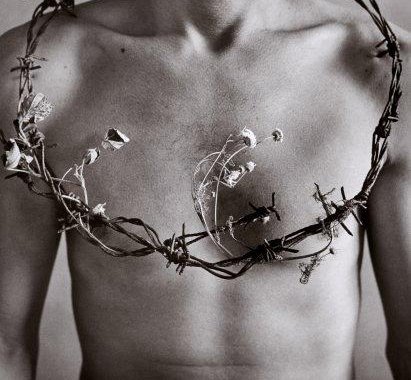
“We are all equal in the presence of death.”
Publilius Syrus (~100 BC)
“Suffering is one very long moment. We cannot divide it by seasons.”
“Suffering is one very long moment. We cannot divide it by seasons.”
Oscar Wilde (1854 - 1900)
Time has no meaning in this white room with no view. The seconds cling tenaciously unable to relinquish their fleeting hold on the present as minutes coil like a snake twisting time into a distorted abolition of a once familiar marker of diurnal rhythm. Without warning the clock leaps ahead hours only to freeze motionless for another eternity. It is only a moment ago, but at the same time it seems difficult to recall when the world was normal, a past reality so distant it is a faded memory. Time is no longer linear but now is three dimensional providing deceptive views from each perspective, with each turn time is elastic and multifaceted looping back upon itself. The barely audible hums and beeps of the army of small robots mix with the drone of background stainless steel clanging and muted voices that seep into a white void.
All along death sits outside the window peering in as a beautiful soul pirouettes and dances in a faceless white mist hoping to once again find the way back to a bruised and battered body restrained to a bed in the corner of the alabaster room. The dark figure that waits outside is a lazy hunter praying on the weak and unaware as she lies motionless with a pert determined scowl painted across her innocent face. Evidence of death’s presence is apparent to all who enter this secure hidden world where life is resurrected from the damaged and diseased, where life hangs in the balance with a precipitous grip. Be it known to all that survival is a bloodsport of the most violent type. A violent bloodsport capable of destroying dignity to an extent few will ever experience. Deep purple bruises cover the entire surface of both her arms from the fingers to the elbows attesting to the dozens of needles that administered the plethora of medicines during the first few critical hours of emergency care. Both elbows have deep red raw abrasions from struggling against cotton sheets attempting to free her from the legions of wires, sensors, probes and tubes that hang from her fragile torso. Her graceful neck retain the long purple striations from the cold steel brace used to hold the head immobile during the procedure, the bruises are dappled with small punctures from stainless steel screws that still trickle and ooze blood down her forehead. A constant seep of transparent crimson liquid finds its way from beneath the surgical dressings down her temple where a ventricle drain in her penetrates the forehead to secure a small clear plastic tube that snakes deep into the frontal fold of her brain. Small cherry sized brown strains dot the pillow where the surgical incision weeps claret tears from between course black stitches running across her temple in a huge arc. Angry red abrasions surround both wrists where the instinctual struggle against the cloth restraints documents the raging battle of the subconscious mind seeking freedom from the madness of this alien and consuming fog.
As if observing a titanic battle from a safe distance while watching the sky flash beyond the horizon, we can understand the carnage that exists beyond our sight, but her visible wounds are only slight tangential indicators of the mortal struggle that rages below the surface, in the unseen world beneath the skull. This battlefield in no different from any battle as the fog of war obscures the tactical situation as the combatants spar against partially revealed positions both in defensive and offensive maneuvers. The struggle is best seen in the eyes that flash animal wildness and fear, darting around the room looking for a way to comprehend the endless nightmare that will not relinquish darkness for dawn. Eyes that only allow the person I know to briefly emerge for a smile before returning to the center of this brutal conflict. Behind her eyes is a void, vacant hollowness as she stares blindly hoping that the mere act of lifting each eyelid will allow light to illuminate the darkness that surrounds everything. I want to reach into those eyes and calm the scared innocent girl hiding in the fog, but she is a prisoner in a place deep within the recesses of her mind where no one can trespass.
The dreadful phone call that would once again completely change my life came at 12:30 just before lunch. Her mother was frantic as her voice crackled with fear and concern. “I just called 911, she is in severe pain and is shaking uncontrollably. She says it’s her head, I’m so scared. Oh my god she is going to pass out. I’ll call you when I know when she is headed.” Suddenly the phone goes dead as I continue to hold it to my ear hoping that what I heard was a mistake.
At that moment time once again stopped as ice water courses down my spine. I am flooded with a mix of disbelief, fear, concern, anger and sorrow that swirl in my mind as I mumble under my breath “…..why…..why….why again?” After about ten minutes of absolute frantic panic while pacing a small circle in my office I could no longer stand the silence and called her mother again.
“She is headed to Northland Hospital. Meet us there. I’m concerned she is in really bad shape. Oh god….Oh god.” Her voice drifts as the conversation is drowned by the sound of the arriving ambulance and the muffled sound of frenzied voices.
The traffic to the hospital is horridly congested and the two minute drive takes over fifteen minutes. Arriving at the emergency room I capture a small glimpse of her rigid contorted body being rolled on a gurney through the glass doors. Running inside the emergency room I am stunned at how crowded it is with dozens of people milling about looking for attention. In response to my inquiry, the attendant at the front desk says “She was just brought in and it will take a few minutes to get her checked in. Come back in ten minutes and I’ll take you back to her.” I scan the waiting room looking for a quiet isolated place where I can digest what is happening when I view her mother walking in from the parking lot, she was too upset to drive to the hospital and hailed a cab. Meeting her in the vestibule she begins to buckle at the knees as I grab her arm to provide support. Her mother is in shock as we wait our turn at the front desk during a staff change. When I recognize the new receptionist, but am unable to discern how I know her. I look down at her and ask “Excuse me, don’t I know you?”
The traffic to the hospital is horridly congested and the two minute drive takes over fifteen minutes. Arriving at the emergency room I capture a small glimpse of her rigid contorted body being rolled on a gurney through the glass doors. Running inside the emergency room I am stunned at how crowded it is with dozens of people milling about looking for attention. In response to my inquiry, the attendant at the front desk says “She was just brought in and it will take a few minutes to get her checked in. Come back in ten minutes and I’ll take you back to her.” I scan the waiting room looking for a quiet isolated place where I can digest what is happening when I view her mother walking in from the parking lot, she was too upset to drive to the hospital and hailed a cab. Meeting her in the vestibule she begins to buckle at the knees as I grab her arm to provide support. Her mother is in shock as we wait our turn at the front desk during a staff change. When I recognize the new receptionist, but am unable to discern how I know her. I look down at her and ask “Excuse me, don’t I know you?”
She looks up and smiles “Yes I worked for you about 12 years ago.”
Embarrassed I offer an apology. “Sorry I’m a little distressed right now. My wife was brought in here a few minutes ago.” Without delay she checks and comes back to escort us to the room my wife is waiting in. Along the way she asks “So how are you doing?”
Caught a little off guard by the question I respond “I guess I could be better otherwise I would be somewhere else. I assumed you meet a lot of people you know under this type of circumstance.”
Embarrassed I offer an apology. “Sorry I’m a little distressed right now. My wife was brought in here a few minutes ago.” Without delay she checks and comes back to escort us to the room my wife is waiting in. Along the way she asks “So how are you doing?”
Caught a little off guard by the question I respond “I guess I could be better otherwise I would be somewhere else. I assumed you meet a lot of people you know under this type of circumstance.”
She nods and points us to empty room while explaining “She is getting a CAT scan and will be right back.” There is real concern in her face as she turns to leave.
My wife has always had one of the highest tolerances for pain of any one I know. A few years back after abdominal surgery and a complete hysterectomy, the day after surgery she was remarking how little it actually hurt. To prove her point much to my horror she began doing sit ups. In complete panic expecting to watch her abdomen to split in two at the incision, I pleaded with her to stop while she just smiled, completed a few more just to show me who was in control.
Her typical method for dealing with severe discomfort is sitting quietly without talking or verbalizing, never really showing any external signs of distress, just a calm quite stoic facade. As the attendant rolls her back from the CT scan I am totally unprepared for what I am witnessing. The definition of pain was defined to me that day like never before. I am witnessing a degree of pain that exceeds my total life experience by a factor of ten. It is an experience that won’t be described in words, while the images haunt me incessantly. Pain is usually described is a scale from 1 to 10 where 10 is the worst pain possible. Never in my life did I conceive what the worst pain possible could actually be. It is a pain that radiates out into the air inflicting severe discomfort to anyone in the room; no one is immune from the indiscriminate pain that permeates every pore in every living thing within sight and sucks the breath from your lungs just watching her.
The pain is searing white blinding in waves that pushes her deeper and deeper into a hell which has no beginning or ending. An unrelenting thunderous punishment that turns each moment into an eternity, as the rivets of cold sweat drains from the furrows in her grimacing face. Any stimulus such as light, sound or touch is like swinging a sledge hammer into her head as she repels with vicious contorted violence. A low guttural throaty animal growl emitting from her limp body which no longer sounds human as the pain screams with pointed daggers from this possessed body. Her muscles involuntarily brutally contract twisting her limbs into knots while flailing against the gurney as if she is being electrocuted. As the blood flows from the ruptured aneurysm in her brain, the pressure escalates squeezing the brain tissue against the inner surface of her skull, every neuron is firing warnings into an uncontrollable firestorm of electrical chaos. The mind, unable to withstand the lightning bolts of stabbing pain, begins to retreat from the outside world in attempt to focus its resources on own survival. Attempting to find refuge from the horror the mind begins the methodical process of dying. A riot of sensation overwhelms reality as portions of the brain begin to drown in rivers of adrenaline flooding the skull in response to the uncontrolled bleeding.
Without any ability to assist her, we watch in stunned horror as her weeping moans fills the bare white room. The emergency room doctor steps in though the door with a measured authority to address me without acknowledgement the broken body quivering in brutal spasms. His words pierce me with a steel cold confirmation of this usually fatal condition, “The CT scan confirms she has suffered a rupture and there is a subarachnoid hemorrhagic bleed. We will need to transport her immediately to St. Luke’s Hospital.”
At that moment all hope of this serious medical being something minor or simple dissipates as fear punches me in the gut making me wobble at the knees. I am transported to three years ago when she was diagnosed with her first ruptured brain aneurysm, feeling an incredible senseless anger over having to relive this nightmare again. I look over at her mother, Mary who is in shock unable to comprehend the journey that has just begun. Mary’s arm is twitching slightly as her stares blankly at the pile of my wife’s discarded possessions. Suddenly a group of EMT’s fill the small room and begin strapping heart monitoring equipment on to the moaning patient, before the transferring her to another gurney. As they slide her on the blanket, to the other stretcher she yelps loud in a painful response to the activity. The sound reminds me of stepping on a dog’s paw as the shrill yell drowns the noises of a room filled with people in motion. The attendants are immune to the sights and sounds of pain as they methodically recite the scripted procedures in an ambitious detachment. I am informed that since the transfer to the next hospital will be under lights and siren no other passengers are permitted in the ambulance. A moment later she disappears into the chrome and red door as the lights flash red and blues turning the emergency room into a disco ballroom with distorted colors painting the white walls with blue and red comets as all the medical equipment reflect the dancing lights like a Christmas tree. Suddenly the room is once again silent and sterile white as I am swimming in confusion. Where have I left the car? What is going to happen next, as by instinct collect her mother by the arm and begin to wander the crowded parking lot in shock trying to retrace my frantic path? Helplessly I wander the parking lot looking for my misplaced vehicle.
The drive to the hospital is a brief respite from the crushing uncertainty. Both of us sit drained of emotion staring mindlessly out the windshield without attempting to focus on anything. The silence relieves both of us the need to articulate our thoughts. A vile ball of emotion attempts to escape from the pit of my stomach by clawing up my throat in a wave of sorrow. Concerned that any display of emotion will further destabilize her mother’s tentative hold on sanity, I summon the testosterone induced power of male indifference to quell this inconvenient display of weakness. While I’m sure the ride is filled with small talk about tangential conversations of no relative importance, I cannot recall a single word that is exchanged as the sounds drift past without piercing conscious thought. Mechanically we park the car adjacent to the emergency room door and rush past the information desk as the attending nurse informs us that she is in room #7 while pointing the way.
Pulling back the curtain for emergency room #7 exposes a beehive of chaotic activity as four or five doctors and nurses hover over the prone patient. Somebody introduces themselves to me as I immediately forget the name. Once I have been identified as her husband, the attending nurse corners me and begins to drill me with a litany of medical history questions. “Is she allergic to any medicines? What is her family history? What medications is she currently taking? When was this condition noticed? Has she exhibited any earlier symptoms? “ At the same time some other attendants are beginning a process we will hear a thousand times before she is finally released from the hospital, the neurological state assessment. “Can you lift your arms? What is your name? When is your birthday? Can you smile for me? Can you wiggle your toes? What is today’s date? Do you know where you are at? Can you lift your legs? Can you squeeze my fingers?” We will hear this drill every couple hours for weeks. It is a process to determine if there is a decline in the neurological function, an early indicator of another stoke. The small room is filled with people running in and out with charts, IV’s and blood pressure cuffs.
The attending nurse turns to me and says “Would you please talk to the administrator in the hall?”
During the entire inquisition I am peering over my shoulder back into emergency room #7, completely detached from the conversation I’m engaged in. Anxious to get back into the room I hand her my driver’s license and insurance cards and politely terminate the discussion.
Standing next to the gurney I watch as they begin to control the severe pain my wife is experiencing while she shakes and moans holding her head. Large clear IV’s of morphine are injected into her in great quantity with the same apparent impact of saline. They begin to change the formulation to other opiates. One after another pain killer are piped into both of her arms. The nurse turns to inform us of the recipe of this particular injection, most of them I have no knowledge off. For ninety minutes they shoot various combinations of opiates into her while she seems to resist any attempt to wrest the excruciating pressure from her skull. Holding her hand I quietly whisper into her ear, hoping my voice will comfort and relax her, but the veil of pain is so dense she is unable to respond as she continues to drift further and further into herself and further from the chaos that surrounds her. The nurse systematically injects the next combination of hope, observes the results for a few minutes when leaves the room to consult with the emergency room attending doctor only to return ten minutes later with another IV.
Having lost count the nurse returns to announce the next injection, this one called “Fentinel”. Within a minute or two of the injection my wife has a violent reaction to the drug. Another creature emerges from the gurney as she begins to shake with uncontrollable spasms that rack her body like an epileptic electrocution. Every muscle in her body contracts propelling her physically into the air no longer touching the gurney, as the color of her face turns ashen grey. Her skin is on fire as sweat rolls off her in torrents which puddle discoloring the baby blue blanket she is lying on. I grab a wash cloth, run it under the cold water in an adjacent sink attempting to place it on her face to reduce the fever but her head is thrashing so violently I am unable to provide any comfort. For the first time in an hour my wife utters a few words in a tone that expresses the monumental effort that is required to talk “ ugh……I’m nauseous ugh…….I’m going to vomit……ick...”
The nurse grabs a thin mauve crescent shaped plastic dish for her to vomit in as I try to follow her whipping head with the receptacle but her violent movements are too erratic. The tenor of her moans and cries are getting more desperate as she is in the process of dying the most painful death one can imagine. It is the most horrifying scene I have ever witnessed as her possessed body shudders in violent waves rolling on a turbulent sea. Nothing can come close to describe the excruciating pain we are observing in absolute helplessness. It is the center stage of the bloodsport of survival as the combatants of life and death take turns clawing at this suffering broken body. For what seems like an eternity time is frozen in this horrific torture with an over whelming sense of complete and futile impotence.
What is this violent motion doing to the ruptured aneurysm inside her brain that is pumping toxic poison blood into an ever increasingly crowded skull? “Oh my god, her body is killing herself. How much longer can she sustain this brutal assault before her brain no longer can regulate basic life functions such as breathing or heart rhythm?”
All I can do is hold a cold washcloth in my hand as my arm hangs limp and watch the chaos that swirls as the entire known world shrinks to the confined space of this small emergency room. It is as if the universe compressed itself into these four tiny walls, nothing exists beyond and there is no escape until death is defeated if at all possible. At this moment an entire life of effort and accomplishment, dreams and plans, possessions and mortgages have no relevance or meaning. Life is now reduced to counting heartbeats and taking the next breath of air, every worry and concern I carried into this day is reduced to trivia, trivia that is laughable in perspective to someone fighting for their life. I become ashamed that I allowed such meaningless thoughts distract me from the gift of life we are given and so severely assume it is our right of birth. My arrogance and selfishness I carried into today collide into the wall of reality and mortality.
I have now entered a state of shock as I blankly stare, so horrified, so afraid, so numb that it is as if I’m having an outer body experience watching from the corner as tears fall from somebody else’s cheeks. It’s the little things that reach out and rip your heart out bringing out the pain of loss so you engage the present cutting through the numbing shock. Sitting in the corner of the crowded room on the floor is a royal blue thin plastic shopping bag with white twine draw strings. The bag with white block letters that spell “hospital” is forlorn and abandon with its top folded over spilling its contents onto the floor. I stare at the bag realizing that it is all of wife’s possessions that were taken or removed from her. All those things that are so important to her are discarded almost as trash; I think to myself that she would never allow her purse, cell phone and wallet to be carelessly tossed unattended into the floor like this. It is a simple realization such of this that drives the moment through you like a searing white hot steel rod, exploding a tidal wave of uncontrolled emotion. I know this is all terribly wrong as I clasp my hand to my face and begin to sob heavily. This can’t happen…..this can’t happen right how. I need to bottle this rage before I collapse into a worthless pile. Everyone in this room needs me to be strong. I cannot ignite a wave of panic in myself that takes control; I must have a grasp on reality however tentative it may be. It takes every ounce of strength in me to wrestle this firestorm of fear back into the corner of my mind.
For over twenty five minute we watch my wife processed and controlled by this violent alien force, until the attending nurse comes in having concluded this reaction is not going to disappear by itself, that something needs to be attempted in sort the stabilize the patient so that she can be sent to have another CT scan. In a firm but yet compassionate tone she explains the choices and risks. “We have two options that we can explore in order to stabilize your wife. One we can give her an injection which will back out all of the Fentinil, but it will also back out all of the other pain killers we have given her to date. I do not want to do this because she will be in excruciating pain if we remove all the painkillers from her body.”
My jaw drops to the floor at her statement what do you mean she will be in excruciating pain? My god is there a level of pain more intense and excruciating than what I am witnessing now? Is that even possible? This is more pain than I have witnessed in my entire life easily by a factor of ten. I cannot fathom what that means, but most of all I know with absolute certainty that I will not bear seeing her in more pain without coming apart at the seams.
With a managed expectation of success the nurse offers the second option. “In some patients we have positive results in managing the allergic reaction to opiates with an injection of Benadryl. I would guess maybe one in five improve with Benadryl.”
The decision is quite simple a small chance to manage the reaction or plunging my wife into certain hell of unspeakable torture. “Let’s try the Benadryl.” I offer as they attempt to restrain her thrashing arm sufficiently to inject the hope of finding a door to exit this nightmare. We wait quietly frozen into stone statues keenly observing every twitch and jerk of her torso trying to discern the slightest abatement of violence. We notice a gradual but steady improvement over the course of ten minutes until her muscles finally stop contracting and gently fall limp laden with exhaustion. For the first time in hours the horrid grimace melts from her face with her head nodding to the left as if drifting into a graceful sleep. The color returns to her face and the film of sweat that covers her flesh starts to evaporate creating dry patches like wet asphalt on a sunny day. I am stuck by the relief that people must feel when death steals the suffering. The seduction is clear; the promise of calm, the lure of eternal bliss beckons us to cross the line between life and death. From the last aneurysm my wife had, she indicated that it would have been so very easy to die that day, the temptation to walk through the open door was without fear or pain, as simple as breathing. For months afterward she would say that she can only hope that she will in fact die that way. This time she receives no free pass to the fields of gold, no graceful flight to the next life. This time she has felt the blistering brimstone of hell in all its fury and this is only the start of the journey.
For the moment there is a childlike quality of grace sweeping over her as her breathing become deep, as the heaving of her chest changes to a salient rhythm which is comforting to everyone in the room. I fall back into a simple metal chair on the corner of the room collapsing once the weight of the moment is lifted from my shoulders. Only now can I begin to peer into the next minute, the next hour, the impending surgery. Life is now measured in small simple digestible units of time, life is reduced to no more than small blocks of minutes or hours. I slump with my head almost touching my knees as my hands rake furrows over and over in my hair. The prospect of probable death or severe disability has not left, we are not anywhere remotely close to exiting this dark and ominous forest, like clinging to a sheer rock face in the middle of a monstrous cliff, we have only secured a small foothold, a sanctuary to rest briefly before the assault continues. My mind tries to process these incomprehensible images as my thoughts are ripped apart into random fragments before they are digested. Chaos is king as my mind flashes bits and pieces of information with no apparent reason or no particular order, like a computer overloaded to the point of dumping memory, spilling all of its contents onto the floor.
Our moment of rest shortly passes as my wife awakes to begin the guttural moans of pain and the process of dumping morphine back into her veins begins in earnest once again. We are informed that the operating room is stacked up with critical procedures and we will need to wait our turn to get an angiogram which will determine the location and extent of the hemorrhage, the first step before cranial surgery. For the next four hours we wait in a state of horror watching the pain course taking her from a state of brief awareness to unresponsiveness. The emotions of hopelessness and ineptness prevail over fear, panic, loss, anger and sorrow as the minutes slowly pass.
At seven in the evening the operating room is now free of the traffic jam which prevented us from entry. We once again prepare ourselves from the next level of anxiety and uncertainty as the next step in the discovery process begins. A small tube will be inserted in the femoral artery on the inside of the thigh which will then be pushed throughout the body until it reaches the aneurysm site in the brain. A dye will be injected into the bloodstream so that the veins will show in contrast revealing the extent of the damage. If at all possible the surgical team will attempt to clog the rupture with a threadlike titanium wire which is coiled into the aneurysm blocking the leakage of blood into the brain cavity. With surgical precision the attending nurse again informs us of the risks, the procedure could further damage the aneurysm resulting catastrophic damage, the risk of clots, the chance the patient could bleed to death from damage to the femoral artery, and on so the list goes on. This is the medical disclaimer to limited malpractice suits; here are all the things that could go wrong, just in case something does, we told you so. I don’t recall the exact probably of death from this procedure but it was in the range of 15%.
For over twenty five minute we watch my wife processed and controlled by this violent alien force, until the attending nurse comes in having concluded this reaction is not going to disappear by itself, that something needs to be attempted in sort the stabilize the patient so that she can be sent to have another CT scan. In a firm but yet compassionate tone she explains the choices and risks. “We have two options that we can explore in order to stabilize your wife. One we can give her an injection which will back out all of the Fentinil, but it will also back out all of the other pain killers we have given her to date. I do not want to do this because she will be in excruciating pain if we remove all the painkillers from her body.”
My jaw drops to the floor at her statement what do you mean she will be in excruciating pain? My god is there a level of pain more intense and excruciating than what I am witnessing now? Is that even possible? This is more pain than I have witnessed in my entire life easily by a factor of ten. I cannot fathom what that means, but most of all I know with absolute certainty that I will not bear seeing her in more pain without coming apart at the seams.
With a managed expectation of success the nurse offers the second option. “In some patients we have positive results in managing the allergic reaction to opiates with an injection of Benadryl. I would guess maybe one in five improve with Benadryl.”
The decision is quite simple a small chance to manage the reaction or plunging my wife into certain hell of unspeakable torture. “Let’s try the Benadryl.” I offer as they attempt to restrain her thrashing arm sufficiently to inject the hope of finding a door to exit this nightmare. We wait quietly frozen into stone statues keenly observing every twitch and jerk of her torso trying to discern the slightest abatement of violence. We notice a gradual but steady improvement over the course of ten minutes until her muscles finally stop contracting and gently fall limp laden with exhaustion. For the first time in hours the horrid grimace melts from her face with her head nodding to the left as if drifting into a graceful sleep. The color returns to her face and the film of sweat that covers her flesh starts to evaporate creating dry patches like wet asphalt on a sunny day. I am stuck by the relief that people must feel when death steals the suffering. The seduction is clear; the promise of calm, the lure of eternal bliss beckons us to cross the line between life and death. From the last aneurysm my wife had, she indicated that it would have been so very easy to die that day, the temptation to walk through the open door was without fear or pain, as simple as breathing. For months afterward she would say that she can only hope that she will in fact die that way. This time she receives no free pass to the fields of gold, no graceful flight to the next life. This time she has felt the blistering brimstone of hell in all its fury and this is only the start of the journey.
For the moment there is a childlike quality of grace sweeping over her as her breathing become deep, as the heaving of her chest changes to a salient rhythm which is comforting to everyone in the room. I fall back into a simple metal chair on the corner of the room collapsing once the weight of the moment is lifted from my shoulders. Only now can I begin to peer into the next minute, the next hour, the impending surgery. Life is now measured in small simple digestible units of time, life is reduced to no more than small blocks of minutes or hours. I slump with my head almost touching my knees as my hands rake furrows over and over in my hair. The prospect of probable death or severe disability has not left, we are not anywhere remotely close to exiting this dark and ominous forest, like clinging to a sheer rock face in the middle of a monstrous cliff, we have only secured a small foothold, a sanctuary to rest briefly before the assault continues. My mind tries to process these incomprehensible images as my thoughts are ripped apart into random fragments before they are digested. Chaos is king as my mind flashes bits and pieces of information with no apparent reason or no particular order, like a computer overloaded to the point of dumping memory, spilling all of its contents onto the floor.
Our moment of rest shortly passes as my wife awakes to begin the guttural moans of pain and the process of dumping morphine back into her veins begins in earnest once again. We are informed that the operating room is stacked up with critical procedures and we will need to wait our turn to get an angiogram which will determine the location and extent of the hemorrhage, the first step before cranial surgery. For the next four hours we wait in a state of horror watching the pain course taking her from a state of brief awareness to unresponsiveness. The emotions of hopelessness and ineptness prevail over fear, panic, loss, anger and sorrow as the minutes slowly pass.
At seven in the evening the operating room is now free of the traffic jam which prevented us from entry. We once again prepare ourselves from the next level of anxiety and uncertainty as the next step in the discovery process begins. A small tube will be inserted in the femoral artery on the inside of the thigh which will then be pushed throughout the body until it reaches the aneurysm site in the brain. A dye will be injected into the bloodstream so that the veins will show in contrast revealing the extent of the damage. If at all possible the surgical team will attempt to clog the rupture with a threadlike titanium wire which is coiled into the aneurysm blocking the leakage of blood into the brain cavity. With surgical precision the attending nurse again informs us of the risks, the procedure could further damage the aneurysm resulting catastrophic damage, the risk of clots, the chance the patient could bleed to death from damage to the femoral artery, and on so the list goes on. This is the medical disclaimer to limited malpractice suits; here are all the things that could go wrong, just in case something does, we told you so. I don’t recall the exact probably of death from this procedure but it was in the range of 15%.

The family present is allowed a few minutes to say goodbye prior to quickly being whisked behind to white worn swings doors with two round windows that resemble a ship’s porthole. Stunned at the prospect of waiting for the procedure to be complete, we are lead down an abandon corridor devoid of architectural interest as florescent lamps bath everything in an eerie blue tint. The small waiting room has white walls and a couple of cheap warehouse artist paintings that are mass produced by the hundreds. It is most disturbing that they don’t match and actually clash as the colors fight each other across the sea of white. Three small office chairs and an industrial sofa framed in ochre colored oak struts are filled with the stress and sorrow of hundreds of family members and loved ones that have preceded us; they stand indifferent as sad trapped emotions ooze from the worn stained fabric. A soiled coffee pot hisses from a battered wooded stand as a black tar substance which in a former life was liquid meant to be consumed, simmers on the burner no longer capable of yielding stream.
Time taunts us as a small round clock hanging above our heads in plain view appears to be frozen unable to advance measuring the march of time. For a period of three and one half hours we are alone with our thoughts, wonderings what is happening in the operating room hidden deep in the bowels of the hospital. Trapped in an endless loop the questions roll past unanswered. How is she doing? Did they find the source of the bleeding? Is it better or worse than expected? When will we know the outcome? How much longer will we wait until we hear something? The strings of questions flash by in one long connected stream of consciousness only to loop back again and begin over, time after time. My stomach is raw with bitter acid from the flood of coffee I’ve consumed. My head pounds from a lethal cocktail of stress, adrenaline and caffeine. My muscles throb in exhaustion, stiff and atrophied. The others sit around me whispering in hushed tones of mindless conversations, as they use nervous chatter attempting to distract themselves from the unbearable isolation of the moment. I am unable to engage in any discussion and only half heartedly acknowledge they are talking with a feeble nod or fabricated smile that cannot hide the complete disconnection I am experiencing. Time is a burden that is crushing with no escape as my breathing remains labored and shallow.
Sitting in silence while staring at the white wall, I begin to follow the black scuff marks tracing them into abstract patterns as the door swings open a nurse in a pale institutional green surgical gown strides into the waiting room. Without hesitation she approaches and begins to report of the finding of the procedure. Her first words are carefully crafted from medical jargon as she speaks, informing us that “the patient has tolerated the procedure well”. Over the following weeks and months we discover the use of this term is standard, and begin to understand its meaning as “only a minor amount of damage or suffering has been inflicted to the patient while accomplishing the objectives of the procedure”. With simple childish expressions as if listening to an adult we sigh collectively.
She goes on to describe the findings, “She has had a bleed in the fold of the frontal lobe of her brain, right between her eyes. We believe it to be the anterior communicating artery. The surgeon was not able to determine how severe the rupture is, but she was not a candidate for coiling. She is scheduled for surgery at 10:00 am tomorrow morning.”
All of a sudden everything is moving too rapidly after seven hours of brutal uncertainty. I am unable to process the information quickly enough to formulate questions. Like an oil spill, the information slowly expands on the surface of the mind in a thin film encompassing its entire surface as I realize that my wife’s brain will continue to bleed for another twelve hours before any attempt at controlling the damage occurs. Fear once again grabs me by the shoulders slapping me violently. Three years ago they did not wait as she was rolled into surgery late in the evening, but we are about four hours later than last time.
I attempt to convince myself that this is a good thing, who wants an exhausted brain surgeon cutting into you in the early morning hours? This must be an acceptable compromise for the additional damage occurring from the continued bleeding in her brain. I must have faith in the judgment of this nationally renowned medical facility. There is great comfort in the fact that the same surgeon that saved her life last time will be performing the procedure this time, with an additional three years of experience under his belt. Is it possible that there is a benefit in having been there before, having traveling inside the skull, having seen the interior structure previously? It do not know for certain, but I am in despite need of some small assurance to cling on to, something to make the probability of death or disability to shrink just a little. Deep within my thoughts I realize the nurse is still talking and I have not been listening, as I refocus my attention.
“She will be in recovery for another 30 to 45 minutes at which time they will take her back to ICU. The nurses in ICU will need about 30 minutes to transfer her from the OR gurney into the ICU bed and place the monitoring equipment on her. You can wait in the ICU Waiting Room on the fourth floor and the nurse will come and get you when she is ready to receive visitors.”
There is a brief moment of silence as the nurse waits to see if there are any additional questions, then hearing none she quickly disappears behind the white door sucking the temporary energy out of the room as she leaves. We all sit cow eyed digesting what we should do next. Glancing at the clock it is now 10:45 in the evening and the hospital is eerily empty. It will be close to 11:30 by the time we get to see her. After a brief discussion we all agree to only spent about 5 to 10 minutes with her in ICU to let her know we are there and praying for her recovery. It has been a long and torturous day for everyone involved and tomorrow only appears to be longer and more trying. With a laborious effort we begin the walk to the fourth floor without communicating.
The ICU waiting room is larger than the last with more extremely worn and stained furniture haphazardly arranged on a soiled institutional grey short pile carpet. Even at this time in the evening the room is crowded with visitors mournfully staring at a flickering television hung from the ceiling in one corner of the room. Although the sound has been muted the images flashing across the screen bath the sedentary visitors with a pale light which is the only movement apparent in the lifeless vaccum. Occasionally a whispered conversation drifts over the hissing sound of another coffee pot, while the same words are repeated over and over each day by the different familiar members imprisoned in this sad and lonesome room.
“She squeezed my hand when I was talking with her; I think she can understand what I was saying.” “The doctors are taking him down for a CT scan.” “We won’t know the full extent of the damage until a few more days.” “We don’t know yet how long he will be in ICU.”
You watch the each one talk into a cell phone with vacant empty eyes as if confessing grievous sins against humanity to a priest, their voice heavy with emotion, attempting to be strong in a world without answers, only more questions. They sit rigid, motionless with shoulders curled forward from the burden placed on them. Children play on the floor between the piles of bedding and pillows oblivious to events which are transpiring around them. The experience is hell’s version of the movie “Groundhog Day” in which the same script is repeated over and over each hour unending, though the day, through the night without reprieve, only the actors sitting in the room change, but not the sad looks or the script. In am stuck by the observation that these same exact conversations have been occurring continually for the past three years since I was seated on this exact same chair during her first aneurysm.
A nurse poked her head into this abysmal cage of tattered hope and informs us my wife is ready to receive visitors. We walk past the hand sanitizer repeating a ritual of cleansing the germs that cling to us as if it was holy water until we reach a locked set of double doors with a simple black phone hanging on the wall below a security camera hanging from the ceiling. No one is allowed into ICU without being a relative. After announcing ourselves, the doors open automatically revealing rows of attendants and nurses behind a large counter surrounded by large individual ICU rooms. Each room has a couple of attendants responsible for observing the patient every minute of every day. There are ten rooms with glass store fronts as we are directed to room 4 while passing an incredible array of medical equipment scattered along the corridor, many of which the function of is not apparent. Peering into the room as we pass them, dozens of small colored lights and graphs on computer screens mix with the beeps and hums of audible warnings or messages from the equipment, but there is little evidence of human activity. The prone figures are clear from beneath the blankets but motion is nonexistent in the dimly lit rooms.
Many rooms have sitters who’s only job is to sit within arm’s length of the patient and observe any change in neurological state. These warriors are the front line of bloodsport of death as they trade two hour shifts, watching, protecting 24 hours a day until the patient clears certain critical thresholds of medical stability. I have grown to greatly admire these gentle guardians of wounded lives who silently with incredible compassion care for the patient as if they are family.
Rounding the corner we enter ICU number 4, to find the lights dimmed and a small group of attendants scurrying around a bed crowed with medical equipment. Recognizing that we have entered the room they melt into the background allowing us a personal moment to visit my wife. I am stuck at how small and frail she appears in the bed with only her face exposed as a web of wires and tubes frame her face but for the first time in a dozen hours the ponderous wall of pain is gone as she rests comfortably in a deep chemical induced state of bliss. It is the first moment of relief I have had since the horror began which seems like an eternity ago. Tears roll down my cheeks as the sheer relief of not seeing her in agony opens a flood gate of emotion. Death is welcome in this gentle softness; it has no right to take a soul while being tortured and tormented. We are all stripped of our dignity, no longer capable of deciding the circumstances of our demise, forces beyond our control regulate us to a pawn in the struggle for life. For the briefest of moments I think that is her were to die today it should be this way, in a blissful sleep, unaware, unencumbered by the humiliation of pain and suffering. The thought passes quickly as I reach over to kiss her on the cheek, tenderly caressing her bruised hand. Each of us has a chance to lean over whispering encouragement, hope, strength, confessing our sins of not being there enough, taking life for granted, spilling our hearts onto the stoic saint resting before us. It is a last opportunity to impart the healing energy of love as our prayers fill the darkened room.
It is time to let her rest and prepare for the surgery which is scheduled for 10:00 am in the morning. We coordinate our schedules and responsibilities for the next day as exhaustion sweeps over me in waves. I will pick her mother up and we will get there in time to see her before she goes into the operating room. I am filled with guilt as I turn to walk out of the ICU room, I can barely stand the idea of leaving, but logic tell me there is nothing I can do to help at this point. I understand that tomorrow will be just as trying and as long as today. I will need to be rested and mentally prepared for the uncertainty of the future. Silently we shuffle down the long sterile corridor into the nondescript grey parking garage, then driving by instinct to an empty house.
Suddenly the ringing of a phone rocks me from a deep slumber. I look around disoriented and confused only to realize I am lying in my bed. Reaching for the phone I glance at the clock indicating that it is 6:02 am. Terror clouds my thoughts as a voice asks “Is this Mr. Blue?”
“Yes it is” I groggily croak clearing my throat.
“This is Carla and I am your wife’s head nurse. We just returned from having a CT scan and your wife has exhibited additional bleeding. We have moved her surgery up to 7:00 am.”
Dizzy and off balance I try to digest what I’ve been told. I need to get down there, but am certain that there is no possible way to get to the hospital before they take her into the operating room. With growing concern I provide verbal approval to begin the surgery without me being present.
Finding my footing I ask “So how long do you expect the procedure to take?”
In a confident comforting voice she explains the preparation time, the surgical process and the recovery time. “The doctor feels confident that the actual operation will require 4 to 5 hours at which time she will be immediately stabilized and returned to the ICU to recovery for another 30 to 50 minutes.” Once again guilt washed over me as I realize than no one from the family will be present to comfort her before the surgery, the fatal possibility that our last brief visit last night might be the last time anyone of us sees her again. Panic begins to flood my mind as I take stock of the fears and begin to once again push them back into that black closet and close the door. My mind cannot be allowed to wander into that minefield, not right now, it would be fatal to do so, I must remain strong and positive. This is a good thing that she will be attended too so much earlier than expected I try to convince myself. No time is available to ponder anything, action is the primary need, as I hang up and call her mother letting her know that I will be picking her up to go to the hospital in the next 15 minutes.
Without showering or combing my hair I pull on some jeans and a bulk sweatshirt knowing how cold they keep the waiting rooms. I realize with each movement that my head is pounding as if I’m fighting a severe hangover. Muscles in neck and upper shoulders are tender and stiff as if I’ve lifted weights all night. My stomach is knotted and sour with acrid bile. What is wrong with me, I collapsed in bed before having a drink and I was stationary most of the previous day? Suddenly is realize how powerful and toxic stress can be as it brings me to brink of illness. Unable to waste time on trivial concerns I jump into the car to pick up my wife’s mother and drive to the hospital.
Our drive to the hospital is solemn with an economy of words which release the mounting stress that building in everyone’s mind. The OR waiting room is on the other side of the hospital which takes an explorer to find hidden between the new construction and the convoluted architectural chaos that is most hospitals. Finally we arrive to find a huge open space decorated like a family den with a dozen or more couches and seating areas tucked into various niches of the room. The furniture is less worn and more stylist, a sea of soft earth tones and subtle pastels. The room contains about 15 separate families huddled into small quiet groups whispering in inaudible tones. We are greeted by an elderly lady with silver hair dressed in a smart navy blue business suit. Her name tag says Ruth as she looks up us from beneath oval reading glasses as she consults a clip board.
“So who are you waiting for?” she asks without lifting her eyes from the table.
“My wife was scheduled for surgery at 7:00 am.” I blurt realizing that I have no idea what time it is, failing to look at my watch in my rush to get to the hospital. The clock stares back at me stating that it is now 7:32 am.
In a familiar and caring tone the lady smiles melting the nervousness floating in the air. “Mr. Blue we have been waiting for you. Your wife is doing just fine. She is still in pre-op and the surgeons are consulting with each other based on this morning’s CT scans.”
The experience is designed to comfort the concerned and provide the most accurate information possible in the timeliest way possible. I can tell how carefully crafted this process is, especially for those who wait. It provides a sense of competency assuring everyone that their loved one is being treated with professionalism and respect. “If you will have a seat Ms. Grey who is our attending care provider will visit the operating room every hour, consult with the surgeon and then come out and inform you as to the condition of the patient.”
Slightly confused I thank her and find a small cluster of furniture vacate in an isolated corner of the waiting room. As if by habit I approach the industrial sized coffee vending machine which dispenses just about any type of brewed coffee you could imagine. I am surprised to find that the coffee is provided for free, as I think to myself what a nice gesture that is. It’s not like waiting in some cold hospital room but seems more like waiting in a family member’s living room where the coffee pot is a sign of hospitality. Grabbing a couple of cups I haul the precious liquid back to our isolated little camp of family and friends.
Once again I am too upset and nervous to engage the idle conversation that fills the holes of silence. Occasionally I look over and admire women’s ability to chatter in seemingly mindless dialogue as a way of group therapy to manage fear collectively. Males are prone to the solitary pursuit of comfort, finding strength in reflection and silence. Today however, comfort cannot be found on the emotional island I have marooned myself on. Today I have little patience as my mind drifts from fragment to fragment of visual images from yesterday. Attempting to reassemble the tattered and torn remnants of yesterday into a coherent sequence of events is impossible; it is like piecing together a shredded newspaper that has all the newsprint smeared and illegible. Each time I close my eyes I am assaulted with the most violent images of my wife in excruciating pain, all different each competing to be more violent and hurtful than the last. I find myself experiencing some form of post traumatic stress syndrome. Escape from this film loop of torture is difficult, reliving the more intimate side of my experience which was previously suppressed by shock and numbness yesterday is unfiltered and vivid today. The intensity of the emotional images are heighted by the concurrent understanding that at this exact moment someone is removing a section of my wife’s skull and probing deep into her brain with cold steel instruments in an undisclosed location only a few dozen feet away from where I am sitting. My mind flashes from yesterday to a constructed image of her lying lifeless tethered to the operating table as her brain once again is exposed to daylight. I imagine the blood as it seeps and trickles from the gaping wounds to congeal into small crimson puddles beneath her neck. I see the surgeon manipulating the folded grey matter of the brain as they hide beneath mask while mumbling barely audible half Latin phases. The operating room appears so cold and indifferent, without love, without judgment. Images of the horrific pain of yesterday clashes with the brutal uncertainty of the moment, each dueling for superiority in my thoughts as I don’t possess the strength to expel them, adhering to consciousness like a crude tattoo.
The dimension of time once again folds into a motionless abstract as the seconds stick and hang before disappearing into the past. Without warning a nurse in a baby blue surgical scrub removes her mask and heads toward us after the admission desk points us out to her. She is holding a clip board and walks with a confident authoritative energy of an individual on a mission. Her piercing blue eyes scan the group as she arrives assessing the temperament and emotion state of our small family clutter.
“Is this the Blue family?” she inquires.
We nod affirmatively while turning our attention to the new figure standing before us. “I am the patient advocate for the hospital.” She begins “My job is to attend the operating room surgeon only to observe the procedure so that I can provide you detailed information on what is going on. I will not disturb the surgeons, but will observe without being obtrusive. ”
Measuring our level of comprehension she quickly scans our faces then continues “I’m sure the doctor has already talked to you about the procedure? Your wife is having intracranial procedure to repair a ruptured SAH hemorrhage in the anterior communicating artery, correct?”
I find a small island of hope and comfort in her deep tranquil eyes that engage so easily. Those eyes remind me of water near a coral reef somewhere in the Caribbean as I find myself transferring accumulated anxiety and doubt to her for safe keeping.
“Your wife has now been in surgery for almost 2 hours. She is under a general anesthetic and is doing well. The surgeon has removed a section of her skull which has been wrapped in a cloth saturated with antiseptic and placed on the operating table next to her.” Concerned the nurse interrupts herself with a polite demeanor. “I’m sorry if this too much detailed information for you to hear please let me know, I will understand.” For the moment I am challenged with the graphic nature of her description especially knowing that at that moment it is my wife is enduring this invasive procedure.
Although there is a part of me that needs to know every aspect, every risk, every complication, I finally answer for the group “No that is fine. Go ahead and continue please.”
“The surgeons are now probing the region looking for the aneurysm site. As soon as they observe the rupture they will decide what corrective procedures they will undertake. I can assure you that she is good hands and will be fine. Do you have any questions for me?”
The family is thunderstruck and silent as I ask the only question I have “My wife was diagnosed with a second small aneurysm on the right hemisphere which the doctors were monitoring, but it is not the rupture site. In the process of this procedure are they going to clip and repair the second aneurysm she has?”
Pulling the pen from her clip board the nurse begins to scribble down my question and responds “I don’t know, but I will ask the surgeon your question. I know that their first priority is addressing the ruptured aneurysm, but I will find out for you.”
As she turns to head back to the operating room I notice the big fluffy hair nets covering her shoes which make her appear to be floating on two petit baby blue clouds. As she leaves the energy in the waiting room lessens as I find my anxiety and desperation returns with a vice like grip.
Throughout the entire surgery our advocate nurse returns every hour with her clip board filled with new information as she works the room, talking to each family, informing them of the condition of their loved one and to answer questions. She becomes this little baby blue angel that appears from the sterile white walls to bring hope from the other side. I greatly admire this small curiously beneficial service she provides everyone captured by dire circumstances. While the detail is vivid making my stomach turn, I feel strangely connection to the activities outside my controlled environment. As the hours pass we exceed the 5 hour time limited first noted by the surgeon for the procedure. At the moment increasing waves of panic batter the façade of hope erected to protect our sanity. Is something wrong? Why is it taking so long? Is it worst than anyone could have expected? The nurse said everything was going good not more than an hour ago, has it all changed? The mind races to pose questions that have no answer but can only torment. Thirty minutes turn into sixty and sixty into ninety as the waves of doubt and fear grow immense. Everyone is concealing the growing panic that is welling from below while the women continue unabated the simple conversation about nothing in particular as if we were sitting at the dining room table on a lazy Sunday afternoon. Sour bile boils in my stomach as the fear pour toxins into my system.
Suddenly the angel with piercing deep blue eyes floats toward us on soft baby blue clouds. At last some news is forthcoming. I can perceive the intent of her message by the way she holds her body, the ease at which she strides across the room, unburdened by events capable of inflicting such horrendous pain. From across the room my anxiety melts, dissipating into relief that this moment of suffering is about to conclude and another chapter will be opened with all of its discovery and uncertainty. The nurse’s first few sentences flow over me without me being able to comprehend its meaning; they are just a foreign language that floats around me without penetrating. It’s not that that the message is overly technical or obtuse, but my mind has yet to uncoil itself from the deafening isolation it has endured from the past six and one half hours. My mind regained function as I intently focus on what she is now saying. “The surgeon has completed the clipping of the ruptured aneurysm and the supporting team is beginning the process of closing your wife up. She has tolerated the procedure well and all vital signs are strong.”
The words immediately remove the leaden weight that has been suffocating me as a rouge tear escapes running down my cheek in a defiant act of freedom. A huge breath of air is involuntarily pulled deep into my lungs as I hear the nurse says “Oh by the way the surgeon was able to clip the second aneurysm before closing her up. They will be taking her up to ICU to recover and you will be able to visit her in about an hour. It will take a while for the ICU nurses to transfer her from the gurney to hospital bed. They will also need some time to attach all the monitoring equipment to her.”
It is the best of all possible outcomes. Not only is the ruptured aneurysm repaired but the lingering possibility of reliving this experience because of the second aneurysm that we have been monitoring, the small time bomb that has been hung over our heads for the past three years is now gone.
The next hour or two is lost to me; I find it difficult to recall much of anything about what transpires in the intervening period. As if my consciousness has overheated and has shut itself off to prevent further damage, I listen a little more intently at the meaningless conversations that surround me, but I am acutely aware of the threshold that has been crossed. This chapter is concluding, but this chapter is only the preface, the introduction of the book that is to be written, a journey yet to be understood or comprehended, a journey with untold successes and failures, a journey that will test my faith like none before. Even in the darkness of the winter there is reason to celebrate the solstice for it is only time until spring returns in its entire splendor. For the moment I am grateful that this powerful soul that I have known and loved for more than half my life has once again cheated death, like so precious few that travels before her. She is truly a miracle set before us as proof of the incredible will to live. For what reason she has been chosen to carry this burden of suffering, I can only speculate. It must be that she is the only one that can bear the weight and tell the story, she is our testament that god’s will is manifested in all of us; we just need to nurture it.
Deep in my thoughts I am disturbed by the ICU nurse as she tells me it is now possible to visit my wife. Once again, as I have done three years before I enter the ICU ward to room number three. The room is darken with only some simple task lighting, the shades are drawn and there is a group of nurses and attendants scurrying around speaking in whispers, adjusting dials and tubes, hanging bags of saline. As I enter the room one by one they begin to noticed me and as they do in quiet systematic order turn to leave the room. I find myself now alone in the darken room as I approach the bed. The vast array of machines that cling to my wife’s motionless body is incomprehensible as it seems like hundreds of cords, tubes, lines, wires have enveloped her body. The room is filled with small blinking LED lights of red, yellow, orange and green as each machine hums and beeps barely audible tones. The whole scene is intimidating as I count eleven separate bags of liquid that are being pumped into this sleeping beauty. Beneath the bandages, blankets and equipment I can now see her face and she appears so fragile. She looks like a small weak baby in this huge bed. She appears as I have never seen her before.
Attached to her lips is a large loop of white medical tape that secures the breathing tube running into her lungs. I am helpless watching a large mechanical box next to her breathe for her as each inhale and exhale is punctuated by a click of gears. The tape appears to be pinching her upper lip and I want so desperately want to remove it. Bandages cover most of her forehead and skull, but I am truly horrified watching her involuntarily struggle against the foreign object forced down her throat. Her arms are tethered by the wrists to prevent her from grabbing any of the objects attached, but they continue to pull and tug weakly against the restraints. There is a pained insufferable expression of discomfort and despair furrowed in her face as she can only fight by attempting to gag and vomit hoping the expel this invader. At each attempt her body becomes rigid as her lips pout while the effort turns her face deep crimson, as she fights to breathe against this machine. Over and over she attempts to wretch out this nightmare of hellish proportions only to lose to this mechanical demon that is keeping her alive. This is the most horrifying image I have ever experienced and can only hope never to experience again. I stand overwhelmed with helplessness as I watch surrounded by darkness. If I was to live another century I could never conceive another trauma even close to this. To this day I find myself awaking in a cold sweat seeing the image of my wife struggling for a breathe of air.
One by one the family has come to my side standing next to me in silent horror of the cost both emotionally and physically over the past two days. We are all silent lost in our thoughts trying to understand where we go from here. We are ready to close this chapter and begin the next. It is time to go home and rest for we have weeks and months to discover the end of this journey. Before we leave for the briefest of moments my wife awakes and acknowledges our presence as if she is trying to heal our pain, she offers a small smile as I lay my hand on her chest. The human touch has the power to heal as her weary soul assures me that she is not going anywhere, that she will stay here for a little longer. It is a rewarding end to the most trying day of my life. Turning to leave I look over my shoulder at the poor soul tethered to the bed with all the machines keeping her alive and think to myself we have a long road ahead of us. We can only wait to see what tomorrow brings.

JULES: We should be fuckin' dead!
VINCENT: Yeah, we were lucky.
JULES: That shit wasn't luck. That shit was somethin' else.
VINCENT: Yeah, maybe.
JULES: That was... divine intervention. You know what divine intervention is?
VINCENT: Yeah, I think so. That means God came down from Heaven and stopped the bullets.
JULES: Yeah, man, that's what means is. That's exactly what it means! God came down from Heaven and stopped the bullets.
VINCENT: I think we should be going now.
JULES: Don't do that! Don't you fuckin' do that! Don't blow this shit off! What just happened was a fuckin' miracle!
VINCENT: Chill the fuck out, Jules, this shit happens.
JULES: Wrong, wrong, this shit doesn't just happen.
VINCENT: Do you wanna continue this theological discussion in the car, or at the jailhouse with the cops?
JULES: We should be fuckin' dead now, my friend! We just witnessed a miracle, and I want you to fuckin' acknowledge it!
VINCENT: Okay man, it was a miracle, can we leave now?
JULES: Whether or not what we experienced was an 'According to Hoyle' miracle is irrelevant. What is relevant is that I felt the touch of God. God got involved.
Pulp Fiction 1994